
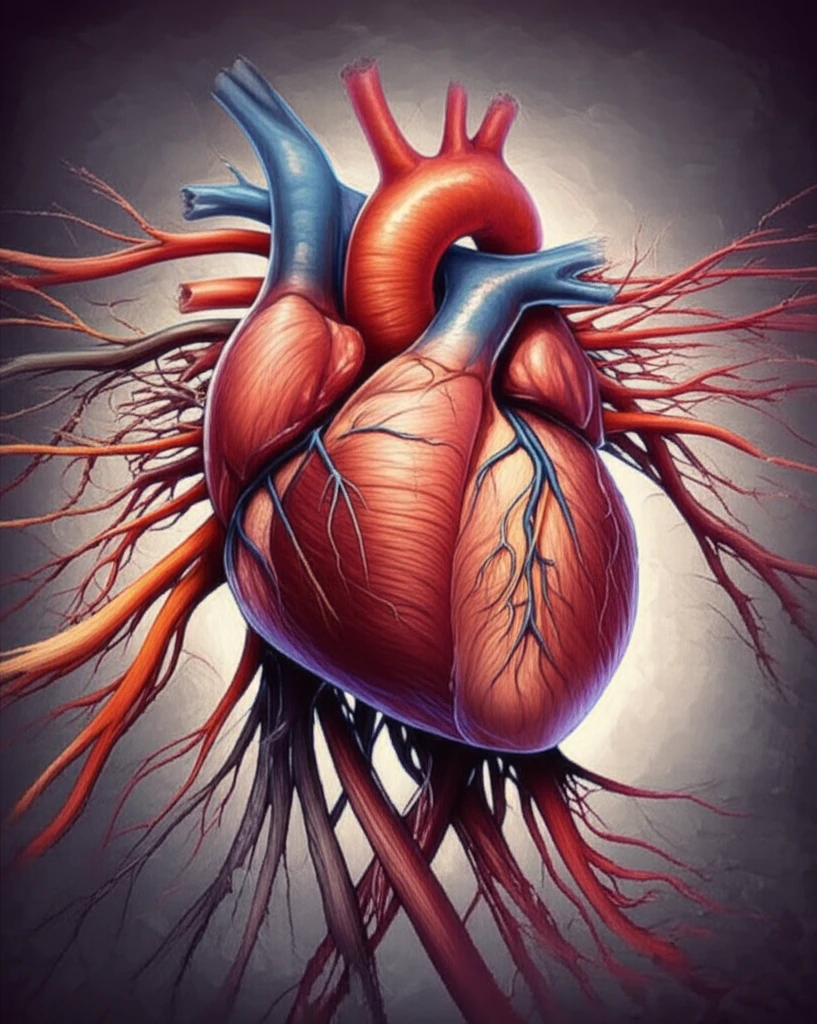
Heart Failure and Exercise: New Insights on Muscle Fatigue

"Discover how heart failure affects muscle endurance during exercise, challenging previous beliefs about fatigue and cardiac function."
Chronic heart failure (CHF) often leads to reduced exercise capacity, impacting individuals' ability to perform daily activities. While central hemodynamic factors like cardiac output and muscle perfusion play a role, the direct effects of CHF on skeletal muscle function are increasingly recognized. Understanding these effects is crucial for developing effective exercise strategies for those living with CHF.
Traditionally, studies have focused on isometric contractions, where muscles generate force without changing length. These studies suggested increased muscle fatigue in CHF. However, everyday activities often involve isotonic contractions, where muscles shorten during movement. This type of muscle activity places different demands on energy metabolism, potentially influencing fatigue development.
Recent research has investigated how CHF affects muscle function during isotonic exercise, challenging previous findings. The results reveal surprising insights into how muscles adapt (or fail to adapt) during shortening contractions, offering new perspectives on exercise tolerance and the potential for rehabilitation.
Challenging Traditional Views of Muscle Fatigue in Heart Failure
Past studies using isometric contractions indicated that individuals with CHF experience faster muscle fatigue. However, isotonic exercises, involving muscle shortening, have revealed a different picture. A study published in PLOS ONE examined fatigue development in rats with induced CHF during isotonic contractions. The results showed that, contrary to expectations, muscles from CHF rats didn't necessarily fatigue faster; in some aspects, they performed better than those from healthy rats.
- Isometric vs. Isotonic: Isometric exercises involve muscle contraction without changing length (e.g., holding a weight), while isotonic exercises involve muscle shortening (e.g., lifting a weight).
- Energy Demand: Isotonic contractions require significantly more energy than isometric contractions.
- Study Design: The study used a rat model of CHF, with muscles stimulated to shorten against a constant load.
Rethinking Exercise Strategies for Heart Failure
These findings suggest that exercise recommendations for individuals with CHF should consider the type of muscle contraction involved. While isometric exercises might exacerbate fatigue, isotonic exercises could be better tolerated and more effective for improving muscle function. The study's authors suggest that patients with CHF may tolerate cycling (isotonic exercise) better than stair climbing (which relies more on isometric force development).
Further research is needed to fully understand the mechanisms behind these differences and to determine the optimal exercise prescriptions for individuals with CHF. Investigating the balance between muscle fiber types, energy metabolism adaptations, and the role of calcium handling could provide valuable insights. The team suggests further experiments are needed to know the mechanistic details.
Ultimately, this research highlights the complexity of muscle function in heart failure and the need for personalized exercise strategies that account for the specific demands of different activities. By understanding how muscles respond to various types of contractions, healthcare professionals can develop more effective rehabilitation programs to improve the quality of life for individuals with CHF.