
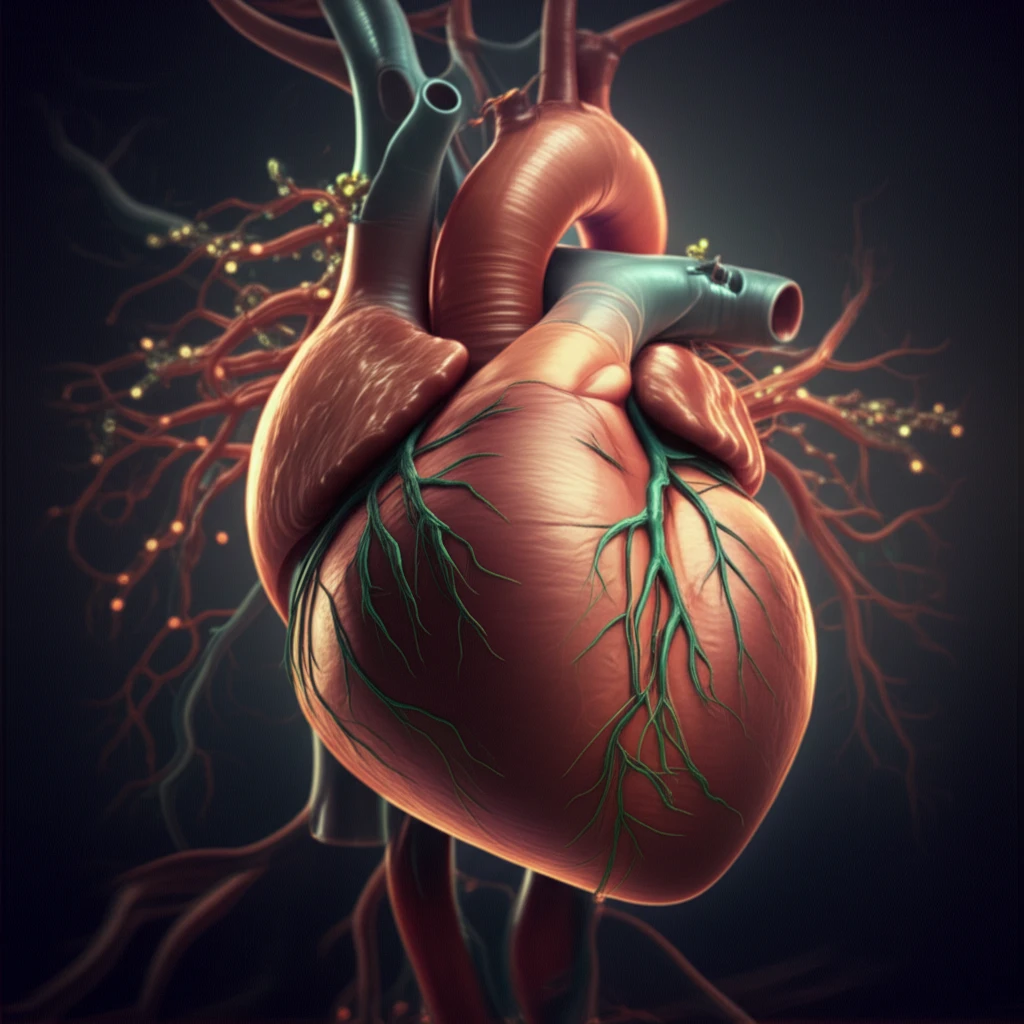
Digital illustration of a heart entwined with vines and capillaries, symbolizing cardiac repair and angiogenesis.

Healing Hearts: How Angiotensin 1-7 Could Revolutionize Cardiac Recovery After Heart Attacks

"Discover how the naturally occurring peptide Angiotensin 1-7 (Ang(1-7)) could promote cardiac repair and improve heart function post-infarction."


When a heart attack, or myocardial infarction (MI), strikes, the heart's battle to repair itself begins. This repair involves angiogenesis, the growth of new blood vessels, and inflammatory responses in the damaged heart tissue. This process helps maintain the heart's structural integrity and is vital for recovery. However, sometimes, the heart can remodel in ways that aren't helpful, leading to fibrosis (stiffening of tissue) and hypertrophy (enlargement) in the undamaged areas.

Scientists have been focusing on what controls this repair and remodeling. The renin-angiotensin system (RAS), a hormone system that regulates blood pressure and fluid balance, plays a significant role. Angiotensin II (AngII), a key player in the RAS, can stimulate processes that lead to repair but also remodeling. Recently, a new understanding of the RAS has emerged with the discovery of angiotensin-converting enzyme 2 (ACE2).

ACE2 generates Angiotensin (1-7) [Ang(1-7)], which interacts with Mas receptors to trigger protective cellular actions. Ang(1-7) has shown promise in countering issues such as apoptosis (cell death), fibrosis, and hypertrophy in the heart following an MI. In this article, we delve into how Ang(1-7) might regulate angiogenesis and improve heart function after a heart attack.

Ang(1-7): A Key to Cardiac Angiogenesis?

Digital illustration of a heart entwined with vines and capillaries, symbolizing cardiac repair and angiogenesis.

The study investigates whether Ang(1-7) regulates cardiac angiogenesis and contributes to cardiac repair. The research involved examining the expression of ACE2 and Mas receptors in rats post-MI, alongside administering a Mas receptor antagonist (A779) to assess Ang(1-7)'s role.

Here’s a breakdown of the key methods used in the study:

  • Creating an MI Model: Left ventricular anterior transmural MI was induced in female Sprague Dawley rats through permanent ligation of the left coronary artery.
  • Monitoring ACE2 and Mas Receptor Expression: The levels of ACE2 and Mas receptors in the heart tissue were tracked over time in both control and MI rats.
  • Administering A779: Some MI rats were treated with A779, a Mas receptor antagonist, to block the effects of Ang(1-7).
  • Assessing Vascular Density: The growth of new blood vessels in the infarcted area was quantified using CD31 staining, a marker for vascular endothelial cells.
  • Evaluating Cardiac Function: Echocardiography was performed to assess heart function, including left ventricular dimensions and fraction shortening.
  • Measuring Angiogenic Mediators: The expression of various factors involved in angiogenesis, such as VEGF-D and MMP-9, was measured using RT-PCR.
By employing these methods, the researchers aimed to elucidate the role of Ang(1-7) in promoting angiogenesis and improving cardiac function following MI. Now, let's dive into the outcomes and what they reveal.

What the Study Tells Us

The study reveals that Ang(1-7) promotes angiogenesis in the infarcted myocardium by stimulating the expression of VEGF-D and MMP-9. Blocking Mas receptors with A779 reduced vascular density and impaired ventricular function, highlighting the importance of Ang(1-7) signaling in cardiac repair. This suggests that Ang(1-7) could be a therapeutic target for improving cardiac function post-MI. More research is needed to fully understand the potential of Ang(1-7) in cardiac care.

About this Article -

This article was crafted using a human-AI hybrid and collaborative approach. AI assisted our team with initial drafting, research insights, identifying key questions, and image generation. Our human editors guided topic selection, defined the angle, structured the content, ensured factual accuracy and relevance, refined the tone, and conducted thorough editing to deliver helpful, high-quality information.See our About page for more information.

This article is based on research published under:

DOI-LINK: 10.2174/15701611113119990006, Alternate LINK

Title: Angiotensin 1-7 Promotes Cardiac Angiogenesis Following Infarction

Subject: Cardiology and Cardiovascular Medicine

Journal: Current Vascular Pharmacology

Publisher: Bentham Science Publishers Ltd.

Authors: Wenyuan Zhao, Tieqiang Zhao, Yuanjian Chen, Yao Sun

Published: 2015-03-03

Everything You Need To Know

1

What is Angiotensin 1-7 (Ang(1-7), and what role does it play in heart health?

Angiotensin 1-7 (Ang(1-7)) is a naturally occurring peptide that the body produces, specifically within the renin-angiotensin system (RAS). This system is a hormone system that plays a critical role in regulating blood pressure and fluid balance. In the context of cardiac health, Ang(1-7) has shown potential to promote cardiac repair after a myocardial infarction (MI), or heart attack, by stimulating blood vessel growth and reducing tissue damage.

2

Why is Angiotensin 1-7 (Ang(1-7) important for cardiac recovery after a heart attack?

After a heart attack, the heart attempts to repair itself, involving angiogenesis, the growth of new blood vessels, and inflammatory responses. Sometimes the heart can remodel in ways that aren't helpful, leading to fibrosis (stiffening of tissue) and hypertrophy (enlargement) in the undamaged areas. Ang(1-7) has been found to counteract these issues. The study demonstrated that Ang(1-7) promotes angiogenesis in the infarcted myocardium by stimulating the expression of VEGF-D and MMP-9. It also improved heart function after an MI by stimulating the growth of new blood vessels and reducing tissue damage.

3

What methods were used in the study to investigate Angiotensin 1-7 (Ang(1-7)?

The research used several key methods. First, a model of myocardial infarction (MI) was created in rats. Then, the expression of ACE2 and Mas receptors in the heart tissue was tracked over time. Some rats were treated with A779, a Mas receptor antagonist, to block Ang(1-7)'s effects. The growth of new blood vessels was quantified using CD31 staining, a marker for vascular endothelial cells. Echocardiography was performed to assess heart function, including left ventricular dimensions and fraction shortening, and the expression of angiogenic mediators such as VEGF-D and MMP-9 was measured.

4

What are the implications of the study's findings related to Angiotensin 1-7 (Ang(1-7) for cardiac care?

The study's findings are significant because they suggest that Ang(1-7) could be a potential therapeutic target for improving cardiac function after a heart attack. By stimulating angiogenesis and reducing tissue damage, Ang(1-7) can help improve the heart's ability to recover. However, more research is needed to fully understand the potential of Ang(1-7) in cardiac care and to explore its use in humans.

5

How does the renin-angiotensin system (RAS) and its components like Angiotensin II (AngII) and Angiotensin 1-7 (Ang(1-7) relate to heart health?

The renin-angiotensin system (RAS) is a hormone system that plays a critical role in regulating blood pressure and fluid balance. Angiotensin II (AngII), a key player in the RAS, can stimulate processes that lead to repair but also remodeling. The discovery of angiotensin-converting enzyme 2 (ACE2) shed new light on the RAS. ACE2 generates Angiotensin (1-7) [Ang(1-7)], which interacts with Mas receptors to trigger protective cellular actions. Ang(1-7) has shown promise in countering issues such as apoptosis (cell death), fibrosis, and hypertrophy in the heart following an MI.

Newsletter Subscribe

Subscribe to get the latest articles and insights directly in your inbox.