
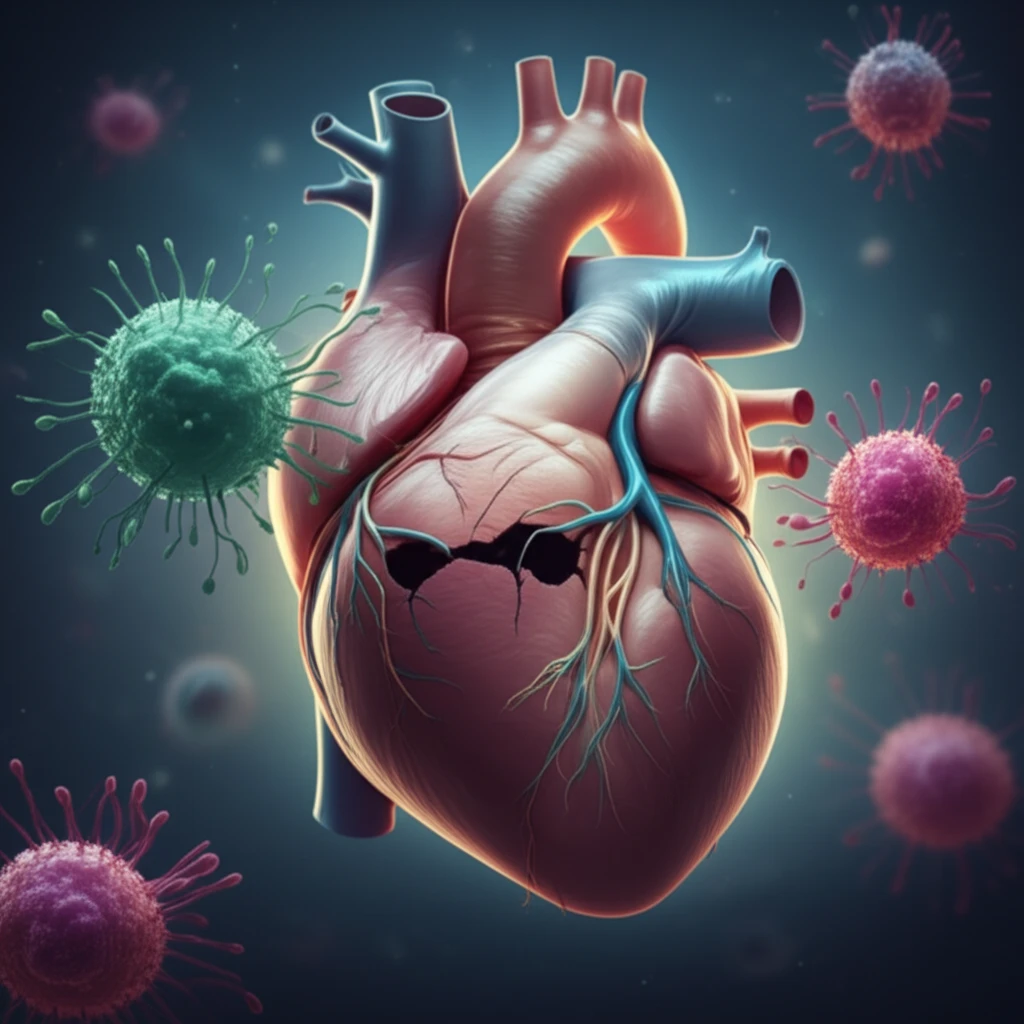
Microparticles repairing heart tissue, macrophage polarization

Healing Hearts: Can Nanotechnology Fix Damage After a Heart Attack?

"Discover how targeted drug delivery is revolutionizing cardiac care and offering new hope for recovery after myocardial infarction."


A heart attack, or acute myocardial infarction (AMI), initiates a complex healing process in the heart. While the body attempts to repair itself, this process can sometimes lead to adverse remodeling of the heart tissue, affecting its size, shape, and function. One major factor influencing this remodeling is inflammation, where immune cells like macrophages play a critical role.

Macrophages, essential for clearing debris and initiating repair, can adopt different phenotypes: some promote inflammation (pro-inflammatory), while others encourage tissue regeneration (anti-inflammatory). The balance between these types is crucial for effective healing. Recent research focuses on guiding macrophages toward the regenerative type to improve heart recovery.

Innovative therapies are now exploring the use of targeted drug delivery systems to modulate this inflammatory response. Neuregulin-1 (NRG1), a protein known for its regenerative properties, is being delivered via biodegradable microparticles directly to the damaged heart tissue. This method aims to reduce inflammation and enhance the heart’s natural ability to repair itself, paving the way for more effective treatments post-AMI.

How Do Neuregulin-1 Microparticles Promote Heart Repair?

Microparticles repairing heart tissue, macrophage polarization

Researchers have been investigating how Neuregulin-1 (NRG1) loaded into PLGA (poly(lactic-co-glycolic acid)) microparticles can influence macrophage polarization and promote cardiac repair after a heart attack. The goal is to shift the balance from harmful inflammation to constructive regeneration by delivering NRG1 directly to the affected heart tissue.

The study reveals that NRG1-loaded PLGA microparticles encourage macrophages to transform into a regenerative phenotype. This transformation is characterized by an increase in CD206+ cells, which are known for their anti-inflammatory and tissue-repairing actions, while simultaneously preventing the development of pro-inflammatory B7-2+ cells.

  • In Vitro Evidence: Laboratory tests showed that NRG1 microparticles directed macrophages toward becoming CD206+ cells, reducing the presence of inflammatory B7-2+ cells.
  • In Vivo Results: Animal studies confirmed that local delivery of NRG1 microparticles improved the ratio of CD206+ to B7-2+ cells in the heart tissue.
  • Timing is Flexible: Administering NRG1 microparticles at various times after a heart attack (15 minutes, 24 hours, 72 hours, and 168 hours) did not cause additional inflammatory problems, indicating a broad therapeutic window.
This targeted approach not only modulates the immune response but also supports the heart’s natural healing mechanisms, potentially leading to better outcomes after a heart attack. The ability to administer these microparticles at different times post-infarction provides clinicians with a flexible treatment strategy, enhancing the potential for successful cardiac repair.

The Future of Heart Attack Treatment

Targeted delivery of NRG1 via PLGA microparticles represents a promising strategy for enhancing heart repair after a heart attack. By modulating the immune response and promoting regenerative macrophage activity, this approach offers new hope for improving patient outcomes and reducing long-term heart damage. As research continues, these innovative therapies may become a vital part of cardiac care, providing more effective and less invasive treatments for heart disease.

About this Article -

This article was crafted using a human-AI hybrid and collaborative approach. AI assisted our team with initial drafting, research insights, identifying key questions, and image generation. Our human editors guided topic selection, defined the angle, structured the content, ensured factual accuracy and relevance, refined the tone, and conducted thorough editing to deliver helpful, high-quality information.See our About page for more information.

Everything You Need To Know

1

What happens to the heart after a heart attack?

Following a heart attack, the heart undergoes a healing process that, if not managed correctly, can result in adverse remodeling, affecting its size, shape, and function. Inflammation, involving immune cells like macrophages, plays a significant role in this remodeling. The balance between pro-inflammatory and anti-inflammatory macrophage types is crucial for effective healing. Therapies aim to guide macrophages toward the regenerative type to improve heart recovery.

2

What is Neuregulin-1 (NRG1) and how is it used to treat heart damage?

Neuregulin-1 (NRG1) is a protein known for its regenerative properties. When delivered via biodegradable PLGA (poly(lactic-co-glycolic acid)) microparticles directly to the damaged heart tissue, Neuregulin-1 aims to reduce inflammation and enhance the heart’s natural ability to repair itself. This targeted drug delivery system is designed to modulate the inflammatory response and promote cardiac repair after a heart attack, potentially leading to better outcomes.

3

How do Neuregulin-1 loaded PLGA microparticles promote heart repair?

PLGA microparticles loaded with Neuregulin-1 encourage macrophages to transform into a regenerative phenotype, increasing CD206+ cells that are known for their anti-inflammatory and tissue-repairing actions, while simultaneously preventing the development of pro-inflammatory B7-2+ cells. This modulation of the immune response supports the heart’s natural healing mechanisms, potentially leading to better outcomes after a heart attack.

4

Is timing important when using Neuregulin-1 microparticles after a heart attack?

The ability to administer Neuregulin-1 loaded PLGA microparticles at various times after a heart attack provides clinicians with a flexible treatment strategy. Research indicates that administering these microparticles at different times post-infarction does not cause additional inflammatory problems, indicating a broad therapeutic window. This timing flexibility enhances the potential for successful cardiac repair.

5

What does the future hold for using targeted drug delivery to treat heart attacks?

Targeted delivery of Neuregulin-1 via PLGA microparticles represents a promising strategy for enhancing heart repair after a heart attack. By modulating the immune response and promoting regenerative macrophage activity, this approach offers new hope for improving patient outcomes and reducing long-term heart damage. These innovative therapies may become a vital part of cardiac care, providing more effective and less invasive treatments for heart disease.

Newsletter Subscribe

Subscribe to get the latest articles and insights directly in your inbox.