
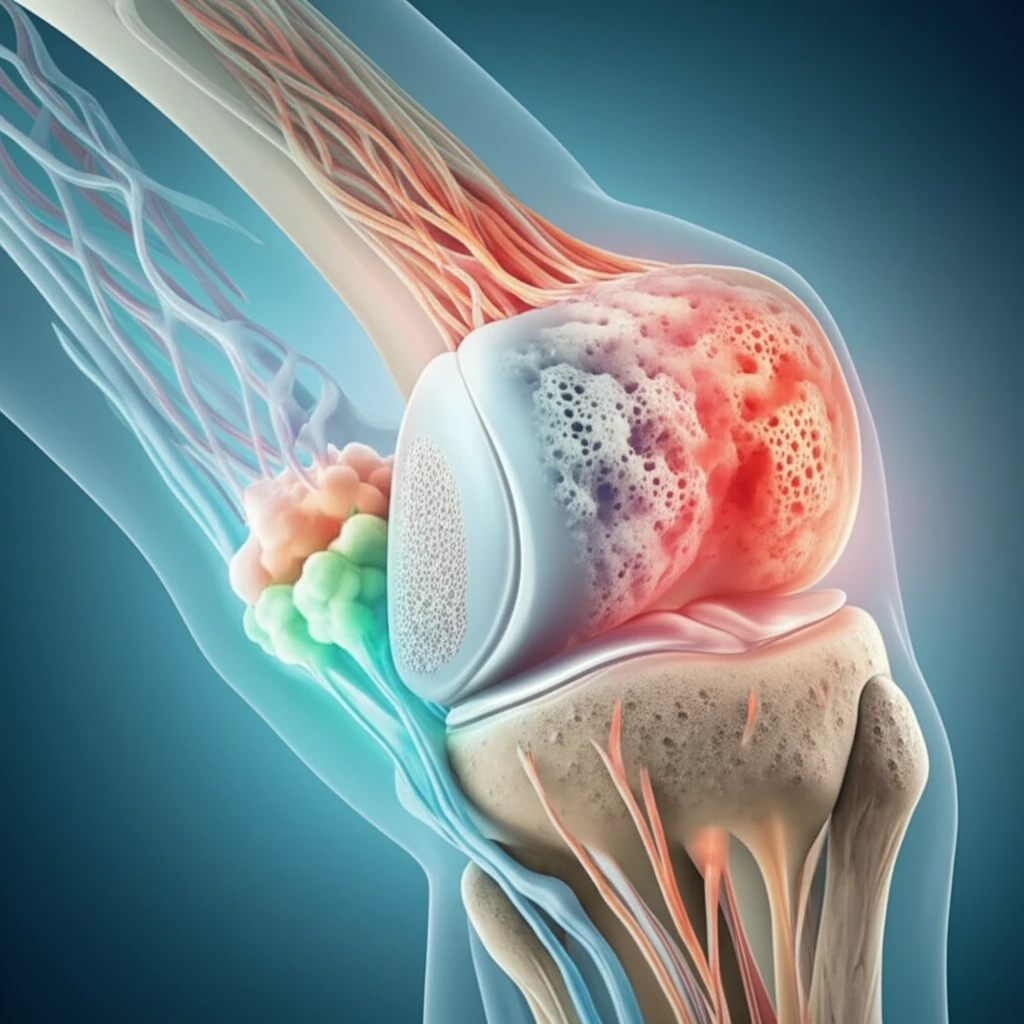
Bone marrow transforming into cartilage.

Healing from Within: How Bone Marrow Can Repair Cartilage Damage

"Discover the science behind using your body's own healing power to repair cartilage and get you back on your feet."


For those struggling with joint pain and cartilage injuries, a promising area of research has emerged: using bone marrow aspirate concentrate (BMAC) to stimulate healing from within. BMAC is a concentrated sample taken from your own bone marrow, rich in cells and growth factors that can aid in the repair and regeneration of damaged cartilage.

The appeal of BMAC lies in its potential to offer a cost-effective and less invasive alternative to traditional surgical interventions. Instead of relying on external materials or complex procedures, BMAC harnesses the body's natural healing capabilities to address cartilage defects.

But what exactly is BMAC, and how does it work? This article dives into the science behind BMAC, exploring its key components and the biological processes that make it a potential game-changer for those seeking relief from cartilage damage.

BMAC: Your Body's Repair Kit

Bone marrow transforming into cartilage.

Bone marrow aspirate concentrate is more than just a collection of cells; it's a complex cocktail of elements that work together to promote healing:

The composition of BMAC includes:

  • Mesenchymal Stem Cells (MSCs): These are like the body's construction crew, capable of transforming into various types of tissues, including cartilage.
  • Growth Factors: These are the signaling molecules that tell cells what to do. In BMAC, they encourage cell growth, reduce inflammation, and promote tissue repair. Key growth factors include:
    • Vascular Endothelial Growth Factor (VEGF)
    • Interleukin-8 (IL-8)
    • Transforming Growth Factor-B2 (TGF-B2)
    • Platelet Derived Growth Factor (PDGF)
  • Cytokines: These proteins regulate the immune response and can help to modulate inflammation and promote a healing environment.
The combination of these components creates a synergistic effect, where the whole is greater than the sum of its parts. MSCs provide the building blocks, growth factors provide the instructions, and cytokines help to manage the environment, all working in concert to regenerate damaged cartilage.

The Future of Healing is Here

BMAC represents an exciting frontier in regenerative medicine, offering a potential pathway to healing cartilage damage and alleviating joint pain. While further research is needed to optimize its use and fully understand its long-term effects, BMAC holds great promise for those seeking to harness their body's own healing power.

About this Article -

This article was crafted using a human-AI hybrid and collaborative approach. AI assisted our team with initial drafting, research insights, identifying key questions, and image generation. Our human editors guided topic selection, defined the angle, structured the content, ensured factual accuracy and relevance, refined the tone, and conducted thorough editing to deliver helpful, high-quality information.See our About page for more information.

This article is based on research published under:

DOI-LINK: 10.4081/or.2016.6659, Alternate LINK

Title: The Basic Science Of Bone Marrow Aspirate Concentrate In Chondral Injuries

Subject: Orthopedics and Sports Medicine

Journal: Orthopedic Reviews

Publisher: Open Medical Publishing

Authors: James Holton, Mohamed Imam, Jonathan Ward, Martyn Snow

Published: 2016-09-30

Everything You Need To Know

1

What is Bone Marrow Aspirate Concentrate (BMAC), and how does it differ from traditional treatments for cartilage damage?

BMAC, or Bone Marrow Aspirate Concentrate, is a concentrated sample extracted from a patient's own bone marrow. Unlike traditional treatments, which often involve external materials or invasive surgical procedures, BMAC harnesses the body's natural healing mechanisms. This means BMAC is rich in Mesenchymal Stem Cells (MSCs), growth factors (like VEGF, IL-8, TGF-B2, and PDGF), and cytokines, all working synergistically to repair and regenerate damaged cartilage from within. Traditional treatments might involve joint replacement, cartilage grafts, or other interventions that do not utilize the body's own regenerative capabilities as directly.

2

What specific components within BMAC contribute to cartilage repair, and how do they function?

BMAC is a complex mixture of cells and signaling molecules that work together to promote cartilage repair. The key components are: Mesenchymal Stem Cells (MSCs), Growth Factors, and Cytokines. MSCs are the building blocks, capable of differentiating into various tissues, including cartilage. Growth factors like VEGF, IL-8, TGF-B2, and PDGF, act as signaling molecules that instruct cells to grow, reduce inflammation, and promote tissue repair. Cytokines regulate the immune response and create a healing environment. The combination of these elements creates a synergistic effect, enhancing the overall regenerative process.

3

How do Mesenchymal Stem Cells (MSCs) contribute to the cartilage repair process when using BMAC?

Mesenchymal Stem Cells (MSCs) are a crucial element in the cartilage repair process using Bone Marrow Aspirate Concentrate (BMAC). MSCs are multipotent stem cells, meaning they have the ability to transform into various cell types. In the context of cartilage repair, MSCs can differentiate into chondrocytes, the specialized cells responsible for producing and maintaining cartilage. Therefore, MSCs provide the necessary building blocks for the regeneration of damaged cartilage tissue, effectively replacing or repairing damaged areas.

4

What are the potential benefits of using BMAC for cartilage repair compared to other treatment options, and are there any limitations or considerations?

The potential benefits of using Bone Marrow Aspirate Concentrate (BMAC) for cartilage repair include a less invasive procedure and harnessing the body's natural healing capabilities. Compared to traditional surgical interventions or artificial implants, BMAC is cost-effective and potentially reduces recovery time. However, limitations exist, including the need for further research to fully understand its long-term effects and optimize its use. Not all patients are suitable candidates, and the effectiveness may vary depending on the severity of the cartilage damage and individual health factors.

5

Can you explain the roles of the specific Growth Factors, such as VEGF, IL-8, TGF-B2, and PDGF, within the BMAC treatment?

Within Bone Marrow Aspirate Concentrate (BMAC), various growth factors play critical roles in promoting cartilage repair. Vascular Endothelial Growth Factor (VEGF) stimulates blood vessel formation, which is essential for delivering nutrients and removing waste products from the healing area. Interleukin-8 (IL-8) and Transforming Growth Factor-B2 (TGF-B2) help to regulate inflammation and promote tissue repair. Platelet Derived Growth Factor (PDGF) supports cell growth and the formation of new tissue. Together, these growth factors act as signaling molecules that direct cells to proliferate, differentiate, and contribute to the regeneration of damaged cartilage, modulating the environment for optimal healing.

Newsletter Subscribe

Subscribe to get the latest articles and insights directly in your inbox.