
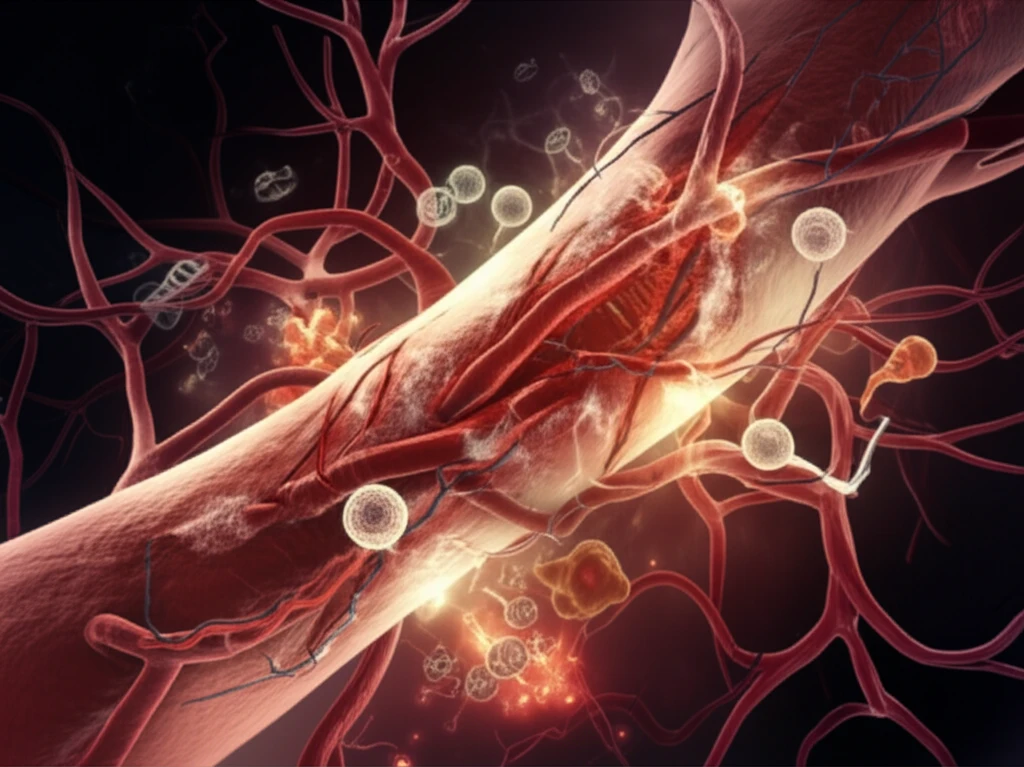
Glowing blood vessels symbolizing wound healing

Healing Breakthrough: How to Supercharge Your Body's Wound Repair System

"Unlock the secrets to faster, more effective wound healing with cutting-edge angiogenesis therapies"


For millennia, accelerating wound healing has been a primary goal of medicine. Chronic, non-healing wounds present a significant and costly medical challenge, often stemming from insufficient blood vessel growth (angiogenesis). Recent research is illuminating new pathways to stimulate this process and revolutionize wound care.

This article explores innovative treatments designed to promote angiogenesis, focusing on biologic, pharmaceutical, and cell-based therapies that enhance blood vessel formation and accelerate wound closure. We'll examine the challenges and advancements in each approach, offering insights into how these strategies can potentially transform the landscape of wound management.

Whether you're a healthcare professional, someone seeking solutions for a persistent wound, or simply interested in the future of regenerative medicine, understanding the latest in angiogenesis-enhancing therapies can empower you to make informed decisions about wound care.

Angiogenesis Unlocked: Therapeutic Strategies for Wound Healing

Glowing blood vessels symbolizing wound healing

Angiogenesis, the formation of new blood vessels from existing ones, is crucial for wound repair. It ensures adequate oxygen and nutrient supply to the damaged tissue, facilitating cell growth and tissue regeneration. When this process is impaired, as is often the case in diabetic ulcers and other chronic wounds, healing stalls.

Researchers are actively developing strategies to overcome these limitations and jumpstart angiogenesis. These approaches fall into several key categories:

  • Protein Therapies: Harnessing growth factors to directly stimulate blood vessel formation.
  • Gene and Nucleic Acid-Based Therapies: Using microRNAs and other genetic tools to modulate the expression of key angiogenic factors.
  • Drug and Drug-Like Compounds: Employing small molecules to promote angiogenesis and rescue impaired wound healing.
  • Stem Cell-Based Therapies: Utilizing the regenerative potential of stem cells to stimulate blood vessel growth and tissue repair.
Each of these strategies faces unique challenges and offers distinct advantages, which we will explore in detail.

The Future of Wound Healing: Personalized Angiogenesis Therapies

The diverse range of angiogenesis-enhancing strategies offers hope for more effective wound care, particularly for chronic and complex wounds that have been difficult to treat. However, there is no one-size-fits-all solution. The ideal approach may depend on the specific characteristics of the wound, the patient's underlying health conditions, and individual responses to therapy.

Future research is likely to focus on personalized approaches, tailoring angiogenesis therapies to the individual patient's needs. This could involve combining different strategies, optimizing delivery methods, and using diagnostic tools to monitor the effectiveness of treatment.

By continuing to unravel the complexities of angiogenesis and developing innovative therapeutic strategies, we can pave the way for a future where chronic wounds are effectively managed, and the body's natural healing potential is fully realized.

About this Article -

This article was crafted using a human-AI hybrid and collaborative approach. AI assisted our team with initial drafting, research insights, identifying key questions, and image generation. Our human editors guided topic selection, defined the angle, structured the content, ensured factual accuracy and relevance, refined the tone, and conducted thorough editing to deliver helpful, high-quality information.See our About page for more information.

This article is based on research published under:

DOI-LINK: 10.1016/j.addr.2018.09.010, Alternate LINK

Title: Therapeutic Strategies For Enhancing Angiogenesis In Wound Healing

Subject: Pharmaceutical Science

Journal: Advanced Drug Delivery Reviews

Publisher: Elsevier BV

Authors: Austin P. Veith, Kayla Henderson, Adrianne Spencer, Andrew D. Sligar, Aaron B. Baker

Published: 2019-06-01

Everything You Need To Know

1

What exactly is Angiogenesis, and why is it so important for healing?

Angiogenesis is the formation of new blood vessels from existing ones. This process is fundamental to wound healing because it delivers oxygen and nutrients essential for tissue repair and regeneration. Insufficient Angiogenesis can lead to chronic, non-healing wounds, highlighting its critical role in effective wound management.

2

What are the different types of therapies that are used to promote Angiogenesis?

The article discusses various therapeutic strategies designed to enhance Angiogenesis. These include protein therapies, gene and nucleic acid-based therapies, drug and drug-like compounds, and stem cell-based therapies. Each approach aims to stimulate blood vessel formation, thereby accelerating wound closure and improving healing outcomes.

3

Why is Angiogenesis particularly important for chronic wounds?

Chronic wounds, such as diabetic ulcers, often result from impaired Angiogenesis. Insufficient blood vessel growth deprives the damaged tissue of vital resources, hindering the healing process. Therapies that boost Angiogenesis are particularly important for these wounds, as they address the root cause of delayed healing, offering the potential to transform wound care.

4

Could you give more detail on the different types of therapeutic strategies?

Protein therapies involve using growth factors to directly promote blood vessel formation. Gene and nucleic acid-based therapies utilize genetic tools, like microRNAs, to modulate the expression of angiogenic factors. Drug and drug-like compounds employ small molecules to stimulate Angiogenesis. Finally, stem cell-based therapies leverage stem cells' regenerative potential to enhance blood vessel growth and tissue repair. Each method offers unique advantages and addresses specific challenges.

5

How are Angiogenesis therapies personalized for different patients?

The ideal approach to enhance Angiogenesis may vary based on the wound's characteristics, the patient's health, and their response to therapy. Personalized Angiogenesis therapies acknowledge that a one-size-fits-all solution is unlikely. Customizing treatments to meet individual needs promises to significantly improve wound care outcomes, especially for complex, chronic wounds.

Newsletter Subscribe

Subscribe to get the latest articles and insights directly in your inbox.