
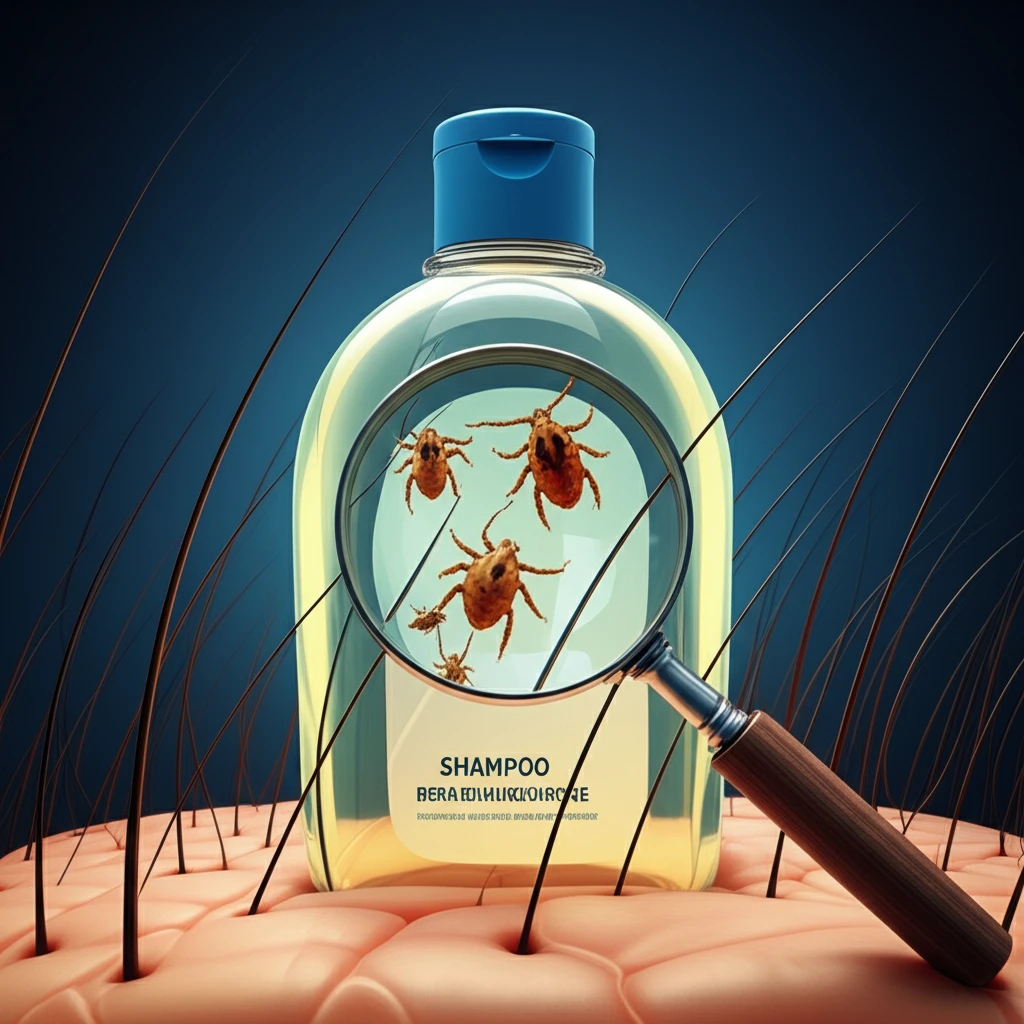
Illustration of a shampoo bottle and magnifying glass examining head lice.

Head Lice Showdown: Can a Common Shampoo Ingredient Really Beat These Pests?

"Unraveling the Truth Behind Cocamide DEA and Its Battle Against Head Lice"


Head lice. The very words can trigger an itch, not just on the scalp, but also in the mind. For parents and anyone who's ever experienced the unwelcome presence of these tiny, parasitic insects, the struggle to eradicate them is all too real. Over the years, a variety of treatments have emerged, promising relief, but how effective are they really? And what about the everyday ingredients lurking in our own bathrooms?.

One such ingredient is cocamide diethanolamine (cocamide DEA), a common surfactant found in many shampoos. This compound is designed to create a foamy lather and remove oils. But could this everyday element also be a secret weapon in the fight against head lice? A recent study delved into this question, and the findings offer a surprising look at the potential—and limitations—of using cocamide DEA to combat these persistent pests.

This article will explore the research, the science behind the treatment, and the practical implications for anyone dealing with head lice. We'll examine the study's methods, the outcomes, and what these results mean for future head lice treatments.

The Science Behind Cocamide DEA: What Makes it a Potential Lice Fighter?

Illustration of a shampoo bottle and magnifying glass examining head lice.

To understand the potential of cocamide DEA, it's important to know how head lice operate. These tiny insects feed on human blood and live close to the scalp, laying their eggs (nits) on hair shafts. Traditional treatments often involve insecticides, but the rise of insecticide resistance has made some of these less effective. This is where alternative approaches, like those using surfactants such as cocamide DEA, come into play.

Cocamide DEA, as a surfactant, works by disrupting the protective lipid layer on the lice's cuticle. This protective layer is crucial for maintaining the insect's hydration. By breaking down this layer, cocamide DEA can cause the lice to dehydrate and die. In theory, this makes it a promising candidate for an alternative treatment.

  • Disrupting the Cuticle: Cocamide DEA works by dissolving the protective lipid layer of the lice.
  • Dehydration: Once the protective layer is gone, the lice dehydrate.
  • A Surfactant Advantage: As a surfactant, it is designed to remove oils.
The study examined the effectiveness of a lotion containing 10% cocamide DEA. The researchers tested the lotion both in the lab and in clinical trials. The goal was to see if this common ingredient could effectively eliminate head lice infestations.

Looking Ahead: The Future of Head Lice Treatments

While the study's findings on cocamide DEA were somewhat underwhelming, the research underscores the need for continued investigation into safe and effective head lice treatments. As insecticide resistance continues to be a challenge, exploring alternative methods is vital. This study highlights the importance of rigorous scientific evaluation and the need to balance efficacy with safety when it comes to battling these persistent pests.

About this Article -

This article was crafted using a human-AI hybrid and collaborative approach. AI assisted our team with initial drafting, research insights, identifying key questions, and image generation. Our human editors guided topic selection, defined the angle, structured the content, ensured factual accuracy and relevance, refined the tone, and conducted thorough editing to deliver helpful, high-quality information.See our About page for more information.

This article is based on research published under:

DOI-LINK: 10.7717/peerj.1368, Alternate LINK

Title: Laboratory And Clinical Trials Of Cocamide Diethanolamine Lotion Against Head Lice

Subject: General Agricultural and Biological Sciences

Journal: PeerJ

Publisher: PeerJ

Authors: Ian F. Burgess, Elizabeth R. Brunton, Christine M. Brown

Published: 2015-11-03

Everything You Need To Know

1

What is cocamide DEA and why is it being explored as a treatment for head lice?

Cocamide diethanolamine, or cocamide DEA, is a surfactant commonly found in shampoos and other personal care products. It's being explored as a potential treatment for head lice because, as a surfactant, it can disrupt the protective lipid layer on the lice's cuticle, leading to dehydration and death. Traditional insecticide treatments are becoming less effective due to resistance, making alternative approaches like cocamide DEA important to investigate.

2

How does cocamide DEA work to kill head lice?

Cocamide DEA functions by dissolving the protective lipid layer that covers the lice's cuticle. This lipid layer is essential for maintaining the lice's hydration. Once this layer is compromised by cocamide DEA, the lice are no longer able to retain water and subsequently dehydrate, leading to their demise. The ability of cocamide DEA to remove oils contributes to its effectiveness as a lice treatment.

3

What did the study reveal about the effectiveness of cocamide DEA in treating head lice infestations?

The study examined a lotion containing 10% cocamide DEA, and while specific effectiveness results are not detailed, the research indicates that the findings regarding cocamide DEA were somewhat underwhelming. The study underscores the importance of rigorous scientific evaluation to balance efficacy with safety when it comes to battling these persistent pests. Further research is needed to determine its practical application as a reliable head lice treatment.

4

Why is insecticide resistance a concern when treating head lice, and how does cocamide DEA address this issue?

Insecticide resistance is a growing concern because head lice have evolved to become less susceptible to traditional treatments that rely on insecticides. This means that these treatments are becoming less effective over time. Cocamide DEA offers a different approach by targeting the lice's outer layer, the cuticle, rather than using neurotoxic insecticides. By disrupting the protective lipid layer, cocamide DEA offers an alternative method of eradicating lice that is not dependent on the same mechanisms as traditional insecticides, potentially circumventing the resistance issue. However, the study's findings on cocamide DEA were somewhat underwhelming.

5

Given the challenges in head lice treatment, what future research directions are recommended?

Given the ongoing challenges with head lice treatments, particularly the rise of insecticide resistance, it is crucial to continue exploring alternative methods. Future research should focus on novel compounds and approaches that disrupt the lice's physiology without relying on traditional insecticides. Additionally, there should be a focus on rigorous scientific evaluation to ensure that any new treatment is both effective and safe for use, especially considering the potential for adverse effects with any chemical application. Research into understanding the lice's cuticle structure and function could lead to more targeted and effective treatments.

Newsletter Subscribe

Subscribe to get the latest articles and insights directly in your inbox.