
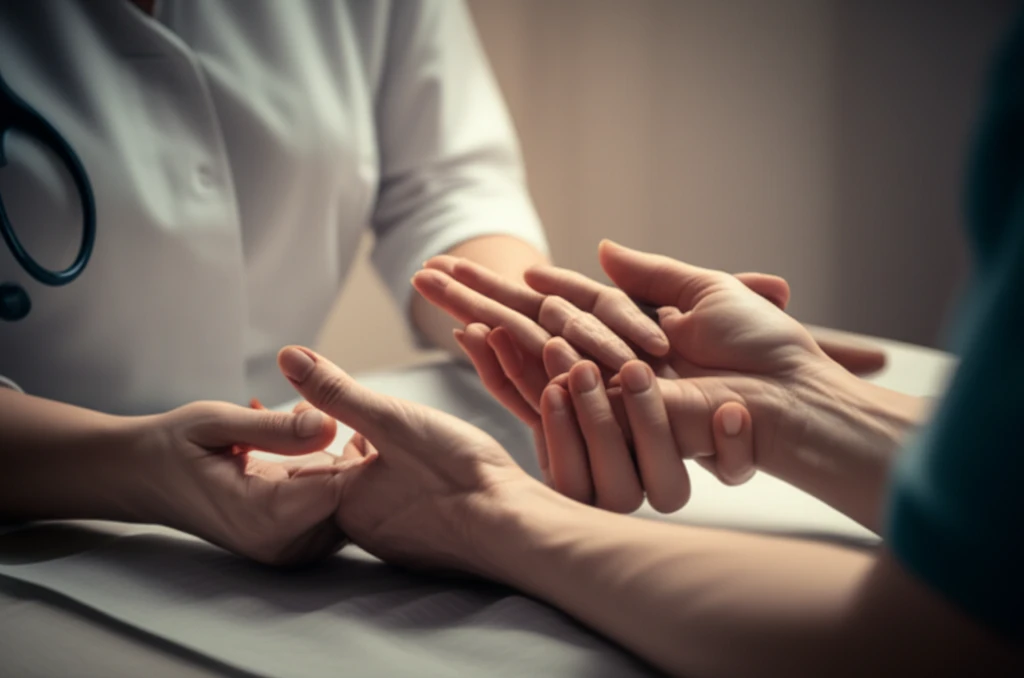
A hand therapist assisting a patient through flexor tendon rehabilitation, promoting healing and recovery.

Hand in Hand: Decoding Flexor Tendon Rehab for a Swift Recovery

"A therapist's perspective on restoring hand function after flexor tendon repair."


Flexor tendon injuries, though common, present a complex challenge in the world of hand rehabilitation. Successful recovery depends not only on a skillful surgical technique but also on the expertise of the therapist and the patient's commitment to the rehabilitation process. In South Africa, public sector therapists are at the forefront of this vital work, yet their perspectives and practices have not been widely explored. This article aims to bridge this gap, offering a comprehensive look at the strategies and challenges faced by therapists in the field.

This article explores the insights from a study that investigated the perspectives of public sector therapists involved in the rehabilitation of patients with flexor tendon repairs in South Africa. By comparing practices in urban and rural settings, the study sheds light on the nuances of hand therapy, highlighting the factors that influence treatment decisions and outcomes. The study emphasizes the importance of a team approach to patient care, highlighting the collaboration between surgeons and therapists.

Understanding the therapist's role is critical, as they are the frontline professionals guiding patients through the intricate process of regaining hand function. This article seeks to provide a valuable resource for patients, therapists, and healthcare professionals alike, by examining the key elements of hand therapy, the challenges encountered, and the strategies employed to ensure the best possible outcomes for patients with flexor tendon repairs.

Unveiling the Hand Therapist's World: Protocols, Challenges, and Success

A hand therapist assisting a patient through flexor tendon rehabilitation, promoting healing and recovery.

The core of successful hand therapy revolves around established protocols, the use of which can significantly impact the rehabilitation journey. Therapists often work closely with surgeons, choosing postoperative tendon management protocols to guide their approach. The study found that established protocols were used more commonly by therapists in tertiary and regional hospitals in the urban district, compared to their counterparts in rural district hospitals. The Modified Kleinert or Duran protocols are frequently used to guide clinical decisions, streamlining the process for therapists.

The journey to recovery isn't without its hurdles. Therapists face challenges such as patient compliance, the severity of the injury, and the risk of complications like adhesions. Moreover, they may feel apprehensive about managing hand injuries, which further highlights the need for robust protocols and ongoing support. The study showed therapists weren't always confident in managing repaired flexor tendons, especially in the rural settings. They often relied on established protocols and external factors when making key decisions about treatment.

  • Protocol Adherence: Therapists in urban health facilities often rely on established rehabilitation protocols more so than their rural counterparts.
  • Teamwork Dynamics: Collaboration between therapists and surgeons is a key aspect of care.
  • Outcome Measurement: The study indicated that the Strickland formula was not used as an outcome measure.
The initiation of therapy is another crucial element of hand rehabilitation. The decision to initiate therapy is often made collaboratively between the doctor and the therapist. The majority of therapists initiate rehabilitation between day one and day three after the repair, with a wide range of treatment frequencies. The frequency of therapy visits is primarily decided by the therapist, though doctors' input is also valued. This highlights the importance of open communication and shared decision-making between all healthcare professionals involved.

The Road Ahead: Improving Hand Rehabilitation for Better Patient Outcomes

In conclusion, this study highlights the crucial role therapists play in the rehabilitation of flexor tendon injuries. The findings underscore the need for standardized care through the use of selected protocols, especially in rural healthcare facilities. The study emphasizes the importance of teamwork, established protocols, and continuous professional development in optimizing patient outcomes. As research continues and practices evolve, a collaborative approach between all stakeholders will pave the way for improved hand function and enhanced quality of life for patients undergoing flexor tendon repairs.

About this Article -

This article was crafted using a human-AI hybrid and collaborative approach. AI assisted our team with initial drafting, research insights, identifying key questions, and image generation. Our human editors guided topic selection, defined the angle, structured the content, ensured factual accuracy and relevance, refined the tone, and conducted thorough editing to deliver helpful, high-quality information.See our About page for more information.

This article is based on research published under:

DOI-LINK: 10.4102/sajp.v70i2.270, Alternate LINK

Title: Rehabilitation Of Repaired Flexor Tendons Of The Hand: Therapists' Perspective

Subject: Physical Therapy, Sports Therapy and Rehabilitation

Journal: South African Journal of Physiotherapy

Publisher: AOSIS

Authors: N.M. Mncube, T. Puckree

Published: 2014-12-12

Everything You Need To Know

1

What role do hand therapists play in restoring hand function after flexor tendon repair, particularly in a South African context?

Hand therapists are crucial in guiding patients through the complex rehabilitation process after flexor tendon repair. In South Africa, particularly in the public sector, therapists work to restore hand function using various strategies and protocols. The perspectives of these therapists, especially when comparing urban and rural approaches, provide insights into successful rehabilitation, including teamwork with surgeons and adapting protocols like the Modified Kleinert or Duran protocols to different settings. They help patients regain hand function and enhance their quality of life. Factors such as the severity of the injury, patient compliance, and the risk of complications like adhesions influence their approach.

2

How do urban and rural hand therapy practices differ in South Africa concerning flexor tendon rehabilitation, and what factors contribute to these differences?

Urban and rural hand therapy practices in South Africa differ primarily in the utilization of established rehabilitation protocols. Therapists in urban tertiary and regional hospitals tend to rely more on protocols like the Modified Kleinert or Duran protocols compared to their rural counterparts. This difference may arise from variations in resources, support, and continuous professional development opportunities. Rural therapists may experience a lack of confidence in managing repaired flexor tendons and may rely more on external factors when making treatment decisions, highlighting the need for standardized care through selected protocols in rural healthcare facilities.

3

Which specific protocols are frequently used in hand therapy for flexor tendon repairs, and how do they aid in the rehabilitation process?

The Modified Kleinert protocol and the Duran protocol are frequently utilized in hand therapy for flexor tendon repairs. These protocols offer structured guidelines for therapists, aiding in streamlining the rehabilitation process. They help therapists make informed clinical decisions and manage patient care effectively. These protocols also help therapists address challenges such as patient compliance and complications like adhesions. The Strickland formula, however, was not used as an outcome measure according to the study.

4

What challenges do hand therapists face during flexor tendon rehabilitation, and how do these challenges impact patient outcomes?

Hand therapists face several challenges during flexor tendon rehabilitation, including patient compliance, the severity of the injury, and the risk of complications like adhesions. Additionally, therapists, especially in rural settings, may feel apprehensive about managing hand injuries due to limited resources and support. These challenges can impact patient outcomes by potentially slowing down the rehabilitation process and affecting the extent of functional recovery. Addressing these challenges requires robust protocols, ongoing professional development, and enhanced teamwork between therapists and surgeons.

5

How crucial is the collaboration between surgeons and therapists in flexor tendon rehabilitation, and how does teamwork contribute to improved patient outcomes?

Collaboration between surgeons and therapists is vital in flexor tendon rehabilitation. A team approach ensures comprehensive patient care, from the initial surgical repair to the subsequent therapy sessions. Open communication and shared decision-making between healthcare professionals lead to better-informed treatment plans and improved patient outcomes. For example, the decision to initiate therapy is often made collaboratively, with both doctors and therapists contributing their expertise. Teamwork dynamics also help in choosing appropriate postoperative tendon management protocols and addressing potential complications, ultimately enhancing hand function and quality of life for patients.

Newsletter Subscribe

Subscribe to get the latest articles and insights directly in your inbox.