
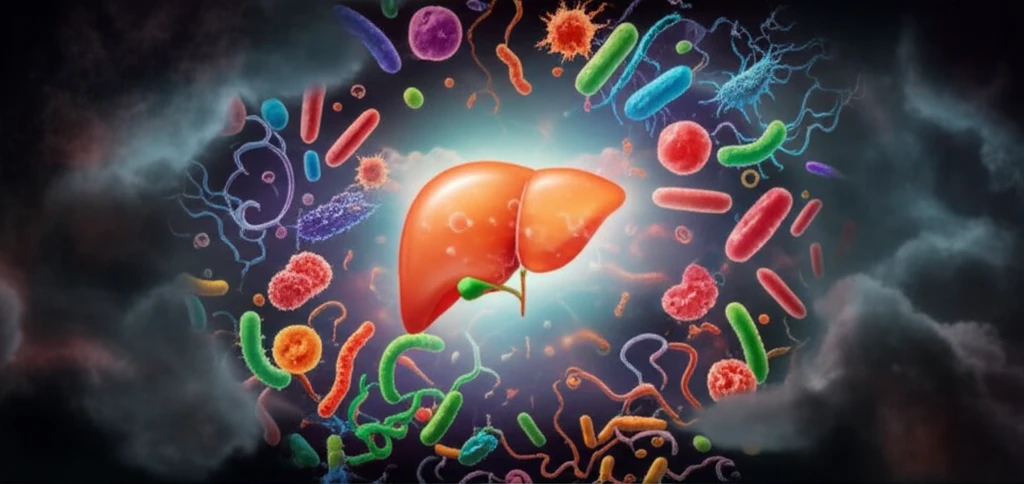
Healthy gut microbiome protecting the liver.

Gut Health SOS: How Your Microbiome Can Trigger Fatty Liver Disease

"Uncover the hidden link between gut bacteria, diet, and the rise of nonalcoholic steatohepatitis (NASH). Learn how to protect your liver through microbiome balance."


Nonalcoholic steatohepatitis (NASH), a severe form of nonalcoholic fatty liver disease (NAFLD), is rapidly becoming a global health crisis. Characterized by liver inflammation and damage in individuals who consume little to no alcohol, NASH can progress to cirrhosis, liver failure, and even liver cancer. With no approved pharmacological treatments currently available, understanding the root causes and potential preventative measures is critical.

Emerging research highlights the pivotal role of the gut microbiome—the complex community of bacteria, fungi, viruses, and other microorganisms residing in our digestive tract—in the development and progression of NASH. An imbalanced gut microbiome, known as dysbiosis, can trigger a cascade of events that negatively impact liver health. But the exact mechanisms and how they evolve over time have remained unclear… until now.

A new study published in the World Journal of Gastroenterology sheds light on the dynamic interplay between gut microbiota, metabolism, and the onset of NASH. By examining the gut microbiome and metabolic profiles of mice fed a methionine-choline-deficient (MCD) diet, researchers have uncovered crucial insights into how dietary imbalances can disrupt gut health and lead to liver damage. Let's dive into the key findings and what they mean for you.

What's the Gut-Liver Connection?

Healthy gut microbiome protecting the liver.

The gut and liver are connected through the "gut-liver axis", a close two-way link that involves the flow of blood and other chemicals. The liver gets a lot of blood directly from the intestines. This means that what happens in the gut has a big effect on the liver's health. When the gut's bacteria are out of balance, bad things can leak into the liver. This can lead to inflammation and liver damage.

Researchers explored how a methionine-choline deficient (MCD) diet affects the gut microbiome and overall health, noting specific findings when a disrupted the gut bacteria leads to NASH:

  • Liver Damage: Mice on the MCD diet showed signs of liver damage, starting with simple steatosis (fatty liver) at 2 weeks and progressing to NASH with fibrosis (scarring) at 4 weeks.
  • Gut Imbalance: The MCD diet caused significant changes in the gut microbiome. Certain beneficial bacteria decreased, while harmful ones increased.
  • Metabolic Changes: The MCD diet also altered the levels of various metabolites (small molecules produced by metabolism) in the gut. Some of these changes were linked to liver damage.
These changes highlight how diet-induced gut dysbiosis can drive the development of NASH. By identifying specific bacterial shifts and metabolic alterations, the study offers potential targets for therapeutic intervention.

What Can You Do?

While the study was performed on mice, the findings have significant implications for human health. Understanding the link between gut health and NASH empowers you to take proactive steps to protect your liver. Consulting with healthcare providers about diet, prebiotics and probiotics may be helpful to slow, stop, or even reverse NASH.

About this Article -

This article was crafted using a human-AI hybrid and collaborative approach. AI assisted our team with initial drafting, research insights, identifying key questions, and image generation. Our human editors guided topic selection, defined the angle, structured the content, ensured factual accuracy and relevance, refined the tone, and conducted thorough editing to deliver helpful, high-quality information.See our About page for more information.

This article is based on research published under:

DOI-LINK: 10.3748/wjg.v24.i23.2468, Alternate LINK

Title: Dynamic Alterations In The Gut Microbiota And Metabolome During The Development Of Methionine-Choline-Deficient Diet-Induced Nonalcoholic Steatohepatitis

Subject: Gastroenterology

Journal: World Journal of Gastroenterology

Publisher: Baishideng Publishing Group Inc.

Authors: Jian-Zhong Ye, Ya-Ting Li, Wen-Rui Wu, Ding Shi, Dai-Qiong Fang, Li-Ya Yang, Xiao-Yuan Bian, Jing-Jing Wu, Qing Wang, Xian-Wan Jiang, Cong-Gao Peng, Wan-Chun Ye, Peng-Cheng Xia, Lan-Juan Li

Published: 2018-06-21

Everything You Need To Know

1

What exactly is nonalcoholic steatohepatitis (NASH), and why should I be concerned about it?

Nonalcoholic steatohepatitis (NASH) is a severe form of nonalcoholic fatty liver disease (NAFLD). NASH is characterized by liver inflammation and damage, even in people who don't drink much alcohol. It's a serious condition because it can lead to cirrhosis, liver failure, and even liver cancer. Currently, there aren't any approved medications specifically for NASH, making prevention and understanding the root causes very important.

2

What is the gut microbiome, and why is it so important for my liver's health?

The gut microbiome refers to the vast community of bacteria, fungi, viruses, and other microorganisms that live in your digestive tract. It plays a crucial role in your overall health, including liver health. An imbalance in the gut microbiome, called dysbiosis, can trigger events that negatively affect the liver. This is significant because the gut and liver are connected through the gut-liver axis, where substances from the gut can directly impact the liver's condition.

3

I keep hearing about the 'gut-liver axis.' What is it, and how does it affect my liver?

The gut-liver axis is the close, two-way connection between the gut and the liver. The liver receives a large amount of blood directly from the intestines, meaning that what happens in the gut can significantly affect the liver. When the gut's bacteria are out of balance (dysbiosis), harmful substances can leak into the liver, leading to inflammation and damage. This connection highlights the importance of maintaining a healthy gut to protect the liver.

4

What is a methionine-choline deficient (MCD) diet, and how does it relate to liver disease?

A methionine-choline deficient (MCD) diet is a diet lacking in the nutrients methionine and choline. When mice were fed an MCD diet, researchers observed liver damage, starting with simple steatosis (fatty liver) and progressing to NASH with fibrosis (scarring). The MCD diet also caused significant changes in the gut microbiome, decreasing beneficial bacteria and increasing harmful ones, as well as altering the levels of various metabolites in the gut. This is important because it shows how dietary imbalances can lead to gut dysbiosis and drive the development of NASH.

5

What does 'dysbiosis' mean, and why is it important in the context of gut and liver health?

Dysbiosis is an imbalance in the gut microbiome, where there's a decrease in beneficial bacteria and an increase in harmful ones. Dysbiosis is significant because it can trigger a cascade of events that negatively impact liver health, potentially leading to conditions like NASH. Factors like diet, medications, and lifestyle can influence the balance of the gut microbiome. Correcting dysbiosis through diet, prebiotics, or probiotics may help slow, stop, or even reverse NASH.

Newsletter Subscribe

Subscribe to get the latest articles and insights directly in your inbox.