
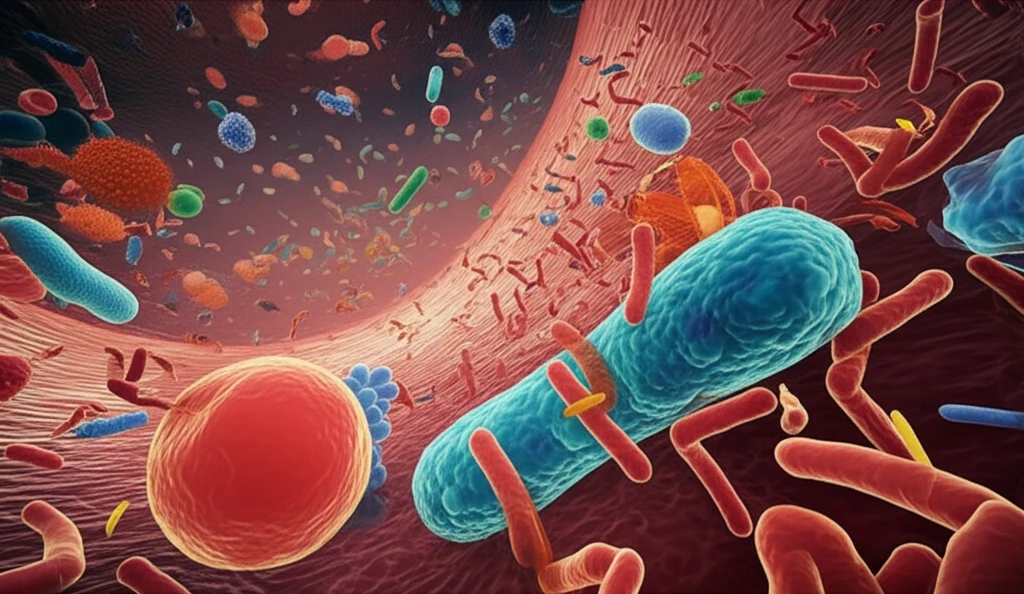
Healthy gut with protective probiotics combating Salmonella.

Gut Guardians: How Probiotics Can Protect You From Salmonella

"Unlock the secrets of Lactobacillus plantarum DM 69 and its powerful ability to combat Salmonella infections, naturally."


Gastrointestinal infections are a widespread global health issue, and the search for effective solutions is constant. Probiotics, particularly Lactobacillus species, have emerged as promising contenders in the fight against these infections. These beneficial bacteria offer a natural way to control infections and enhance gut health. The key to their effectiveness lies in their ability to colonize the gut and adhere to the intestinal lining, preventing harmful pathogens from taking hold.

Researchers have been diving deep into understanding how probiotics work, specifically focusing on their colonization and adherence properties. By studying these mechanisms, scientists aim to harness the full potential of probiotics to combat various infections. One standout probiotic is Lactobacillus plantarum DM 69, which has shown remarkable promise in fighting Salmonella enterica, a common cause of foodborne illnesses. The exploration of its properties has opened new avenues for natural health solutions.

This article explores the exciting research surrounding Lactobacillus plantarum DM 69 and its potential as a natural defense against Salmonella. We'll break down the science, highlight the key findings, and explain how this probiotic can help you maintain a healthy gut and protect yourself from harmful infections. Perfect for those looking to improve their health naturally.

Lactobacillus plantarum DM 69: A Probiotic Powerhouse

Healthy gut with protective probiotics combating Salmonella.

Lactobacillus plantarum DM 69, a probiotic strain that exhibits unique properties making it an effective tool against Salmonella. It all starts with strong colonization capabilities. This probiotic has a strong hydrophobic property, ensuring that it effectively adheres to the intestinal lining. This adhesion is the first critical step in preventing pathogenic bacteria like Salmonella from colonizing the gut.

Beyond just sticking around, Lactobacillus plantarum DM 69 also exhibits impressive aggregation abilities. This means it can form clusters, creating a barrier that further protects the gut lining from harmful invaders. The probiotic strain forms a barrier or biofilm which provides a protective shield to the host system and prevents the colonization of pathogenic microorganisms. Its ability to aggregate and prevent biofilm formation contributes significantly to gut health and overall wellness.

  • Strong Hydrophobicity: Ensures effective adhesion to the intestinal lining.
  • High Self-Aggregation: Forms clusters to create a protective barrier.
  • Low Co-Aggregation with Pathogens: Prevents biofilm formation and minimizes pathogen colonization.
  • Broad-Spectrum Antimicrobial Activity: Fights against S. enterica and other harmful bacteria.
Another key aspect of Lactobacillus plantarum DM 69 is its antimicrobial properties. Research shows that it produces compounds that can directly inhibit the growth of Salmonella and other harmful bacteria. By understanding these mechanisms, scientists hope to develop even more effective probiotic-based strategies for preventing and treating infections.

Embracing Probiotics for a Healthier Future

The research on Lactobacillus plantarum DM 69 highlights the potential of probiotics as a natural and effective way to combat infections and promote gut health. With its strong colonization abilities, aggregation properties, and antimicrobial activity, this probiotic offers a promising defense against Salmonella and other harmful bacteria. As we continue to explore the benefits of probiotics, incorporating them into our daily routines could be a simple yet powerful step towards a healthier future.

About this Article -

This article was crafted using a human-AI hybrid and collaborative approach. AI assisted our team with initial drafting, research insights, identifying key questions, and image generation. Our human editors guided topic selection, defined the angle, structured the content, ensured factual accuracy and relevance, refined the tone, and conducted thorough editing to deliver helpful, high-quality information.See our About page for more information.

Everything You Need To Know

1

What exactly is Lactobacillus plantarum DM 69, and how does it work to protect against infections?

Lactobacillus plantarum DM 69 is a specific strain of probiotic bacteria known for its ability to combat Salmonella infections. It works by effectively colonizing the gut, adhering strongly to the intestinal lining, and preventing harmful pathogens like Salmonella from establishing themselves. This probiotic also exhibits aggregation abilities, forming clusters that create a protective barrier. Its antimicrobial properties further inhibit the growth of harmful bacteria. These combined mechanisms make it a potent tool for enhancing gut health and preventing infections. The strain's hydrophobic qualities also allow it to adhere effectively to the intestinal walls.

2

Why are colonization and adherence properties so important for Lactobacillus plantarum DM 69 to be effective?

The effectiveness of Lactobacillus plantarum DM 69 lies in its strong colonization and adherence properties within the gut. This is important because its ability to stick to the intestinal lining prevents harmful pathogens like Salmonella from taking hold. Additionally, its aggregation properties allow it to form protective barriers. This colonization is key to maintaining a healthy balance of gut bacteria and preventing infections. Furthermore, the antimicrobial activity directly inhibits the growth of pathogens. Without colonization and adhesion, the probiotic would simply pass through the digestive system without providing any benefit.

3

What are the key characteristics that make Lactobacillus plantarum DM 69 so effective against Salmonella?

Lactobacillus plantarum DM 69 possesses strong hydrophobic properties, high self-aggregation, low co-aggregation with pathogens, and broad-spectrum antimicrobial activity. Its strong hydrophobicity ensures effective adhesion to the intestinal lining. High self-aggregation allows it to form clusters, creating a robust protective barrier. Low co-aggregation with pathogens prevents biofilm formation, minimizing pathogen colonization. The broad-spectrum antimicrobial activity enables it to fight against S. enterica and other harmful bacteria. The combination of these properties contributes to its effectiveness in promoting gut health.

4

Why are probiotics like Lactobacillus plantarum DM 69 being researched as a way to fight infections, and what are the implications?

Probiotics, like Lactobacillus plantarum DM 69, are being explored as a natural and effective way to combat infections and promote gut health. They offer a way to control infections and enhance overall wellness by colonizing the gut and preventing harmful pathogens from thriving. The significance lies in providing a natural alternative or complement to traditional medical treatments, potentially reducing the reliance on antibiotics. The implications of using probiotics include a reduced risk of antibiotic resistance and a more holistic approach to managing gastrointestinal health.

5

What is Salmonella enterica and why is it dangerous?

Salmonella enterica is a common cause of foodborne illnesses. This bacterium is dangerous because it can cause a range of gastrointestinal symptoms, including diarrhea, fever, and abdominal cramps. If left untreated, Salmonella infections can lead to more severe complications, especially in vulnerable populations like young children, the elderly, and individuals with compromised immune systems. Lactobacillus plantarum DM 69 offers a natural defense against Salmonella by inhibiting its growth and preventing it from colonizing the gut. This reduces the risk of infection and supports overall gut health.

Newsletter Subscribe

Subscribe to get the latest articles and insights directly in your inbox.