
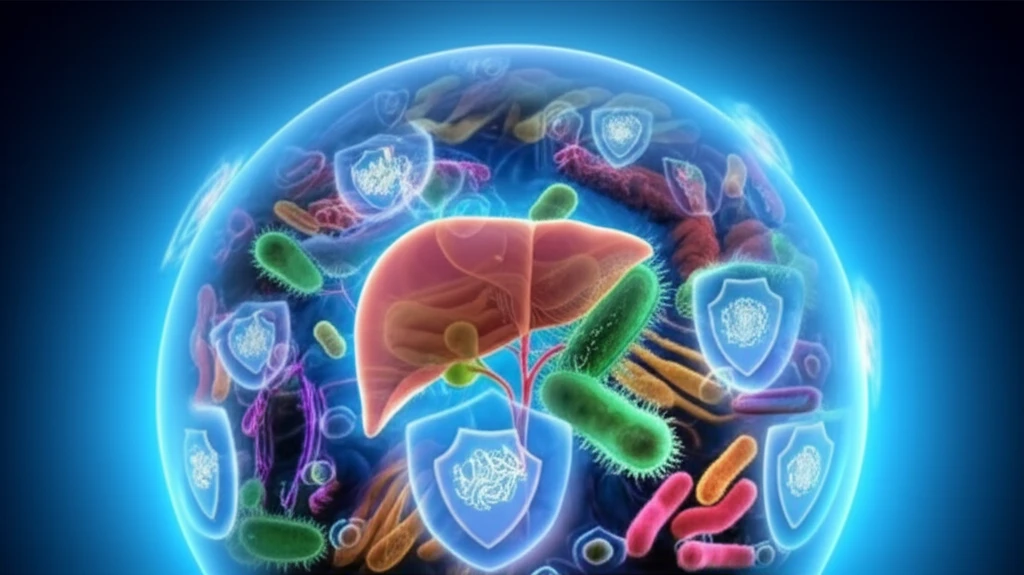
Gut Guardians: How Antimicrobial Proteins Protect Your Liver

"Discover the crucial role of antimicrobial proteins in maintaining gut health and preventing liver disease."
The gastrointestinal tract is more than just a digestive system; it's a vast ecosystem teeming with trillions of bacteria, both beneficial and harmful. This complex community, known as the gut microbiota, plays a pivotal role in human health, influencing everything from immunity to metabolism. When this delicate balance is disrupted, a condition known as dysbiosis occurs, paving the way for various health problems, including liver disease.
Dysbiosis can compromise the integrity of the intestinal barrier, leading to increased permeability or 'leaky gut.' This allows bacteria and their byproducts to escape the gut and enter the bloodstream, triggering inflammation and potentially damaging distant organs, particularly the liver. To prevent this, the gut relies on a sophisticated defense system that includes antimicrobial proteins (AMPs).
Antimicrobial proteins are natural substances produced in the gastrointestinal tract that help to maintain a healthy balance of gut bacteria by neutralizing harmful bacteria. In this article, we’ll explore the importance of AMPs in protecting against liver disease, focusing on conditions like alcoholic steatohepatitis, non-alcoholic fatty liver disease (NAFLD), and cirrhosis. We'll also discuss strategies for enhancing AMP function to promote gut and liver health.
What are Antimicrobial Proteins (AMPs) and How Do They Work?
The surface of your intestine is continuously exposed to a variety of microorganisms. To combat these constant challenges, the body produces AMPs. These proteins work by attacking the basic cell structures of bacteria through both enzymatic and non-enzymatic mechanisms, effectively neutralizing harmful bacteria.
- Defensins: Act like natural antibiotics, disrupting bacterial membranes.
- Cathelicidins: Interfere with bacterial cell walls and membranes.
- C-type lectins (like the REG family): Recognize and bind to specific carbohydrates on the surface of microorganisms, helping to control bacterial populations.
- Ribonucleases (RNases): Degrade RNA, which is essential for bacterial survival.
- S100 proteins: Have antimicrobial and regulatory functions, modulating immune responses.
The Future of Liver Health: Targeting AMPs
The connection between gut health and liver health is undeniable, and AMPs play a crucial role in maintaining this delicate balance. By understanding how dysbiosis, bacterial translocation, and antimicrobial deficiencies contribute to liver disease, we can explore new strategies for prevention and treatment. Future research should focus on how to modulate AMP function, potentially through dietary interventions, prebiotics, probiotics, or targeted therapies, to improve gut health and protect the liver.