
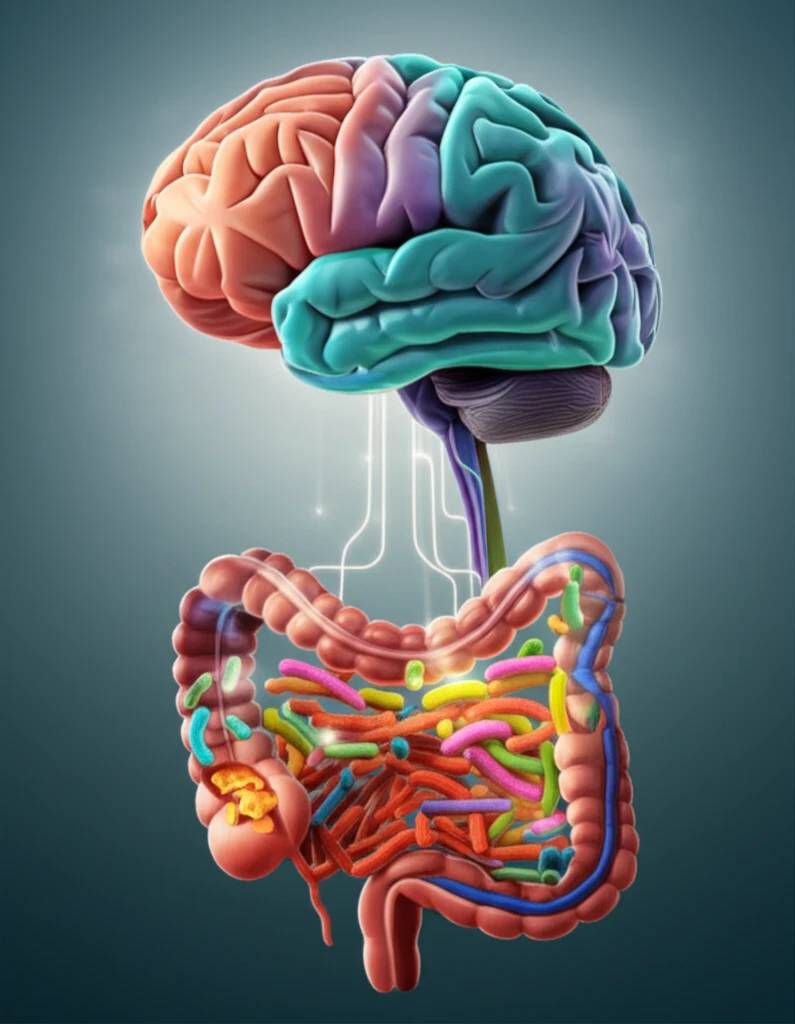
Gut Feelings: Can Your Microbiome Explain Depression?

"New research explores the link between gut bacteria and depressive-like behavior, offering potential insights into future treatments."
The connection between the gut and the brain is increasingly recognized as a key factor in mental health. Research has shown that individuals with depression often have different gut microbiota compositions compared to healthy individuals, sparking interest in treatments aimed at restoring a healthy gut balance. Understanding this complex relationship could pave the way for innovative approaches to mental health care.
To explore this connection, researchers have been investigating animal models of depression. One such model is the Flinders Sensitive Line (FSL) rat, which exhibits depressive-like behaviors. By studying the gut microbiota of these rats and comparing them to their non-depressed counterparts, the Flinders Resistant Line (FRL) rats, scientists hope to uncover specific microbial differences that contribute to depression.
This article dives into a recent study that characterized the gut microbiota of FSL rats and investigated the effects of fecal microbiota transplantation (FMT). The goal was to determine if the unique microbial composition of FSL rats could be transferred to FRL rats, and whether this would influence their behavior in tests designed to measure depressive-like symptoms. Ultimately, this research aims to provide a foundation for future microbiota-targeted interventions for depression.
Decoding the Gut-Depression Connection: What the Study Revealed
The study began by comparing the gut microbiota of adult male FSL and FRL rats. Using 16S rRNA amplicon sequencing, a method for identifying and quantifying different types of bacteria, the researchers found that FSL rats tended to have lower bacterial richness and altered relative abundances of several bacterial groups compared to FRL rats.
- Higher levels of Proteobacteria in FSL rats, a group often associated with inflammation.
- Lower levels of Elusimicrobia and Saccharibacteria in FSL rats.
The Future of Microbiota-Targeted Therapies
While this study provides valuable insights into the gut microbiota composition of a rat model of depression, it also highlights the complexity of the gut-brain connection. The fecal microbiota transplantation, while altering the gut environment, did not fully reverse the depressive-like behaviors in the FSL rats.
This suggests that other factors, beyond just the bacterial composition, may be at play. These could include the presence of other microorganisms (archaea, fungi, viruses), metabolites produced by the bacteria, or even the host's own genetics and immune response.
Future research should focus on further elucidating the functional roles of these strain-characteristic microbiota and exploring other animal models of depression to confirm and expand upon these findings. Understanding the intricate interplay between the gut microbiota and the brain could unlock new avenues for treating depression and other mental health disorders through targeted microbiota interventions.