
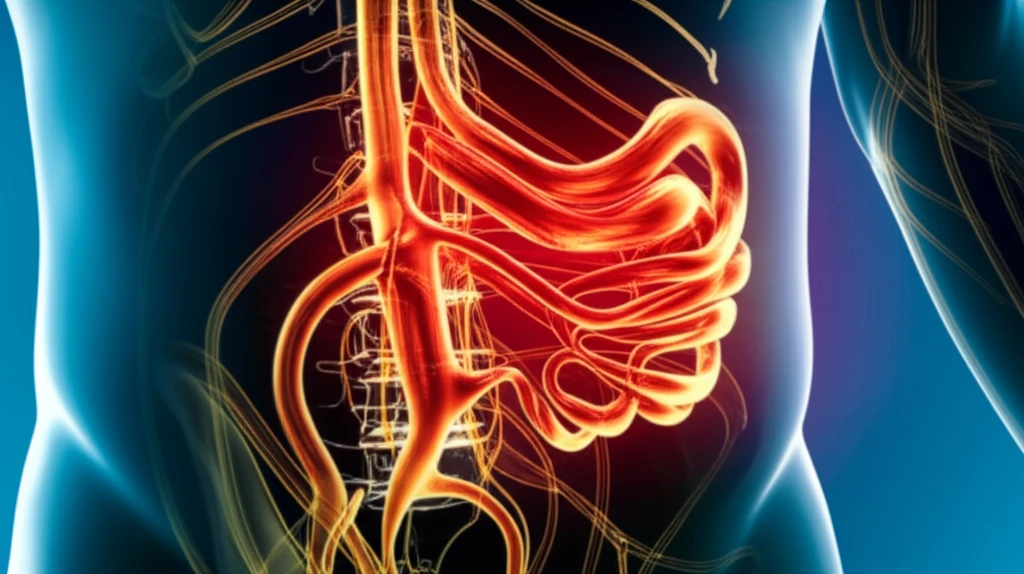
Gut Feeling Gone Wrong: How Abdominal Pressure Can Pinch Your Nerves

"Exploring the link between intra-abdominal hypertension (IAH) and genitofemoral nerve function."
That nagging pain after a heavy lifting session or the odd discomfort during travel might have a surprising culprit: increased pressure in your abdomen. Known as intra-abdominal hypertension (IAH), this condition occurs when the pressure inside your abdominal cavity rises above normal levels, potentially leading to a cascade of effects throughout your body.
While IAH is recognized for its impact on major organ systems, its subtler effects on peripheral nerves—those delicate pathways that transmit signals from your brain and spinal cord to the rest of your body—are less understood. This article explores the relationship between increased abdominal pressure and the genitofemoral nerve (GFN), a crucial nerve in the groin area responsible for both motor and sensory functions.
Drawing on recent research, we'll delve into how IAH can affect the GFN, potentially causing nerve compression and leading to discomfort or dysfunction. Understanding this connection is the first step toward addressing and preventing nerve-related issues linked to abdominal pressure.
The Pressure-Nerve Connection: What the Research Shows
A recent study published in the Turkish Journal of Medical Sciences investigated the impact of increased intra-abdominal pressure on the genitofemoral nerve in a controlled experiment using rats. Researchers aimed to determine whether elevated pressure in the abdomen could affect the nerve's ability to transmit signals effectively.
- Researchers increased the intra-abdominal pressure (IAP) in a group of rats, mimicking conditions of intra-abdominal hypertension.
- They then measured the genitofemoral nerve's (GFN) motor conduction – how quickly and efficiently the nerve sends signals to the cremaster muscle, which is controlled by the GFN.
- Measurements were taken at different pressure levels and time intervals to see how the nerve's function changed.
What This Means for You: Practical Takeaways
While this research was conducted on animals, it offers valuable insights into how increased abdominal pressure may affect nerve function in humans. Understanding the potential link between IAH and nerve compression can help you take proactive steps to protect your health.
If you experience persistent pain, tingling, or numbness in the groin area, especially if you have risk factors for increased abdominal pressure (such as obesity, chronic constipation, or frequent heavy lifting), it's important to discuss these symptoms with your healthcare provider. They can help determine the underlying cause and recommend appropriate treatment strategies.
While more research is needed to fully understand the long-term effects of IAH on peripheral nerves, this study highlights the importance of maintaining healthy abdominal pressure. Lifestyle modifications, such as regular exercise, a balanced diet, and proper lifting techniques, can help prevent IAH and protect your nerve health.