
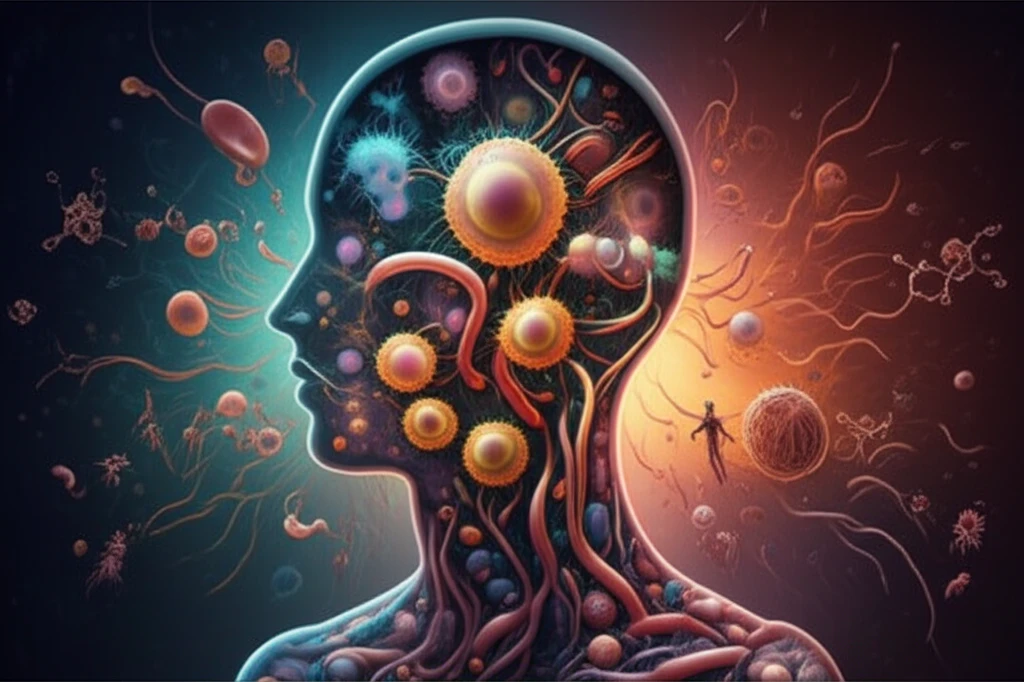
Gut Check: How Your Microbiome and Mast Cells Impact Your Health

"Unlocking the secrets of the mast cell-aryl hydrocarbon receptor interplay for a healthier you."
Your body is constantly interacting with its environment, and mast cells (MCs) are at the forefront of this interaction. These cells, found in tissues throughout your body, are increasingly recognized as key players in how you respond to environmental factors. Interestingly, how well mast cells do their job is influenced by their surroundings, particularly the microorganisms in your body.
Think of it as a delicate balancing act. Mast cells need to be effective enough to protect you, but not so aggressive that they cause harm to your own tissues. Microorganisms, collectively known as the microbiome, play a crucial role in this balance. They can influence mast cell survival, recruitment, maturation, and even how they perform their specific functions.
This article delves into the current understanding of how microorganisms regulate mast cell physiology. We'll discuss how disruptions in this process can lead to health problems and highlight the pivotal role of the aryl hydrocarbon receptor (AhR) in sensing the environment and shaping how mast cells adapt at the host-microbe interface.
Mast Cells and Your Microbial Ecosystem: What's the Connection?
Mast cells originate from hematopoietic stem cell-derived progenitors, entering circulation, and populating all vascularized tissues. They express surface markers like c-kit and FcɛRI, essential for their survival and function. Specific adhesion molecules and chemokine receptors guide MCs to different peripheral tissues, with lipid mediators also contributing to MC recruitment during inflammation. Once settled, they differentiate and prepare to exert their effector functions.
- Location Matters: MCs strategically position themselves in areas exposed to the external environment, allowing them to interact with foreign substances.
- Microenvironment Influence: The surrounding environment plays a crucial role in shaping MC development, function, and phenotype, creating spatial and temporal heterogeneity.
- Constant Communication: A continuous cross-talk between MCs and the environment is essential for maintaining tissue homeostasis, and disruptions can lead to inflammatory or allergic conditions.
The Future of Gut Health: Understanding the Microbiome-Mast Cell Connection
Research is increasingly revealing the essential role of mast cells in normal human biology and disease. MCs have critical roles in the host response to pathogens, either promoting resistance to infection or contributing to a dysregulated immune response that increases morbidity and mortality. The signals to which MCs respond and react include signals from the body's microbiota. Dysfunctional MCs and/or dysbiotic changes may potentially lead to many adverse consequences.
The complex interactions between microbiota and MCs demand for more research to better understand and leverage these interactions. By understanding how to influence and correct an imbalance between the microbiome and the mast cells. This will offer an individual a more balanced, healthy body.
Further exploration of the communication lines—like the AhR pathway—will uncover novel therapeutic strategies for a range of conditions, from allergies to autoimmune disorders. The future of personalized medicine lies in understanding and manipulating these intricate relationships within our bodies.