
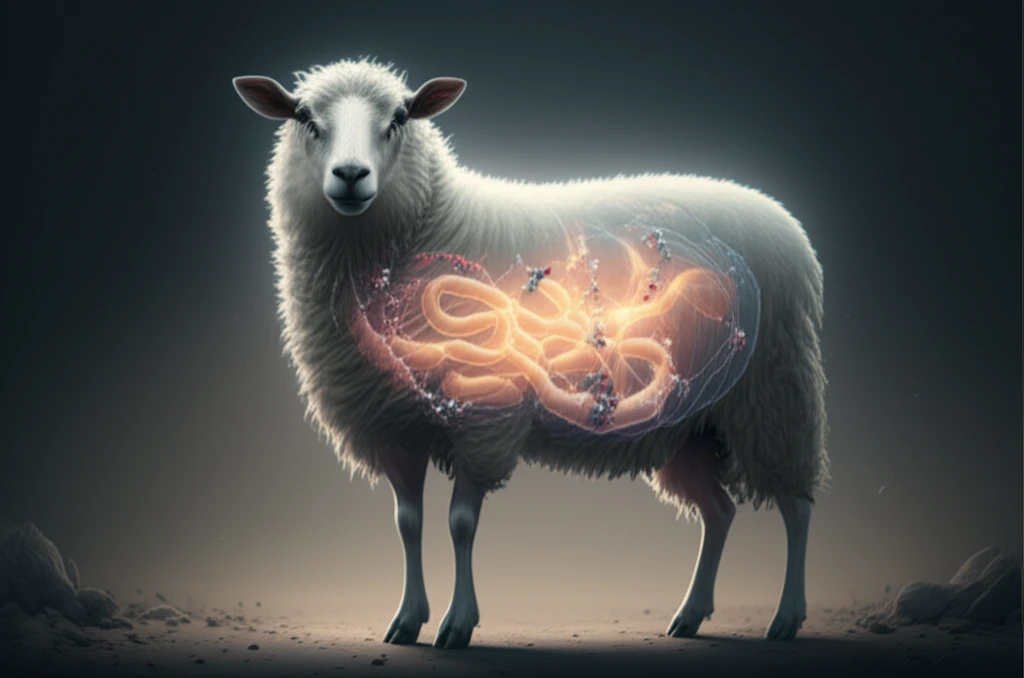
Surreal image of a sheep's digestive system showing lactulose molecules.

Gut Check: How Indomethacin Impacts Sheep Digestion and What It Means for Livestock

"Discover how a common anti-inflammatory drug affects gut health in sheep, revealing insights into livestock well-being and potential treatments."


Maintaining a healthy digestive system is vital for animals, ensuring they absorb nutrients properly and stay protected from harmful substances. When the gut becomes too permeable, it can lead to various health issues. Factors like diet, stress, and certain medications can all impact this permeability, making it crucial to understand these effects.

A recent study investigated how indomethacin, a nonsteroidal anti-inflammatory drug (NSAID), affects the gut health of sheep. Indomethacin is known to increase intestinal permeability, which can compromise the digestive system. The goal was to see if a lactulose test could effectively measure these changes and what they reveal about the animal’s overall health.

The research focused on assessing the small intestine’s permeability using lactulose, a sugar that's not easily digested. By monitoring lactulose levels in the blood after administering indomethacin, scientists aimed to gauge the extent of gut damage and its impact on the inflammatory response in sheep.

What Happens to Sheep When Given Indomethacin?

Surreal image of a sheep's digestive system showing lactulose molecules.

The study involved seven adult sheep, both males and females, who were given either saline or indomethacin injections over a period of time. Researchers then administered lactulose orally and collected blood samples to monitor changes in their metabolic profiles and lactulose levels.

The sheep that received indomethacin showed several clinical symptoms, including a reduced appetite, dullness, weakness, depression, and diarrhea with traces of blood in their feces. These signs indicated a significant disruption in their digestive health.

Here’s a breakdown of the key changes observed in the sheep treated with indomethacin:
  • Increased levels of haptoglobin and ceruloplasmin, indicating an inflammatory response.
  • Decreased levels of cholesterol, albumin, and paraoxonase, which are important for overall health.
  • Elevated reactive oxygen metabolites, suggesting oxidative stress.
  • Reduced vitamin E concentration, an important antioxidant.
The blood lactulose concentrations were significantly higher in the indomethacin-treated sheep, with peak levels observed six hours after lactulose was administered. These findings suggest that indomethacin increased the small intestine’s permeability, allowing more lactulose to enter the bloodstream.

What Does This Mean for Livestock Management?

This study highlights the potential of using lactulose as a probe to assess gastrointestinal permeability in adult ruminants. By understanding how factors like indomethacin affect gut health, we can develop better strategies for managing livestock welfare and preventing digestive issues. Monitoring blood lactulose levels between two and eight hours after oral administration appears to be the most effective way to assess intestinal permeability.

About this Article -

This article was crafted using a human-AI hybrid and collaborative approach. AI assisted our team with initial drafting, research insights, identifying key questions, and image generation. Our human editors guided topic selection, defined the angle, structured the content, ensured factual accuracy and relevance, refined the tone, and conducted thorough editing to deliver helpful, high-quality information.See our About page for more information.

This article is based on research published under:

DOI-LINK: 10.2527/jas.2013-6729, Alternate LINK

Title: Assessment Of Gastrointestinal Permeability By Lactulose Test In Sheep After Repeated Indomethacin Treatment1

Subject: Genetics

Journal: Journal of Animal Science

Publisher: Oxford University Press (OUP)

Authors: A. Minuti, S. Ahmed, E. Trevisi, F. Piccioli-Cappelli, G. Bertoni, P. Bani

Published: 2013-12-01

Everything You Need To Know

1

What is the effect of indomethacin on sheep?

Indomethacin is a nonsteroidal anti-inflammatory drug (NSAID) that, in the context of sheep, increases intestinal permeability. This means that it makes the lining of the small intestine more porous, allowing substances to pass through more easily than they should. The implications of this are significant because a compromised gut can lead to systemic health problems.

2

What role does lactulose play in this context?

Lactulose is a type of sugar that is not easily digested, and it was used in the study to assess gastrointestinal permeability in sheep. When lactulose is given orally, its presence in the bloodstream indicates how permeable the small intestine is. Higher levels of lactulose in the blood suggest that the gut lining is more permeable, allowing more lactulose to pass through. This method is used as a probe to understand the effects of substances like indomethacin.

3

Why is gut permeability important for sheep?

The significance of gut permeability in sheep lies in its impact on overall health and nutrient absorption. A healthy digestive system ensures that sheep can properly absorb nutrients and stay protected from harmful substances. Increased intestinal permeability, as caused by indomethacin, can lead to various health issues by allowing unwanted substances to enter the bloodstream. This can trigger inflammatory responses and impact overall well-being.

4

What specific symptoms did the sheep experience after being given indomethacin?

The study's findings highlight that sheep treated with indomethacin experienced reduced appetite, dullness, weakness, depression, and diarrhea with traces of blood. Blood tests revealed an inflammatory response, indicated by increased haptoglobin and ceruloplasmin levels. Other key changes included decreased levels of cholesterol, albumin, and paraoxonase, along with elevated reactive oxygen metabolites, and reduced vitamin E concentration. These findings underscore the disruption to digestive health caused by indomethacin.

5

How can this study benefit livestock management?

This research is significant for livestock management because it demonstrates a method to assess gut health and the impact of medications like indomethacin on sheep. Monitoring blood lactulose levels can help identify early signs of digestive issues. This understanding can lead to the development of better strategies for managing livestock welfare. By understanding how factors like indomethacin affect gut health, better preventative measures can be established to prevent digestive issues.

Newsletter Subscribe

Subscribe to get the latest articles and insights directly in your inbox.