
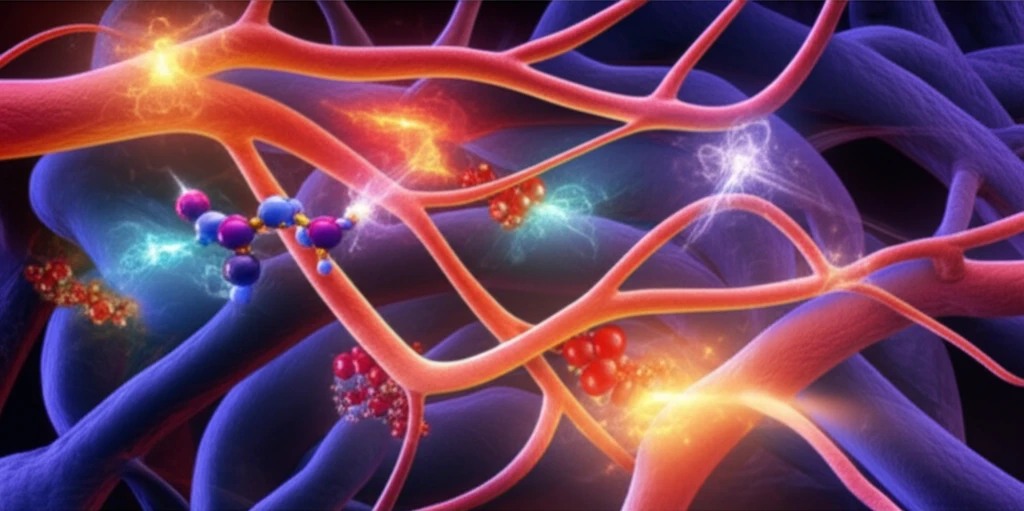
Interstitial Cells of Cajal (ICCs) with ATP molecules

Gut Check: How ATP Fine-Tunes Your Digestion's Pacemaker

"Scientists explore how ATP, a key energy molecule, influences the interstitial cells of Cajal, the gut's natural pacemakers, offering new insights into digestive health and potential therapies."


Our digestive system is a complex machine, working tirelessly to break down food and absorb nutrients. At the heart of this process lies a subtle yet crucial electrical rhythm, orchestrated by specialized cells known as interstitial cells of Cajal (ICCs). These cells act as the gut's natural pacemakers, setting the tempo for smooth muscle contractions that propel food through the digestive tract.

Like any finely tuned instrument, the gut's pacemaker system is subject to various influences. Among these, adenosine 5'-triphosphate (ATP), the body's fundamental energy currency, has emerged as a key regulator. While ATP is well-known for powering cellular processes, it also plays a significant role outside cells, acting as a signaling molecule that can influence a wide range of physiological functions, including gastrointestinal motility.

New research is shedding light on how ATP interacts with ICCs to modulate their pacemaker activity. By understanding this interaction, scientists hope to develop targeted therapies for digestive disorders linked to disruptions in gut motility, such as irritable bowel syndrome (IBS) and gastroparesis.

ATP's Role in Gut Motility: What Does the Research Say?

Interstitial Cells of Cajal (ICCs) with ATP molecules

A recent study published in the Chonnam Medical Journal delves into the functional roles of ATP on pacemaker activity in cultured ICCs from mouse small intestines. The researchers employed advanced techniques like whole-cell patch clamp and intracellular Ca2+ imaging to observe how ATP affects these cells.

The study's findings reveal that external ATP dose-dependently depolarizes the resting membrane of ICCs and produces tonic inward pacemaker currents. This effect was antagonized by suramin, a purinergic P2 receptor antagonist, highlighting the involvement of P2 receptors in this process.

  • Depolarization: ATP causes a change in the electrical charge across the cell membrane of ICCs.
  • Tonic Inward Currents: ATP induces a continuous flow of ions into the cells, affecting their rhythmic activity.
  • Suramin Sensitivity: The effects of ATP are blocked by suramin, indicating the involvement of purinergic P2 receptors.
Further experiments showed that ATP-induced effects on pacemaker currents were suppressed by removing external sodium ions and inhibited by nonselective cation channel blockers like flufenamic acid and niflumic acid. Additionally, the removal of external calcium ions or treatment with thapsigargin, which inhibits calcium uptake into the endoplasmic reticulum, also diminished ATP's effects on pacemaker currents. The study also found that ATP enhances spontaneous calcium oscillations within the ICCs.

The Future of Gut Health: Targeting ATP and ICCs

These findings suggest that external ATP modulates pacemaker activity by activating nonselective cation channels via external calcium influx and calcium release from the endoplasmic reticulum. Activating the purinergic P2 receptor may influence gastrointestinal motility by acting on ICCs. This opens new avenues for therapeutic interventions targeting these receptors to manage gastrointestinal disorders related to motility.

About this Article -

This article was crafted using a human-AI hybrid and collaborative approach. AI assisted our team with initial drafting, research insights, identifying key questions, and image generation. Our human editors guided topic selection, defined the angle, structured the content, ensured factual accuracy and relevance, refined the tone, and conducted thorough editing to deliver helpful, high-quality information.See our About page for more information.

Everything You Need To Know

1

What is ATP, and why is it important for digestion?

Adenosine 5'-triphosphate, or ATP, is the primary molecule that provides energy for cells. It also functions as a signaling molecule outside of cells. This is significant because it influences gastrointestinal motility by interacting with interstitial cells of Cajal (ICCs), which are the gut's pacemaker cells. It is involved in various physiological functions, including the regulation of digestive processes.

2

What are interstitial cells of Cajal (ICCs), and what role do they play in the digestive system?

Interstitial cells of Cajal (ICCs) are specialized cells that act as the natural pacemakers in the gut. They generate electrical rhythms that control smooth muscle contractions, which are essential for moving food through the digestive tract. The proper function of ICCs ensures efficient digestion; dysfunction can lead to motility disorders.

3

What are purinergic P2 receptors, and how do they relate to gut function?

The purinergic P2 receptors are a type of receptor that is activated by ATP. When ATP binds to these receptors on interstitial cells of Cajal (ICCs), it modulates their activity, influencing gut motility. Understanding this interaction is crucial, as it opens potential therapeutic avenues for managing gastrointestinal disorders related to motility issues.

4

What did the recent study reveal about how ATP affects interstitial cells of Cajal (ICCs)?

The study found that ATP depolarizes the resting membrane of interstitial cells of Cajal (ICCs) and produces tonic inward pacemaker currents. This means ATP changes the electrical charge across the cell membrane and induces a continuous flow of ions into the cells, affecting their rhythmic activity. These effects are mediated by purinergic P2 receptors and involve calcium influx and release, which are critical for the pacemaker function of ICCs.

5

How might targeting ATP and interstitial cells of Cajal (ICCs) lead to new treatments for gut health?

Researchers suggest that external ATP modulates pacemaker activity by activating nonselective cation channels via external calcium influx and calcium release from the endoplasmic reticulum. By targeting purinergic P2 receptors on interstitial cells of Cajal (ICCs), new treatments could be developed for gastrointestinal disorders like irritable bowel syndrome (IBS) and gastroparesis. These interventions aim to restore normal gut motility by influencing the electrical activity of ICCs.

Newsletter Subscribe

Subscribe to get the latest articles and insights directly in your inbox.