
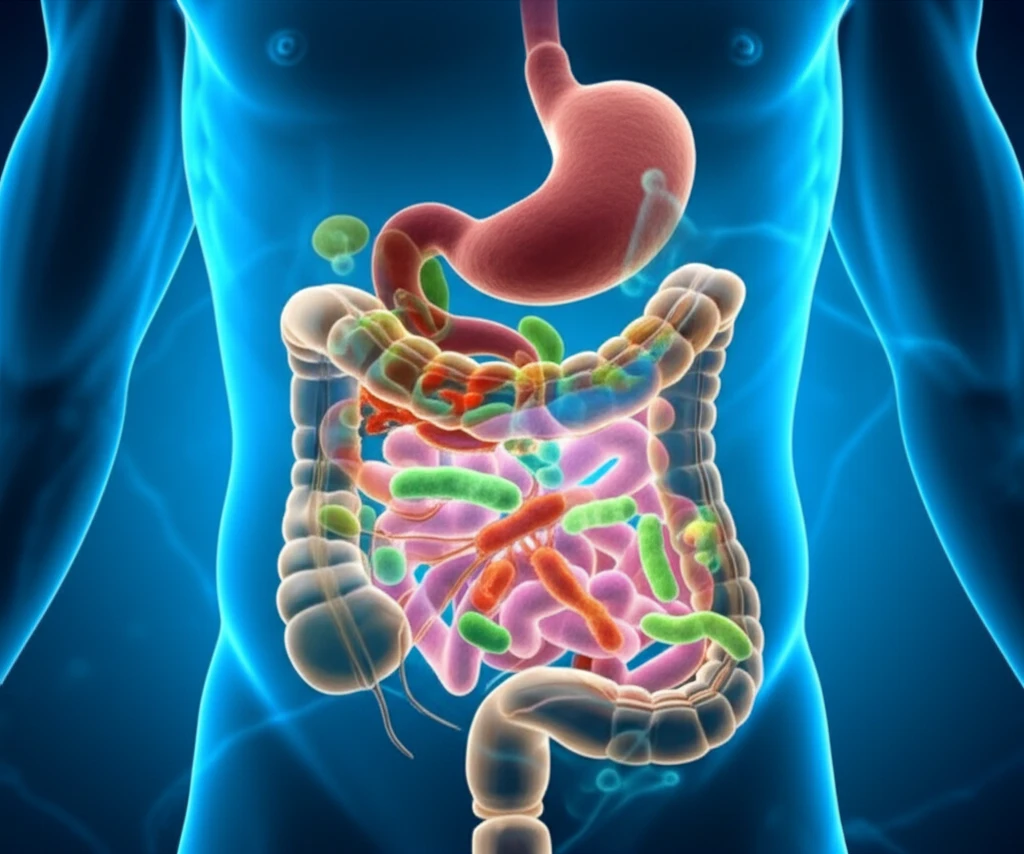
Gut Check: How a Microbial Metabolite Could Be the Key to Fighting Type 2 Diabetes

"New research links a specific metabolite produced by gut bacteria to insulin resistance, offering a potential new target for treating type 2 diabetes."
Type 2 diabetes mellitus (T2DM) is a widespread health issue, and while we know gut bacteria play a role, the specifics have been murky. In 2013, researchers like Fredrik Bäckhed pointed out that the gut microbiota is different in people with T2DM. But what do these changes mean for the disease?
Now, a new study has found that a particular metabolite, imidazole propionate, which comes from histidine (an amino acid), is found in higher concentrations in the blood of obese individuals with T2DM, compared to those without it.
Bäckhed explains, “Building on our 2013 paper, we hypothesized that the microbiota might form metabolites that can affect insulin sensitivity.” The team used metabolomics to analyze blood from the portal vein (which carries blood from the intestines to the liver) of individuals with and without T2DM to figure this out.
Imidazole Propionate: The Culprit Behind Insulin Resistance?
The team identified four metabolites that might be involved in insulin sensitivity. To find out if any of these were actually caused by the gut microbiota, they compared metabolite concentrations in germ-free mice (which have no gut bacteria) and conventionally raised mice.
- Germ-Free vs. Conventional Mice: Comparing metabolite concentrations in mice with and without gut bacteria.
- Imidazole Propionate's Impact: Focus on imidazole propionate as the key metabolite regulated by gut microbiota.
- Insulin Sensitivity Tests: Injecting imidazole propionate into mice to observe its effect on glucose tolerance.
A New Target for Diabetes Treatment?
Bäckhed concludes, “To my knowledge, this is one of the first papers that identifies a metabolite in humans, identifies the bacteria that produce it, establishes causality and identifies a new signalling pathway.”
While it’s still unclear whether targeting imidazole propionate or the enzymes involved in its production could be a viable treatment, this research opens up new avenues for therapeutic intervention.
Specifically, future research may explore whether dietary interventions, prebiotics, or probiotics could modulate the production of imidazole propionate in the gut, potentially improving insulin sensitivity and helping to manage or prevent T2DM. This could lead to innovative strategies for personalized nutrition and targeted therapies.