
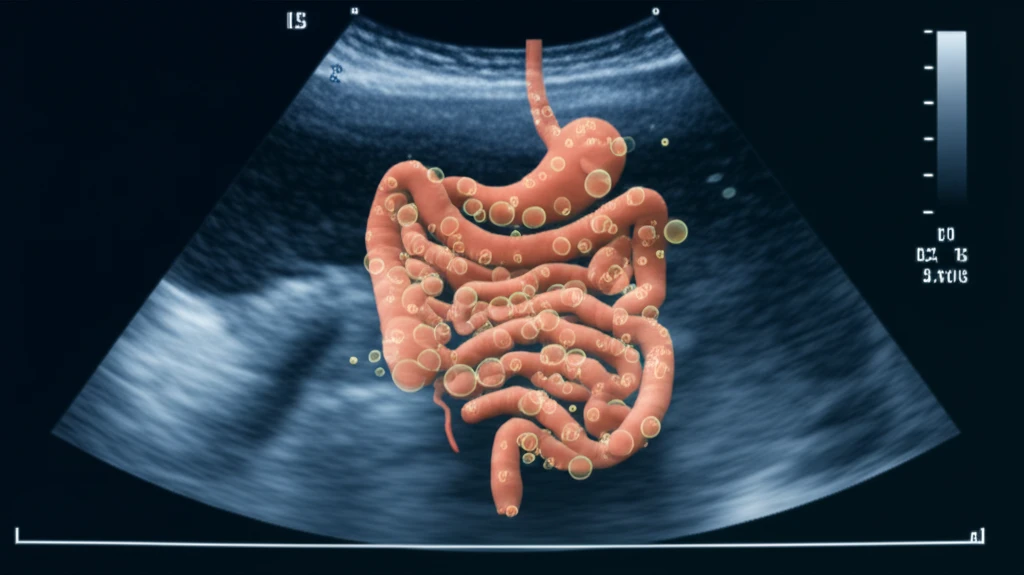
Contrast-enhanced ultrasound (CEUS) imaging of the digestive system.

Gut Check: Can Ultrasound Help Doctors Spot Transplant Complications Earlier?

"New research explores how contrast-enhanced ultrasound could offer a non-invasive way to diagnose graft-versus-host disease (GvHD) after allogeneic transplants, potentially improving patient outcomes."


Allogeneic stem cell transplantation (allo-SCT) offers a lifeline for individuals battling severe blood disorders. However, this treatment isn't without its risks. One of the most significant complications is graft-versus-host disease, or GvHD. This occurs when the donor's immune cells, now residing in the recipient's body, recognize the recipient's tissues as foreign and launch an attack.

GvHD often manifests with vague symptoms like abdominal pain, cramps, and diarrhea, making early diagnosis a challenge. These symptoms can easily be mistaken for other common post-transplant issues, such as viral or bacterial infections. However, accurately differentiating GvHD from other conditions is crucial because the treatment approaches vary significantly, and delays in GvHD diagnosis can worsen patient outcomes.

Traditionally, diagnosing GvHD relies on endoscopic biopsies, an invasive procedure that carries risks, especially for patients with compromised immune systems. The quest for non-invasive diagnostic tools has led researchers to explore the potential of contrast-enhanced ultrasound (CEUS). This technique uses microbubbles to enhance ultrasound images, potentially revealing subtle changes in the gut indicative of GvHD.

What is Contrast-Enhanced Ultrasound (CEUS) and How Can It Help in GvHD Diagnosis?

Contrast-enhanced ultrasound (CEUS) imaging of the digestive system.

Contrast-enhanced ultrasound (CEUS) is an advanced imaging technique that utilizes microbubbles – tiny, gas-filled spheres – injected into the bloodstream. These microbubbles enhance the visibility of blood vessels and tissue structures during an ultrasound scan. In the context of GvHD, researchers are investigating whether CEUS can detect specific changes in the gut wall that are characteristic of the disease.

The study published in Clinical Hemorheology and Microcirculation explored the potential of CEUS to differentiate GvHD from other causes of abdominal symptoms in patients who had undergone allogeneic transplantation. The researchers focused on whether intravenously applied microbubbles could penetrate the bowel lumen, a phenomenon they hypothesized might be indicative of GvHD-related damage to the gut lining.

  • Study Design: The study involved 23 patients, 20 of whom had received allo-SCT and were suspected of having enteric GvHD. The remaining three patients presented with similar abdominal symptoms but had other underlying conditions.
  • CEUS Procedure: All patients underwent CEUS with a particular focus on observing the penetration of microbubbles into the bowel lumen.
  • Confirmation: Researchers aimed to obtain histological confirmation of GvHD in the gastrointestinal tract for patients with a history of allo-SCT.
  • Data Analysis: The resulting examinations were documented digitally and analyzed to determine the presence or absence of microbubble penetration.
The results showed that in 14 out of 17 patients with confirmed GvHD of the GI tract, CEUS revealed penetration of the intravenously applied microbubbles into the bowel lumen. This translates to a sensitivity of 82% and a specificity of 100% for transmural bubble penetration as an indicator of GvHD in the GI tract. Importantly, patients without GvHD did not show this transmural bubble penetration.

Looking Ahead: The Future of GvHD Diagnosis

While these findings are promising, the researchers emphasize that further studies with larger patient groups are needed. Future research should also compare CEUS results in patients before and after the onset of GvHD, as well as those with and without GvHD following allo-SCT. This will help to distinguish GvHD-related changes from regimen-related mucosal damage caused by radiation or chemotherapy. Ultimately, CEUS may emerge as a valuable tool for the early and non-invasive diagnosis of intestinal GvHD, potentially leading to improved treatment outcomes for transplant recipients.

About this Article -

This article was crafted using a human-AI hybrid and collaborative approach. AI assisted our team with initial drafting, research insights, identifying key questions, and image generation. Our human editors guided topic selection, defined the angle, structured the content, ensured factual accuracy and relevance, refined the tone, and conducted thorough editing to deliver helpful, high-quality information.See our About page for more information.

This article is based on research published under:

DOI-LINK: 10.3233/ch-2011-1463, Alternate LINK

Title: Contrast-Enhanced Ultrasound For Differential Diagnosis Of Suspected Gvhd In Patients After Allogeneic Transplantation

Subject: Physiology (medical)

Journal: Clinical Hemorheology and Microcirculation

Publisher: IOS Press

Authors: Andreas G. Schreyer, K. Landfried, E.M. Jung, N. Platz Batista Da Silva, F. Poschenrieder, C. Dornia, P. Wiggermann, L.M. Dendl, E. Holler, C. Stroszczynski, C. Friedrich

Published: 2011-01-01

Everything You Need To Know

1

What is Graft-versus-host disease (GvHD) and why is it a significant concern after allogeneic stem cell transplantation (allo-SCT)?

Graft-versus-host disease (GvHD) is a major complication that can occur after allogeneic stem cell transplantation (allo-SCT). It arises when the donor's immune cells, introduced into the recipient's body during the transplant, identify the recipient's tissues as foreign and initiate an immune attack. This immune response can affect various organs, with the gastrointestinal tract being a common target. Because symptoms are often vague, it is challenging to diagnose, making early and accurate diagnosis crucial for effective treatment and improving patient outcomes. Delayed diagnosis can worsen patient outcomes.

2

How does Contrast-enhanced ultrasound (CEUS) work, and what's its potential for diagnosing GvHD?

Contrast-enhanced ultrasound (CEUS) is an advanced imaging technique. It uses microbubbles, tiny gas-filled spheres, that are injected into the bloodstream. These microbubbles enhance the visibility of blood vessels and tissue structures during an ultrasound scan. In the context of GvHD, researchers are exploring whether CEUS can detect specific changes in the gut wall characteristic of the disease. The study published in *Clinical Hemorheology and Microcirculation* focused on microbubble penetration into the bowel lumen, hypothesized to indicate GvHD-related damage to the gut lining, which could help differentiate GvHD from other causes of abdominal symptoms.

3

What were the key findings of the study exploring CEUS for GvHD diagnosis, and what do they suggest?

The study examined 23 patients, with a focus on whether intravenously applied microbubbles could penetrate the bowel lumen. The results revealed that in 14 out of 17 patients with confirmed GvHD of the GI tract, CEUS showed penetration of microbubbles into the bowel lumen. This translated to a sensitivity of 82% and a specificity of 100% for transmural bubble penetration as an indicator of GvHD in the GI tract. Patients without GvHD did not show this transmural bubble penetration, highlighting the potential of CEUS to differentiate GvHD from other conditions.

4

What are the limitations of using CEUS for GvHD diagnosis, and what further research is needed?

While the findings are promising, the researchers emphasize that further studies with larger patient groups are needed. Future research should also compare CEUS results in patients before and after the onset of GvHD, as well as those with and without GvHD following allo-SCT. This will help to distinguish GvHD-related changes from regimen-related mucosal damage caused by radiation or chemotherapy. Additional research is necessary to validate these initial findings, refine the technique, and establish its role in clinical practice.

5

How could Contrast-enhanced ultrasound (CEUS) ultimately improve patient care for those undergoing allogeneic stem cell transplantation?

CEUS has the potential to improve patient care by offering a non-invasive method for the early diagnosis of intestinal GvHD. Early and accurate diagnosis is crucial because treatment approaches vary significantly depending on the underlying cause of the symptoms. By enabling faster and more accurate diagnosis, CEUS may lead to earlier initiation of appropriate therapies, potentially preventing disease progression and improving patient outcomes. This could lead to decreased morbidity and mortality associated with GvHD and improved overall quality of life for transplant recipients.

Newsletter Subscribe

Subscribe to get the latest articles and insights directly in your inbox.