
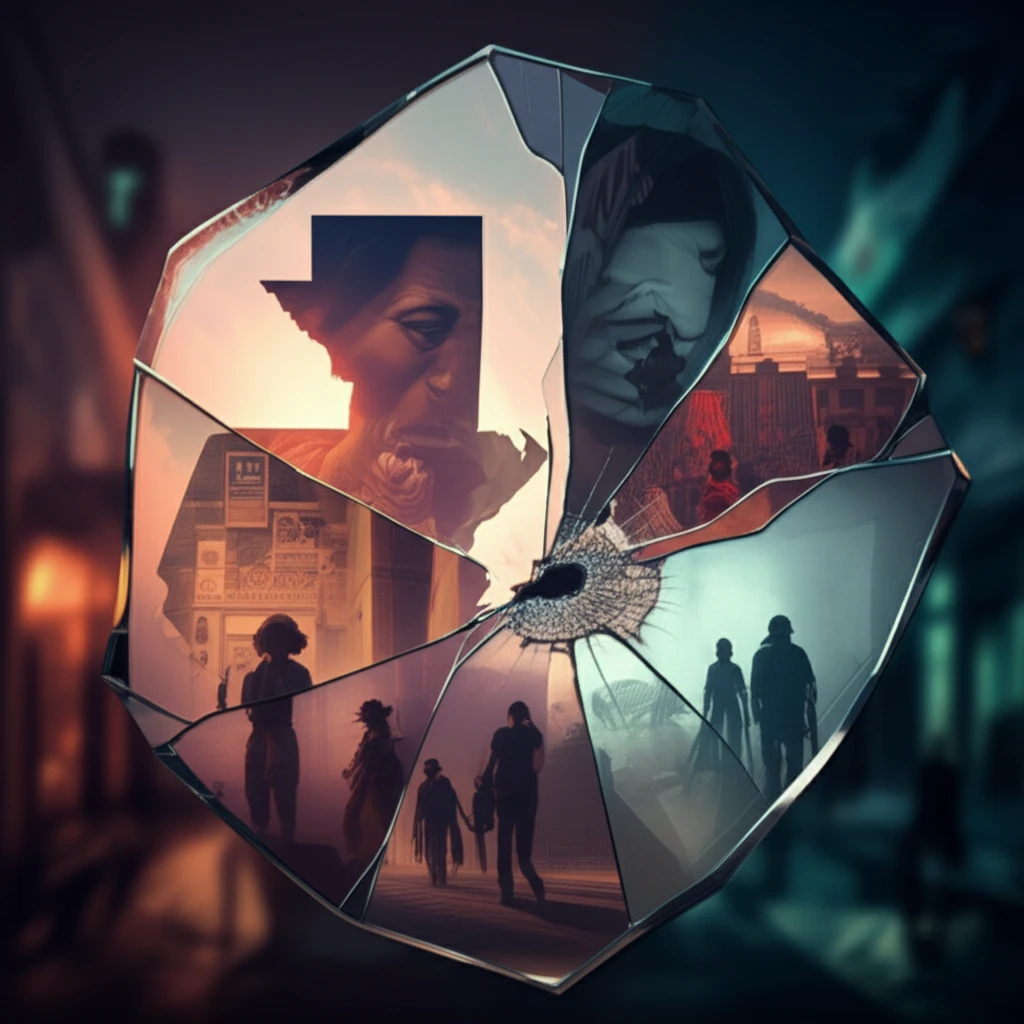
Shattered mirror reflecting Guatemala's present and past, symbolizing the lasting impact of historical conflicts.

Guatemala's Unsettled Past: How the Scars of War Still Shape the Present

"Thirty years after NACLA's initial report, the echoes of Efraín Ríos Montt's genocide continue to resonate in Guatemala. Explore how these unresolved conflicts influence today's society."


In the 1980s, Guatemala was the site of horrific state-sponsored violence, resulting in the slaughter of tens of thousands. This dark chapter, often overlooked, involved the systematic targeting of civilians, particularly Indigenous communities. The silence surrounding this genocide made it difficult to uncover and report the truth, as journalists faced immense risks, and the army's actions were concealed in remote areas.

The 1983 issue of NACLA Report, "Guatemala—The War is Not Over,” was groundbreaking. Its urgency and clarity provided crucial insights into the ongoing conflict. Rereading it today, the report remains a sobering reminder of the challenges in reporting and understanding such crises.

In the early 1980s, as a young sound recordist, I witnessed the insurgencies in Nicaragua and El Salvador. Driven to learn more about Guatemala, I collaborated with cinematographer Tom Sigel to create “When the Mountains Tremble.” What we discovered was a stark contrast to the eerie normalcy in the capital, where fear silenced many voices. The journey to uncover the truth was long and fraught with danger, as Guatemalan journalists who dared to report the reality faced dire consequences.

Unmasking the Truth: The Enduring Impact of Guatemala's Hidden War

Shattered mirror reflecting Guatemala's present and past, symbolizing the lasting impact of historical conflicts.

As we filmed in the highlands, the narrative of a winding-down war and improved human rights, propagated by the mainstream media under General Efraín Ríos Montt's regime, was challenged. The reality was far more grim.

Investigative journalism played a crucial role in uncovering the truth. NACLA's approach, characterized by in-depth investigation, source development across the political spectrum, and radical thinking, proved essential. The contributions of authors like George Black, Milton Jamail, and Norma Stoltz Chinchilla were invaluable. Their non-Guatemalan identities allowed them to venture forth more boldly, knowing that any attempt against them would carry significant political repercussions.

  • Digging Deeper: Independent journalism, as practiced by NACLA, involved thorough investigations and radical thinking.
  • Source Development: Gathering information from across the political spectrum was crucial to understanding the full scope of the conflict.
  • Protecting Journalists: The non-Guatemalan identities of some authors provided a degree of protection, albeit still risky.
The revelations of the “Nunca Más” report (1998) by Monsignor Juan José Gerardi and “Guatemala: Memoria del Silencio” (1999) by the Commission for Historical Clarification, combined with eyewitness testimony and documentary evidence, played a pivotal role in the 2013 trial of Ríos Montt. These sources confirmed that attacks against unarmed civilians intensified, and acts of genocide and crimes against humanity were intentionally ordered by Ríos Montt against the Maya people. Despite Ríos Montt's denials, the evidence was overwhelming.

Will the Dark Forces Prevail?

As we were editing “When the Mountains Tremble” in March 1983, the “Guatemala—The War is Not Over” issue was released, reinforcing our narrative and deepening our understanding. The NACLA issue also highlighted the progressive forces creatively organizing and documented the unification of rural and urban populations demanding change and seeking an opening within Guatemalan society. These efforts continue today as activists organize and resist corruption and impunity across Guatemala. This process of imagining a different country is what this 1983 issue foregrounds. Yet, at the same time, it also asks, will the dark forces prevail?

About this Article -

This article was crafted using a human-AI hybrid and collaborative approach. AI assisted our team with initial drafting, research insights, identifying key questions, and image generation. Our human editors guided topic selection, defined the angle, structured the content, ensured factual accuracy and relevance, refined the tone, and conducted thorough editing to deliver helpful, high-quality information.See our About page for more information.

This article is based on research published under:

DOI-LINK: 10.1080/10714839.2018.1525044, Alternate LINK

Title: Guatemala: War, Continued

Subject: Microbiology

Journal: NACLA Report on the Americas

Publisher: Informa UK Limited

Authors: Pamela Yates

Published: 2018-07-03

Everything You Need To Know

1

What was the significance of the NACLA Report "Guatemala—The War is Not Over"?

The NACLA Report "Guatemala—The War is Not Over," published in 1983, was groundbreaking. It provided crucial insights into the ongoing conflict and the state-sponsored violence during the regime of Efraín Ríos Montt. The report's urgency and clarity made it a vital source for understanding the realities of the situation, challenging the narrative of a winding-down war. It also highlighted progressive forces organizing for change, documenting the unification of rural and urban populations. Its rereading today reinforces the challenges of reporting and understanding such crises.

2

How did investigative journalism contribute to uncovering the truth about the events in Guatemala?

Investigative journalism, as exemplified by NACLA, was critical in unmasking the truth. This involved in-depth investigations, source development across the political spectrum, and radical thinking. The contributions of authors like George Black, Milton Jamail, and Norma Stoltz Chinchilla were invaluable. Their non-Guatemalan identities provided a degree of protection, allowing them to venture forth more boldly. The findings from reports such as “Nunca Más” by Monsignor Juan José Gerardi and “Guatemala: Memoria del Silencio” by the Commission for Historical Clarification, combined with eyewitness testimony and documentary evidence, were pivotal. These sources played a pivotal role in the 2013 trial of Ríos Montt.

3

What role did General Efraín Ríos Montt play in the events discussed?

General Efraín Ríos Montt's regime was responsible for state-sponsored violence in the 1980s, including the slaughter of tens of thousands of civilians, particularly Indigenous communities. Attacks against unarmed civilians intensified under his orders, including acts of genocide and crimes against humanity against the Maya people. Despite his denials, the evidence presented in the “Nunca Más” report and the trial in 2013 confirmed his culpability.

4

How did the experiences of journalists and those reporting the truth differ from the official narrative propagated by the regime?

The official narrative propagated by General Efraín Ríos Montt's regime presented a picture of a winding-down war and improved human rights. In contrast, journalists and investigators, such as those working for NACLA and those involved in the making of “When the Mountains Tremble,” revealed a far more grim reality. They documented horrific state-sponsored violence, the systematic targeting of civilians, and the silencing of voices through fear. The mainstream media, influenced by the regime, often failed to accurately portray the depth of the conflict.

5

What were some of the challenges faced by those seeking to uncover and report the truth about the events in Guatemala?

Those seeking to uncover and report the truth faced significant challenges. Journalists faced immense risks, including dire consequences for reporting the reality. The army's actions were often concealed in remote areas, making it difficult to gather information. The silence surrounding the genocide, coupled with the fear instilled by the regime of Efraín Ríos Montt, made it difficult to uncover and report the truth. Furthermore, investigative journalism required navigating a complex political landscape, developing sources across the political spectrum, and often relying on the non-Guatemalan identities of some authors to provide a degree of protection.

Newsletter Subscribe

Subscribe to get the latest articles and insights directly in your inbox.