
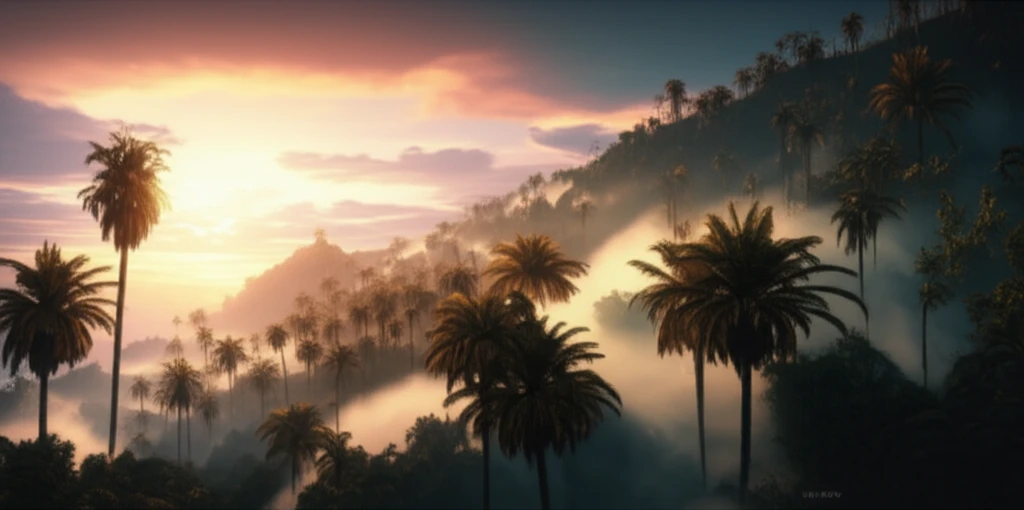
Guadalupe Island's Fog Oasis: A North American Mystery

"Discover the unique palm forest of Brahea edulis on Guadalupe Island and explore how fog creates a rare oasis in a desert environment."
Fog plays a crucial role in shaping the vegetation of coastal deserts. Guadalupe Island, located 260 km off the coast of Baja California, stands out as one of the few locations in the Sonoran Desert with both rugged coastal terrain and frequent fog occurrences. This combination creates a unique environment where plant life can flourish despite the arid conditions.
The island's northern tip is home to a palm forest (palmar) of Brahea edulis. This article investigates how fog influences this unique community. By analyzing the richness and composition of vascular plants in the palmar compared to the rest of the island, and by examining altitudinal variations in plant abundance, we aim to understand the ecological dynamics at play.
Historically, naturalists have noted the presence of fog and its impact on the island’s northern vegetation since Edward Palmer's visit in 1875. The goal of our analysis is to determine if the palm forest community of Guadalupe Island can be considered a true fog oasis, a phenomenon rarely seen in North America, similar to the fog-dependent 'lomas' of South America.
Unveiling the Secrets of Guadalupe's Palm Forest
To understand the fog's impact, a detailed analysis of the palmar community was conducted. This involved comparing the species richness and composition within the palmar to that of the broader island ecosystem. Additionally, the study examined how the abundance of palms, herbs, and mosses varied with altitude.
- Species Richness: The palmar showed a significantly higher number of plant species compared to other areas of the island at similar altitudes.
- Vascular Plant Cover: The density of plant life was notably greater within the palmar.
- Altitudinal Zonation: A clear pattern emerged, with different plant types dominating at different elevations.
A Fragile Oasis in Need of Protection
The findings support the classification of the Brahea edulis palm community on Guadalupe Island as a fog oasis. This makes it one of the few such ecosystems in North America. However, the ecosystem is fragile and faces numerous threats.
Past overgrazing has significantly altered the island's ecosystem. The absence of recruitment in the palm population over the last 150 years points to the lasting impacts of this disturbance. While goat eradication efforts show promise, the long-term recovery of the palmar and the island's broader ecosystem requires continued conservation efforts.
Protecting this unique fog oasis is crucial for maintaining biodiversity and ecosystem health on Guadalupe Island. Continued research and conservation initiatives are essential to ensure the survival of this North American treasure, as well as the unique plant species it houses.