
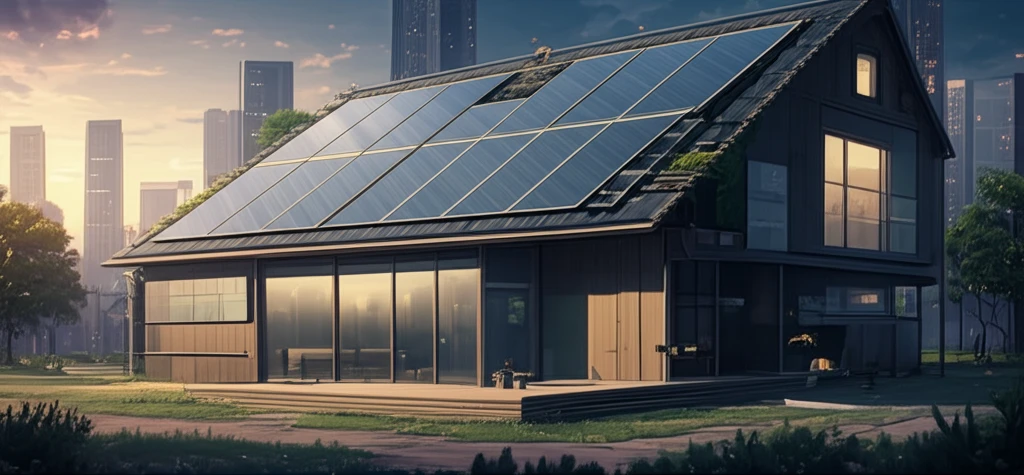
Green Homes of the Future: How Innovation Turns Labs into Reality

"Explore the dual paths of sustainable tech: Products like solar panels and building standards for energy-efficient living."
Climate change is pushing us to rethink how we use energy. It's not enough to just come up with new ideas in the lab; we need to find ways to make these ideas widespread and effective. This article looks at how sustainable energy systems make their way from initial concepts to everyday use.
We'll focus on two main examples: photovoltaics (solar panels) and passive-house buildings. These examples show different approaches to making energy systems more sustainable. Photovoltaics represent a product-based approach, while passive houses focus on setting a standard for energy efficiency.
It's easy to forget that research, markets, and development can vary significantly. For instance, the cost of electricity is a constant debate, with discussions focusing on small differences in price per kWh. However, this overlooks the fact that there isn't a single market for electric power. Consider AA batteries: they provide power at a cost that far exceeds standard electricity rates, highlighting the diverse needs and values within the energy market.
Energy Data and Global Monitoring
The Energy Institute Statistical Review of World Energy serves as a primary data source on commercially traded energy globally, though it notably excludes traditional biomass from its measurements. Organizations such as the International Energy Agency work with countries worldwide to shape energy policies for a secure and sustainable future, providing both free and paid data sets spanning the entire energy system. Real-time global statistics, including energy consumption and carbon dioxide emissions, are tracked by platforms like Worldometer. These monitoring frameworks form the backbone of understanding how energy systems impact the climate and environment.
Assessment Methodologies and Their Challenges
Renewable energy resources have attracted significant attention as environmentally friendly alternatives to fossil fuels, driven by concerns over non-sustainability, severe environmental impacts, and price volatility. Life cycle assessment is a widely used method for evaluating environmental impacts, with Monte Carlo simulation representing the most common approach for performing quantitative uncertainty analysis through probability distributions. However, divergent sustainable development perspectives, mathematical model limitations, and varying scenarios contribute to significant uncertainty in assessing renewable energy sustainability. Sustainability assessment tools have become the most commonly applied methodologies, though the proliferation of initiatives reflects the complexity of measuring performance across different frameworks.
The Evolution of Sustainable Energy
The technology for sustainable energy has dramatically expanded in recent years, moving from niche applications to mainstream adoption. However, some critics argue that even so-called 'green' projects often follow extractive logic—relying on concrete, steel, and soil sealing that contribute to urban heat buildup—challenging the notion that sustainable simply means less harmful. The concept of regenerative design, which goes beyond minimizing harm to actively restoring ecosystems, has emerged as a more ambitious standard. Companies like Siemens Energy and GE Vernova are now positioning themselves as leaders in building resilient, affordable, and sustainable energy systems.
From Lab to Life: Two Paths to Sustainability
Sustainable energy tech makes its way from scientific discovery to practical application. The story of photovoltaics (PV), or solar panels, began in 1940 with the discovery that light could generate current in silicon. By 1954, the first practical solar cell was created, boasting an efficiency of 6%.
- Experience Curve: PV module costs have dramatically decreased, making solar energy competitive.
- Manufacturing Refinements: Continuous improvements in production drive down costs.
- Niche Markets: Early adoption in specific markets (like space and off-grid applications) paved the way for broader use.
Advancing Energy Sustainability Research
The MDPI journal 'Sustainability' hosts a dedicated Section on Energy Sustainability, providing a multidisciplinary platform for research on innovation, technology development, and demonstration in sustainable energy deployment. Recent research in agriculture and forestry sectors has focused on developing procedures that improve the integration of renewable technologies into local planning processes. These studies pursue clean and safe energy possibilities as sustainable solutions for human necessities, reflecting a growing emphasis on practical, locally adaptable approaches. The breadth of topics covered across these platforms underscores the interdisciplinary nature of energy sustainability research.
Challenges in the Energy Transition
While some analyses suggest that homes can produce enough energy to sustain themselves through renewable sources, significant regulatory and geopolitical challenges persist. The US Department of Energy has criticized the European Commission's guidance on methane emissions compliance as insufficient, arguing that the EU's landmark regulation continues to threaten global energy security despite recommendations to delay penalties until 2030. This dispute highlights how international policy disagreements can undermine coordinated climate action. The tension between national energy security priorities and global emissions reduction goals remains a persistent obstacle.
Weighing Energy Alternatives
Alternative energy sources such as solar, wind, and hydroelectric power offer distinct advantages over traditional fossil fuels like coal, oil, and natural gas. The primary benefit is renewability—these sources can be replenished naturally and are more sustainable in the long term compared to finite fossil fuel reserves. However, comparative evaluations must consider the full spectrum of pros and cons, including intermittency challenges, storage requirements, and infrastructure costs. The distinction between sustainable energy and alternative energy is also worth noting, with sustainable energy representing a broader concept that encompasses long-term environmental and social considerations.
The Future of Green Tech: Standards and Normality
Both PV and passive houses demonstrate the importance of continuous improvement. Creating standards, supporting innovation, and refining manufacturing processes are key. It's a gradual process, but the goal is clear: to transform sustainable technologies from niche applications to everyday normality. While challenges remain, the journey toward a sustainable future is underway.
Expert Perspectives on Sustainable Energy
The UNECE Committee on Sustainable Energy emphasizes that energy security enables reliable energy needed for economic development, while affordability of green energy reduces costs across electricity, heating, cooling, and transport. Experts note that carbon credits provide a mechanism allowing producers of carbon dioxide emissions to balance out their environmental impact, though the effectiveness of such mechanisms remains debated. Weather conditions and behavioral economics significantly influence energy consumption patterns, shaping how societies approach sustainability efforts. These interconnected factors demonstrate that achieving sustainable energy requires addressing technical, economic, and human behavioral dimensions simultaneously.
Pathways to a Sustainable Energy Future
Innovators like GreenVize are advancing accessible, on-site green hydrogen solutions to help businesses achieve net-zero goals while championing the circular economy. A sustainable energy future is increasingly viewed as achievable without compromising natural habitats or living standards, though many underestimate the potential for supporting a larger civilization sustainably on Earth. Next-generation building materials and energy trends are emerging as key areas of development for future sustainable cities. The transition requires both technological innovation and a fundamental shift in how societies conceptualize energy production and consumption.
Systemic Forces Shaping Energy Transition
Non-physical factors such as beliefs and narratives exert tangible influence on energy systems and sustainability efforts—what researchers term 'imaginary energy influence.' Geopolitical disruptions, such as those affecting the Strait of Hormuz, are reshaping global energy markets and testing the resilience of the broader energy system. Organizations are increasingly integrating sustainability and social impact into their core missions, as demonstrated by recent impact reports connecting ESG goals to business operations. Women in sustainable energy are also contributing critical perspectives on energy system challenges, highlighting the importance of diverse leadership in navigating the transition.
Real-World Applications and Case Studies
Case studies from around the world explain the successes and failures of sustainable energy implementation, covering issues from planning through realization with emphasis on efficiency, scale-up of renewables, risk mitigation, and energy security. In the technology sector, major companies are demonstrating that sustainable practices can coexist with rapid growth—Google's data centers and Microsoft's AI sustainability initiatives provide concrete examples of corporate commitments to carbon reduction. HVAC manufacturers like Systemair are developing energy-saving products and solutions that transform indoor and outdoor environments globally. These real-world examples illustrate that the transition to sustainable energy is already underway across multiple sectors.