
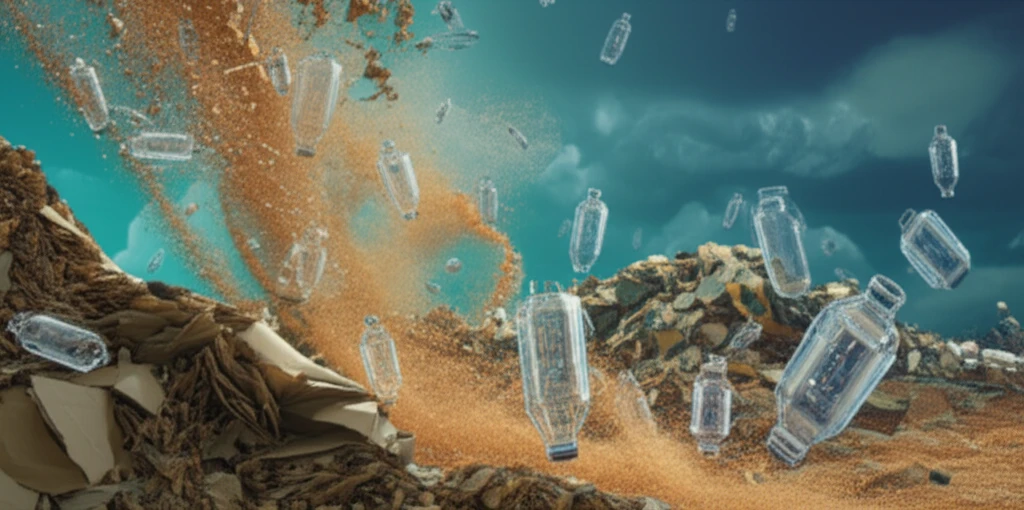
Sustainable bottles made from recycled materials.

Green Chemistry's Hottest Collab: How Pepsi & Co. Are Joining Forces for Bio-Bottles

"Discover how PepsiCo and other industry giants are teaming up to revolutionize beverage packaging with sustainable, biobased materials. Is this the future of eco-friendly consumerism?"


The beverage industry is facing increasing pressure to adopt sustainable practices. Consumers are demanding eco-friendly alternatives, and companies are seeking innovative solutions to reduce their environmental footprint. Addressing this challenge requires collaborative efforts and a shift towards renewable resources.

PepsiCo, along with Danone, Nestlé Waters, and Origin Materials, has formed the NaturALL Bottle Alliance to tackle this issue head-on. The goal is ambitious: to create beverage containers made entirely from biobased polyethylene terephthalate (PET), reducing reliance on fossil fuels and minimizing waste.

This alliance represents a significant step towards a circular economy, where waste materials are repurposed into valuable products. By leveraging innovative technologies and collaborative partnerships, the NaturALL Bottle Alliance aims to transform the beverage packaging landscape and set a new standard for environmental responsibility.

Turning Waste into Refreshment: The Bio-Bottle Breakthrough

Sustainable bottles made from recycled materials.

The NaturALL Bottle Alliance, formed in 2017, plans to use waste biomass—think cardboard and sawdust—as feedstocks. This approach avoids competing with food resources, ensuring a sustainable and ethical sourcing strategy. By transforming waste into valuable raw materials, the alliance addresses both environmental and ethical concerns.

The Alliance has selected a site in Sarnia, Ontario, to construct a demonstration plant capable of processing 18,000 metric tons of biomass annually. Scheduled to open by 2020, the plant will initially produce 95% biobased PET. This facility marks a crucial step in scaling up the production of sustainable packaging materials and demonstrating the feasibility of biobased PET on an industrial scale.

  • Sustainable Sourcing: Utilizing waste biomass such as cardboard and sawdust.
  • Industrial-Scale Production: A demonstration plant in Sarnia, Ontario, processing 18,000 metric tons of biomass per year.
  • High Biobased Content: Initial production target of 95% biobased PET.
While the NaturALL Bottle Alliance focuses on biobased PET, other industry players are exploring alternative materials and partnerships. Coca-Cola, for instance, is separately working to produce fully biobased PET with p-xylene from partners Virent and Gevo. Coca-Cola is also investing in polyethylene furanoate (PEF), a competing packaging polymer. These parallel efforts highlight the industry's commitment to diversifying sustainable packaging solutions.

A Greener Future, Bottled

The move towards biobased bottles represents a significant shift in the beverage industry, driven by consumer demand and corporate responsibility. By embracing sustainable materials and innovative technologies, companies like PepsiCo and Coca-Cola are paving the way for a more environmentally friendly future.

The success of initiatives like the NaturALL Bottle Alliance and Coca-Cola's parallel efforts will depend on continued investment, technological advancements, and collaboration across the industry. As production scales up and costs decrease, biobased packaging has the potential to become the norm, rather than the exception.

Ultimately, the transition to sustainable packaging requires a collective effort from businesses, consumers, and policymakers. By supporting eco-friendly products and advocating for responsible environmental policies, we can contribute to a future where sustainability is at the heart of consumerism.

About this Article -

This article was crafted using a human-AI hybrid and collaborative approach. AI assisted our team with initial drafting, research insights, identifying key questions, and image generation. Our human editors guided topic selection, defined the angle, structured the content, ensured factual accuracy and relevance, refined the tone, and conducted thorough editing to deliver helpful, high-quality information.See our About page for more information.

This article is based on research published under:

DOI-LINK: 10.1021/cen-09637-buscon6, Alternate LINK

Title: Pepsi Joins Consortium For Biobased Bottles

Subject: General Medicine

Journal: C&EN Global Enterprise

Publisher: American Chemical Society (ACS)

Authors: Melody Bomgardner

Published: 2018-09-17

Everything You Need To Know

1

What is the NaturALL Bottle Alliance and what is its main objective?

The NaturALL Bottle Alliance is a collaborative effort between PepsiCo, Danone, Nestlé Waters, and Origin Materials. Their primary goal is to create beverage containers made entirely from biobased polyethylene terephthalate (PET). This initiative aims to reduce reliance on fossil fuels and minimize waste, representing a significant move towards a circular economy.

2

What is biobased PET, and why is it important?

Biobased PET is a type of plastic made from renewable resources, specifically waste biomass such as cardboard and sawdust. This approach is important because it reduces the dependence on fossil fuels, which are a finite resource and contribute to greenhouse gas emissions. By utilizing waste materials, the process also addresses environmental and ethical concerns related to sourcing.

3

Where is the demonstration plant located, and what are its key features?

The NaturALL Bottle Alliance plans to construct a demonstration plant in Sarnia, Ontario. This facility will process 18,000 metric tons of biomass annually. Initially, this plant aimed to produce 95% biobased PET, demonstrating the feasibility of large-scale production of sustainable packaging materials. This is a crucial step in making biobased bottles a viable option for the beverage industry.

4

What are the main drivers behind the move towards biobased bottles?

The shift towards biobased bottles is driven by increasing consumer demand for eco-friendly alternatives and the need for companies to reduce their environmental footprint. Using sustainable materials and innovative technologies like biobased PET allows companies like PepsiCo and Coca-Cola to meet these demands and contribute to a more environmentally friendly future.

5

Are there any other companies that are not part of the NaturALL Bottle Alliance also working towards sustainable packaging?

Coca-Cola is pursuing alternative strategies, including developing fully biobased PET with partners Virent and Gevo, and investing in polyethylene furanoate (PEF). These parallel efforts highlight a broader industry commitment to creating diverse sustainable packaging solutions, ensuring the industry isn't solely reliant on a single material or process.

Newsletter Subscribe

Subscribe to get the latest articles and insights directly in your inbox.