
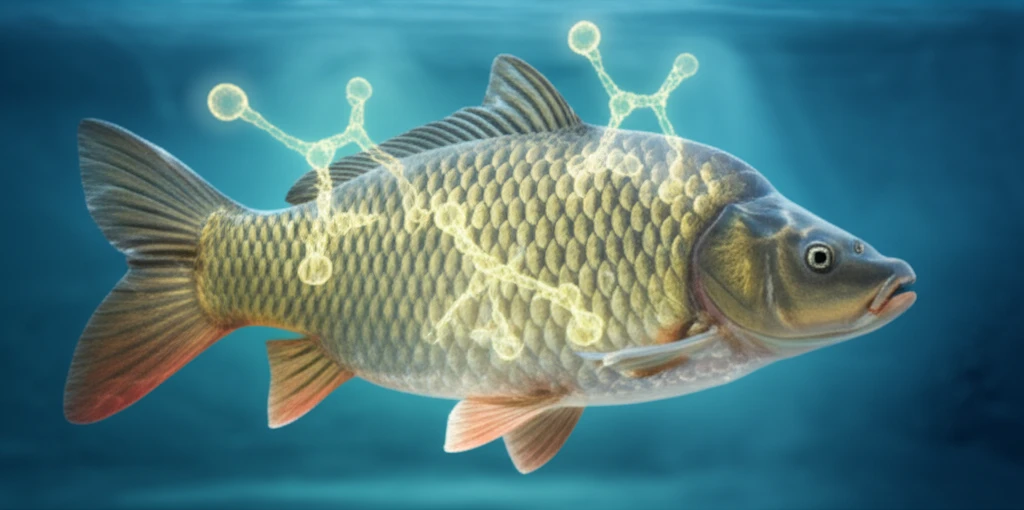
Illustration of a grass carp with glowing molecules, representing the anti-inflammatory potential of TNFR2.

Grass Carp's Secret Weapon: How a Natural Molecule Could Revolutionize Inflammation Treatment

"Scientists discover a soluble form of TNFR2 in grass carp that targets inflammation, offering a potential new pathway for treating inflammatory diseases in humans and animals alike."


Inflammation is a double-edged sword. It's the body's natural response to injury or infection, designed to protect and heal. However, when inflammation becomes chronic, it can wreak havoc, contributing to a wide array of diseases from arthritis and heart disease to autoimmune disorders and even cancer. That's why researchers are constantly seeking new and effective ways to manage inflammation and its harmful effects.

Enter the grass carp, an unassuming freshwater fish with a surprising secret. Scientists have recently discovered that grass carp produce a unique molecule called soluble tumor necrosis factor receptor 2 (TNFR2) that appears to have potent anti-inflammatory properties. This discovery opens up exciting new avenues for developing targeted therapies that could revolutionize the way we treat inflammatory conditions.

This article delves into the groundbreaking research on grass carp TNFR2, exploring its potential as a natural anti-inflammatory agent and what it could mean for the future of medicine. We'll break down the science in an easy-to-understand way, highlighting the key findings and their implications for human health.

TNFR2: The Body's Inflammation Manager

Illustration of a grass carp with glowing molecules, representing the anti-inflammatory potential of TNFR2.

To understand the significance of this discovery, it's essential to grasp the role of TNF-alpha and its receptors in the inflammatory process. TNF-alpha is a powerful signaling molecule that triggers inflammation. It binds to two main receptors on cells, TNFR1 and TNFR2, each initiating different downstream effects.

While both receptors contribute to inflammation, TNFR2 has emerged as a key player in regulating the process. The soluble form of TNFR2, discovered in grass carp, acts like a decoy, binding to TNF-alpha and preventing it from attaching to cell surface receptors. This effectively neutralizes TNF-alpha's inflammatory signal, reducing the body's inflammatory response. Key aspects of TNFR2 include:

  • Targeted Action: Soluble TNFR2 selectively neutralizes TNF-alpha, minimizing potential side effects compared to broad-spectrum anti-inflammatory drugs.
  • Natural Origin: As a naturally occurring molecule, grass carp TNFR2 may be more biocompatible and less likely to cause adverse reactions.
  • Potential for Innovation: This discovery paves the way for developing novel therapies that harness the body's own mechanisms for controlling inflammation.
The identification of TNFR2 in grass carp provides a novel strategy to regulate inflammation and the destructive effects of chronic inflammatory diseases.

Looking Ahead: The Future of Inflammation Control

While the discovery of soluble TNFR2 in grass carp is promising, further research is needed to fully understand its potential benefits and risks. Scientists are now working to investigate the following:

About this Article -

This article was crafted using a human-AI hybrid and collaborative approach. AI assisted our team with initial drafting, research insights, identifying key questions, and image generation. Our human editors guided topic selection, defined the angle, structured the content, ensured factual accuracy and relevance, refined the tone, and conducted thorough editing to deliver helpful, high-quality information.See our About page for more information.

Everything You Need To Know

1

What is the role of TNF-alpha in inflammation, and how does TNFR2 interact with it?

TNF-alpha is a signaling molecule that triggers inflammation in the body. It binds to receptors like TNFR1 and TNFR2 on cells, initiating different effects. The soluble form of TNFR2, discovered in grass carp, acts as a decoy, binding to TNF-alpha and preventing it from attaching to cell surface receptors. This action neutralizes TNF-alpha's inflammatory signal, effectively reducing the body's inflammatory response and the damage associated with chronic inflammation. TNFR2's targeted action makes it a promising candidate for anti-inflammatory therapies.

2

How does the soluble TNFR2 from grass carp work to reduce inflammation, and what makes it unique?

The soluble TNFR2 discovered in grass carp has potent anti-inflammatory properties because it neutralizes TNF-alpha. TNFR2 functions as a decoy, capturing TNF-alpha and stopping it from binding to cell surface receptors like TNFR1 and TNFR2. This mechanism is unique because it selectively targets TNF-alpha, minimizing potential side effects compared to broad-spectrum anti-inflammatory drugs. Moreover, being a naturally occurring molecule, grass carp TNFR2 may be more biocompatible, reducing the likelihood of adverse reactions in humans and animals. This approach harnesses the body's own mechanisms to control inflammation.

3

What are the potential implications of using grass carp's soluble TNFR2 for treating inflammatory diseases?

The discovery of soluble TNFR2 in grass carp opens new avenues for treating a wide array of inflammatory conditions. Because it directly targets TNF-alpha, it could revolutionize how we treat diseases like arthritis, heart disease, and autoimmune disorders. Its targeted action could minimize side effects, offering a safer alternative to broad-spectrum anti-inflammatory drugs. This natural molecule's biocompatibility also enhances its appeal. The implications include developing targeted therapies, reducing adverse reactions, and harnessing the body's own mechanisms for inflammation control.

4

What makes the TNFR2 molecule from grass carp a promising option compared to other anti-inflammatory drugs?

TNFR2 from grass carp stands out because of its targeted action, natural origin, and potential for innovation. Unlike broad-spectrum drugs, TNFR2 specifically neutralizes TNF-alpha, reducing the risk of side effects. Being a naturally occurring molecule, it may be more compatible with the body, decreasing the likelihood of adverse reactions. This paves the way for novel therapies that utilize the body's natural processes to control inflammation. This contrasts with conventional drugs that often have widespread effects.

5

What further research is needed to fully understand the benefits and risks associated with the soluble TNFR2 discovered in grass carp?

While the discovery of soluble TNFR2 in grass carp is very promising, further research is required to fully grasp its potential and risks. Scientists will investigate its benefits and risks through clinical trials. They are studying the long-term effects, optimal dosages, and potential interactions with other medications. A deeper understanding of the molecule's mechanism, efficacy in different conditions, and safety profile is essential before widespread use in treatments.

Newsletter Subscribe

Subscribe to get the latest articles and insights directly in your inbox.