
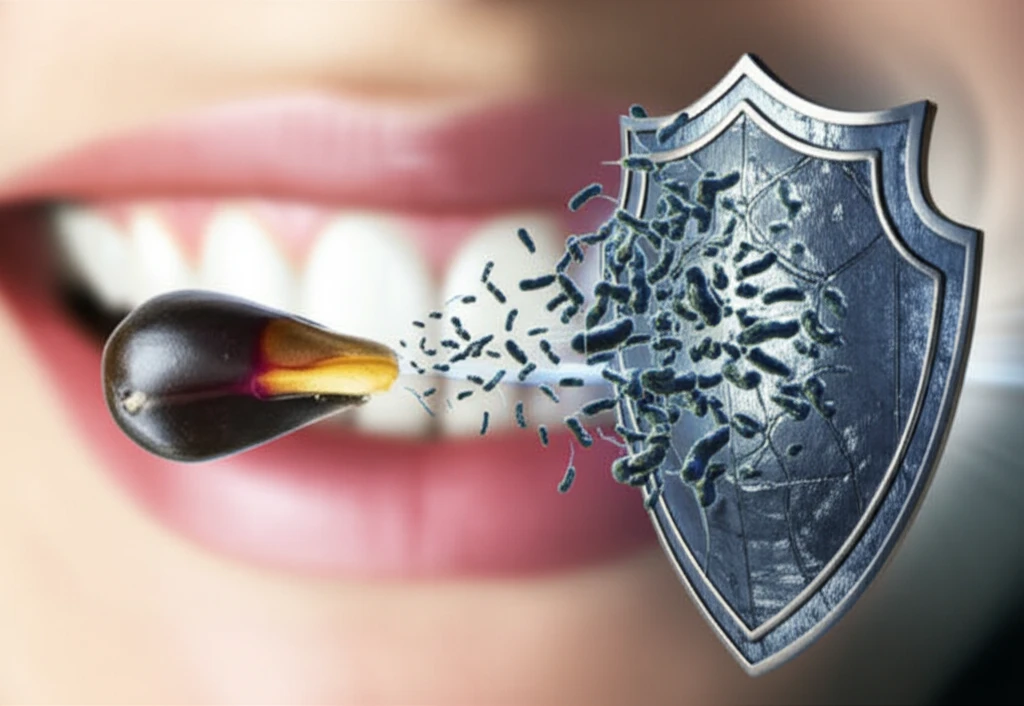
Grape Seed Extract vs. Chlorhexidine: The Battle for a Healthier Mouth

"Discover the natural antibacterial power of grape seed extract and how it stacks up against the traditional mouthwash ingredient in fighting Streptococcus mutans."
Dental caries, a widespread chronic infectious disease, arises from a complex interplay of factors, including the host (saliva and teeth), the oral microflora, and diet. Among the primary culprits in this process is Streptococcus mutans (S. mutans), a bacterium recognized for its role in the development of cavities.
With increasing interest in natural therapies, researchers have been exploring the potential of plant-based compounds to combat oral bacteria. Grapes, rich in tannins and polyphenols, have emerged as a promising source of antibacterial agents. Grape seed extract, in particular, has garnered attention for its potential to inhibit the growth of S. mutans.
This article explores the findings of a study that investigated the effectiveness of grape seed extract at varying concentrations against S. mutans, comparing it to the well-established antibacterial agent, chlorhexidine gluconate. By examining the results of this in vitro study, we aim to provide clarity on whether grape seed extract could serve as a natural alternative for promoting oral health.
Grape Seed Extract vs. S. mutans: What the Research Shows
A recent study published in the International Journal of Clinical Pediatric Dentistry (2016) investigated the antibacterial activity of grape seed extract against S. mutans. The researchers extracted grape seeds, prepared different concentrations of the extract, and then introduced these solutions to S. mutans strains. They compared the effects of grape seed extract to that of chlorhexidine gluconate, a common antibacterial mouthwash ingredient, and a control group using ultrapure water.
- Extraction: Grape seeds were extracted using a 70:30 ethanol/water solution.
- Concentration: Varying concentrations of grape seed extract (500 mg/mL, 250 mg/mL, and 125 mg/mL) were prepared.
- Bacterial Incubation: S. mutans strains were incubated with different concentrations of grape seed extract and chlorhexidine gluconate for 48 hours.
- CFU Count: The number of colony-forming units (CFU) per milliliter was checked to determine antibacterial activity.
The Future of Natural Antibacterial Agents in Oral Care
While the study confirms the antibacterial potential of grape seed extract, it's important to acknowledge that chlorhexidine gluconate remains a more potent agent against S. mutans. This suggests that grape seed extract could be a complementary approach to oral hygiene rather than a direct replacement for traditional treatments.
Further research is needed to determine the optimal concentration and delivery methods for grape seed extract to maximize its antibacterial effects in in vivo conditions (i.e., within the human mouth). Additionally, studies exploring the long-term effects and potential benefits of grape seed extract on the oral microbiome are warranted.
Ultimately, grape seed extract represents a promising avenue in the pursuit of natural antibacterial agents for oral care. As research continues, we may see it integrated into dental products or recommended as a supportive measure for maintaining a healthy and balanced oral environment.