
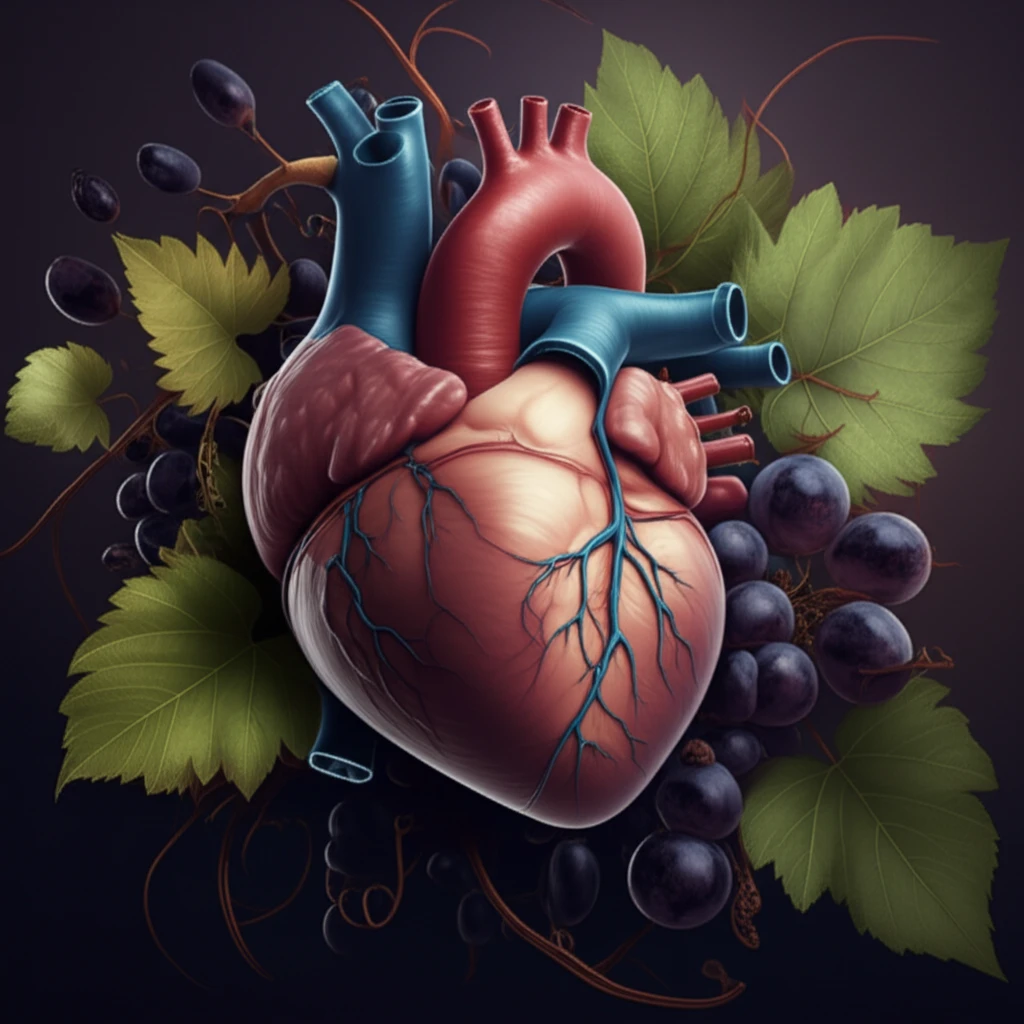
Illustration of a healthy heart surrounded by grapes, symbolizing the protective effects of grape pomace.

Grape Pomace: The Unexpected Heart Helper?

"Could this winemaking byproduct be the key to fighting heart arrhythmias and metabolic syndrome?"


Metabolic syndrome (MetS) is a cluster of conditions that increase the risk of heart disease, stroke, and type 2 diabetes. Characterized by high blood pressure, elevated insulin levels, excess body fat around the waist, and abnormal cholesterol levels, MetS is a growing concern worldwide. Finding effective strategies to combat this syndrome is crucial for improving public health.

Interestingly, the food we consume such as high fat diets may predispose individuals to a greater risk of cardiac arrhythmias, and it has been shown that cardiac arrhythmia in obesity is associated with an increased risk of sudden cardiac death. Now, research is pointing to a surprising source of help: grape pomace (GP). Grape pomace is the solid remains of grapes after pressing them for juice, including the skins, pulp, seeds, and stems.

Rich in antioxidants and dietary fiber, GP is emerging as a potential superfood with benefits ranging from improved heart health to better metabolic function. This article explores the exciting findings of a recent study investigating how GP supplementation can reduce reperfusion arrhythmias (irregular heartbeats during blood flow restoration) and alleviate the symptoms of MetS. We'll break down the science in an easy-to-understand way, highlighting the potential of this natural remedy.

How Grape Pomace Protects Your Heart

Illustration of a healthy heart surrounded by grapes, symbolizing the protective effects of grape pomace.

The study published in Food & Function journal, investigated the impact of grape pomace on rats with a diet high in fat and fructose, designed to mimic the effects of MetS. The results were remarkable. Rats supplemented with GP experienced a significant reduction in heart arrhythmias compared to those that didn't receive the supplement. But how exactly does GP work its magic?

GP appears to exert its protective effects through multiple pathways:

  • Enhancing Nitric Oxide Bioavailability: GP increases the production of nitric oxide (NO), a molecule that helps blood vessels relax and improves blood flow. Increased NO helps prevent arrhythmias and supports overall cardiovascular health.
  • Reducing Oxidative Stress: Grape pomace is packed with antioxidants that combat oxidative stress, a key contributor to heart disease and MetS. By neutralizing harmful free radicals, GP protects heart cells from damage.
  • Improving Cellular Communication: GP helps maintain healthy communication between heart cells by preserving connexin-43 (Cx43), a protein crucial for electrical signaling in the heart. This ensures a stable heart rhythm and reduces the risk of arrhythmias.
  • Combating Metabolic Imbalances: GP supplementation also led to improvements in several key metabolic markers, including reduced systolic blood pressure, improved insulin resistance, and healthier cholesterol levels.
These findings demonstrate the potential of GP as a comprehensive approach to managing both heart health and metabolic well-being. By addressing multiple risk factors simultaneously, GP offers a holistic solution for individuals seeking to improve their cardiovascular and metabolic health.

Adding Grape Pomace to Your Diet

While research is still ongoing, the findings suggest that incorporating GP into your diet could offer notable health benefits. GP can be found in various forms, including powders, supplements, and even as an ingredient in certain food products.

Before making any significant changes to your diet or supplement routine, it's always a good idea to consult with your healthcare provider. They can help you determine the right dosage and ensure that GP is a safe and appropriate addition to your wellness plan.

Grape pomace, once a discarded byproduct, is now proving to be a valuable asset in the fight against heart disease and metabolic syndrome. As research continues to unfold, expect to see more innovative ways to harness the power of this natural compound for improved health and well-being.

About this Article -

This article was crafted using a human-AI hybrid and collaborative approach. AI assisted our team with initial drafting, research insights, identifying key questions, and image generation. Our human editors guided topic selection, defined the angle, structured the content, ensured factual accuracy and relevance, refined the tone, and conducted thorough editing to deliver helpful, high-quality information.See our About page for more information.

This article is based on research published under:

DOI-LINK: 10.1039/c7fo01062a, Alternate LINK

Title: Grape Pomace Reduced Reperfusion Arrhythmias In Rats With A High-Fat-Fructose Diet

Subject: General Medicine

Journal: Food Funct.

Publisher: Royal Society of Chemistry (RSC)

Authors: Diahann J. Perdicaro, Cecilia Rodriguez Lanzi, Ariel R. Fontana, Andrea Antoniolli, Patricia Piccoli, Roberto M. Miatello, Emiliano R. Diez, Marcela A. Vazquez Prieto

Published: 2017-01-01

Everything You Need To Know

1

What is Grape Pomace (GP) and why is it significant?

Grape pomace (GP) is the solid byproduct of winemaking, comprising grape skins, pulp, seeds, and stems. It is rich in antioxidants and dietary fiber. In the context provided, GP is significant because it is being studied for its potential to reduce heart arrhythmias and combat metabolic syndrome, both of which are serious health concerns. The implications are that GP could be a natural remedy that may improve cardiovascular and metabolic health, offering a more holistic approach to wellness.

2

What is Metabolic Syndrome (MetS) and why is it important?

Metabolic syndrome (MetS) is a cluster of health conditions like high blood pressure, elevated insulin levels, excess body fat around the waist, and abnormal cholesterol levels. These conditions increase the risk of heart disease, stroke, and type 2 diabetes. It's important because it is a growing global health concern. Addressing MetS is vital for improving public health, as it is associated with significant morbidity and mortality. If left unaddressed, it can significantly impact quality of life and increase healthcare costs.

3

How does Grape Pomace (GP) help protect the heart?

GP helps the heart in several ways. Firstly, it increases the production of nitric oxide (NO), which relaxes blood vessels and improves blood flow, which may help to prevent arrhythmias. Secondly, it is packed with antioxidants that combat oxidative stress, protecting heart cells. Thirdly, GP improves cellular communication by preserving connexin-43 (Cx43), a protein essential for electrical signaling in the heart. Finally, GP improves metabolic markers like blood pressure and cholesterol. All of these factors can protect the heart.

4

What were the key findings of the study on Grape Pomace (GP)?

The study used rats with a diet high in fat and fructose to mimic the effects of Metabolic Syndrome (MetS). The results showed that rats supplemented with Grape Pomace (GP) had significantly reduced heart arrhythmias compared to those that didn't receive the supplement. This research highlights the potential of GP to positively influence heart health and shows promising data that may be used in human trials.

5

How can someone add Grape Pomace (GP) to their diet?

You can potentially incorporate Grape Pomace (GP) into your diet through powders, supplements, and certain food products. The research is ongoing, but the early findings are encouraging. It is essential to consult with a healthcare professional before starting any new supplement. The potential benefits include improved heart health and metabolic function. While it shows promise as a natural remedy, it is still under research and should be used as part of a healthy lifestyle, including a balanced diet and regular exercise.

Newsletter Subscribe

Subscribe to get the latest articles and insights directly in your inbox.