
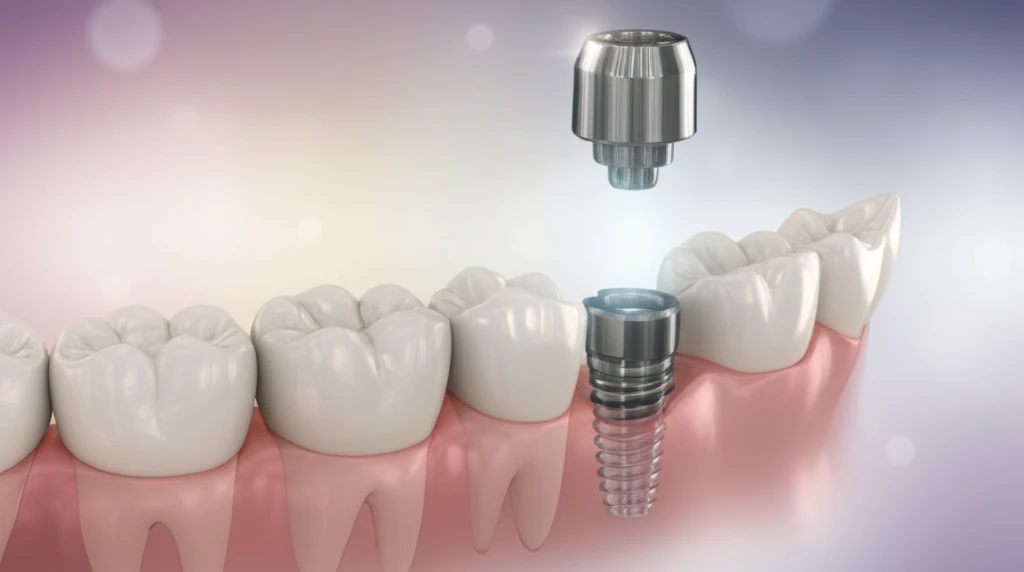
Innovative dental implant integrated into jawbone, symbolizing graft-less technique.

Graft-Less Sinus Floor Augmentation: Is It the Future of Dental Implants?

"Discover how a new implant design is revolutionizing graft-less sinus floor augmentation, offering hope for patients with severe bone resorption."


For many seeking dental implants, the journey can hit a significant roadblock: insufficient bone volume in the upper jaw. When teeth are lost, the body often resorbs the bone that once supported them, leading to a condition known as severe bone resorption. This is particularly common in the posterior maxilla (the back part of the upper jaw), making it difficult to place implants securely.

Traditionally, overcoming this obstacle has involved bone grafting. This surgical procedure uses bone material—either from the patient's own body or from a donor—to build up the deficient area. While effective, bone grafting is invasive, costly, and requires a longer healing time. It also carries the risks associated with any surgical procedure.

However, a new approach is gaining traction: graft-less sinus floor augmentation. This technique aims to elevate the sinus membrane (the lining of the sinus cavity above the upper jaw) and create space for new bone to form, all without the need for a bone graft. This method is less invasive and potentially more cost-effective. Now, with innovative implant designs, graft-less procedures are proving to be a viable option for many patients. Let's delve into the details of a groundbreaking study that explores the clinical outcomes of a novel implant design used in graft-less sinus floor augmentation.

How Does This New Implant Design Work?

Innovative dental implant integrated into jawbone, symbolizing graft-less technique.

The study, led by Giovanni Cricchio and Stefan Lundgren, investigated the clinical performance of a new reverse spiral flute implant design by Nobel Biocare AB in Gothenburg, Sweden. This design is specifically intended for use in both lateral and crestal graft-less sinus floor elevation protocols. The key is in the design’s features, which enhance bone formation and implant stability.

The researchers focused on patients needing implant-supported restoration in the posterior maxilla who had less than 8 mm of residual bone height at the implant site. These patients underwent either a lateral or crestal graft-less sinus floor elevation procedure, depending on their specific bone height. The crestal approach was used when the residual bone height was 6-8 mm, while the lateral approach was chosen for bone heights less than 6 mm.

  • Anodized Surface: Enhances osseointegration (the process of bone fusing to the implant).
  • Rounded Apex: Minimizes trauma during insertion and reduces the risk of sinus membrane perforation.
  • Sharp Cutting Flute: Oriented to direct bone chips into the sinus cavity, promoting new bone formation.
After implant placement, temporary fixed restorations were attached after six months of submerged healing. Final restorations were placed two months later. The researchers then meticulously assessed clinical and radiographic data, including the cumulative survival rate (CSR), implant stability quotient (ISQ), and any complications.

The Future of Dental Implants: Less Grafting, More Innovation?

The study’s findings suggest a promising future for graft-less sinus floor augmentation. The innovative implant design offers excellent stability and good survival rates, making it a viable option for patients with severe bone resorption. As technology advances, the move towards less invasive and more efficient dental implant procedures is likely to continue, improving outcomes and experiences for patients worldwide. If you’re facing the challenge of bone loss and considering dental implants, talking to your dentist about graft-less options might open the door to a more straightforward and successful treatment journey.

About this Article -

This article was crafted using a human-AI hybrid and collaborative approach. AI assisted our team with initial drafting, research insights, identifying key questions, and image generation. Our human editors guided topic selection, defined the angle, structured the content, ensured factual accuracy and relevance, refined the tone, and conducted thorough editing to deliver helpful, high-quality information.See our About page for more information.

Everything You Need To Know

1

What is graft-less sinus floor augmentation and how does it differ from traditional methods?

Graft-less sinus floor augmentation is a dental procedure designed to facilitate the placement of dental implants in patients with insufficient bone volume in the upper jaw, particularly in the posterior maxilla. Unlike traditional methods, such as bone grafting, which involve adding bone material to the deficient area, graft-less sinus floor augmentation aims to elevate the sinus membrane to create space for new bone formation without the need for a bone graft. This approach is considered less invasive and potentially more cost-effective than traditional bone grafting, offering a potentially quicker and less complicated path to dental implants for patients experiencing severe bone resorption.

2

How does the new implant design by Nobel Biocare AB contribute to the success of graft-less sinus floor augmentation?

The new reverse spiral flute implant design by Nobel Biocare AB is specifically engineered to enhance the success of graft-less sinus floor augmentation. This design incorporates several key features, including an anodized surface to promote osseointegration, a rounded apex to minimize trauma and reduce the risk of sinus membrane perforation, and a sharp cutting flute to direct bone chips into the sinus cavity, encouraging new bone formation. The implant is designed for use in both lateral and crestal graft-less sinus floor elevation protocols, providing clinicians with versatility in treating patients with varying degrees of bone loss in the posterior maxilla.

3

What are the key features of the new implant design that facilitate bone formation and implant stability in graft-less procedures?

The innovative implant design utilizes several critical features. First, the anodized surface is crucial for enhancing osseointegration, the direct structural and functional connection between the implant and the bone. Secondly, the rounded apex minimizes trauma during insertion, reducing the risk of complications such as sinus membrane perforation. Lastly, the sharp cutting flute is strategically oriented to direct bone chips into the sinus cavity, a process that actively promotes new bone formation. These features collectively contribute to both the implant's stability and the overall success of the graft-less sinus floor augmentation procedure.

4

What determines whether a patient is eligible for the crestal or lateral approach in graft-less sinus floor elevation?

The choice between the crestal and lateral approach in graft-less sinus floor elevation is primarily determined by the patient's residual bone height at the implant site in the posterior maxilla. The crestal approach is typically chosen when the residual bone height is between 6 and 8 mm. Conversely, the lateral approach is selected for patients with less than 6 mm of residual bone height. This distinction allows the surgeon to select the most appropriate method based on the specific anatomy and bone availability of the patient, optimizing the procedure for the best possible outcome in graft-less sinus floor augmentation.

5

What does the future hold for dental implants given the advancements in graft-less sinus floor augmentation?

The advancements in graft-less sinus floor augmentation, particularly with innovative implant designs, signal a promising future for dental implants. The trend towards less invasive and more efficient procedures is likely to continue, leading to improved outcomes and experiences for patients worldwide. These techniques offer excellent stability and good survival rates. As technology evolves, graft-less options could become increasingly prevalent, making dental implants a more accessible and straightforward treatment option for individuals facing the challenge of bone loss. This could potentially reduce the need for more invasive and time-consuming procedures like bone grafting, thereby improving the patient journey.

Newsletter Subscribe

Subscribe to get the latest articles and insights directly in your inbox.