
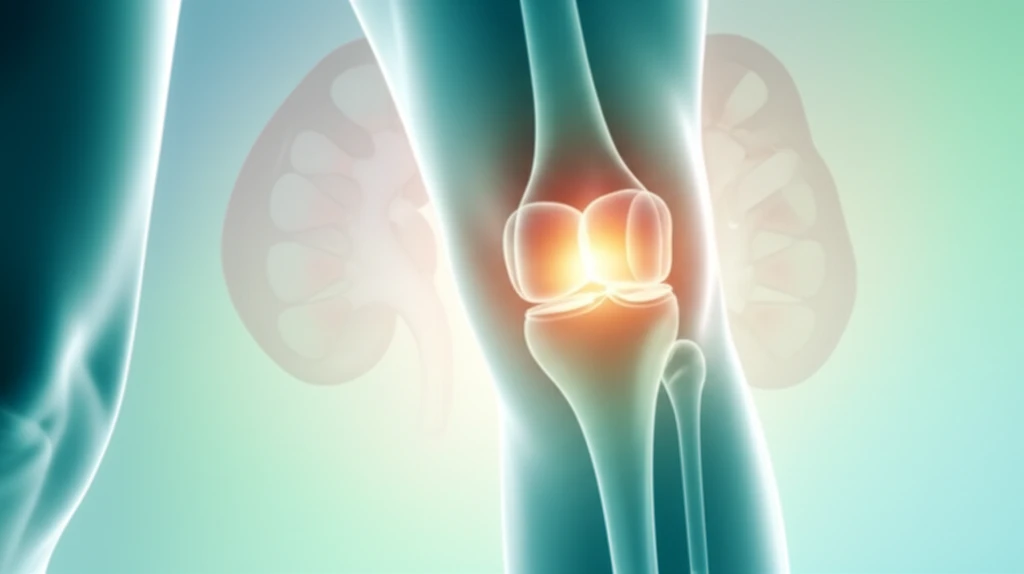
Stylized image representing reduced inflammation in a joint with a kidney landscape backdrop, symbolizing hope in gout treatment.

Gout Breakthrough: Canakinumab Offers New Hope for Difficult-to-Treat Cases

"Exploring the Efficacy and Safety of Canakinumab in Patients with Chronic Kidney Disease and Acute Gouty Arthritis"


Gout, a painful form of inflammatory arthritis, affects millions worldwide. Characterized by sudden, severe attacks of pain, swelling, redness, and tenderness in the joints, gout can significantly impact a person's quality of life. Traditional treatments, such as NSAIDs and colchicine, aren't always suitable for everyone, particularly those with underlying health conditions like chronic kidney disease (CKD).

Now, groundbreaking research offers new hope for individuals with difficult-to-treat gout. A study presented at the European League Against Rheumatism (EULAR) Congress has shed light on the efficacy and safety of canakinumab (CAN), a selective, fully human anti-IL-1β monoclonal antibody, in managing acute gouty arthritis (GA). This innovative treatment approach is particularly promising for patients with CKD and those who have not responded well to conventional therapies.

This article delves into the details of this research, exploring how canakinumab is changing the landscape of gout treatment and providing relief for those who need it most. We'll examine the study's findings, the benefits of canakinumab over traditional treatments, and what this means for the future of gout management.

What is Canakinumab and How Does It Fight Gout?

Stylized image representing reduced inflammation in a joint with a kidney landscape backdrop, symbolizing hope in gout treatment.

Canakinumab is a biologic medication that targets interleukin-1 beta (IL-1β), a key protein involved in inflammation. In gout, IL-1β plays a crucial role in triggering and sustaining the inflammatory response that leads to intense joint pain and swelling. By blocking IL-1β, canakinumab helps to reduce inflammation and alleviate gout symptoms.

Unlike traditional treatments like NSAIDs and corticosteroids, canakinumab offers a more targeted approach with a different mechanism of action. This specificity can be particularly beneficial for patients who cannot tolerate or don't respond well to conventional therapies.

  • Selective Action: Canakinumab precisely targets IL-1β, minimizing off-target effects.
  • Reduced Inflammation: By blocking IL-1β, it effectively reduces joint pain and swelling.
  • Alternative for Sensitive Patients: It offers a viable option for those with contraindications to NSAIDs and colchicine.
The unique mechanism of canakinumab makes it a valuable tool in managing acute gouty arthritis, especially in cases where traditional treatments fall short.

The Future of Gout Treatment: A Brighter Outlook

The research on canakinumab represents a significant step forward in gout management, offering a targeted and effective treatment option for patients with CKD and those who have not found relief with traditional therapies. As research continues and more data emerges, canakinumab promises to play an increasingly important role in improving the lives of individuals affected by this debilitating condition. With ongoing advancements, the future of gout treatment looks brighter than ever before.

About this Article -

This article was crafted using a human-AI hybrid and collaborative approach. AI assisted our team with initial drafting, research insights, identifying key questions, and image generation. Our human editors guided topic selection, defined the angle, structured the content, ensured factual accuracy and relevance, refined the tone, and conducted thorough editing to deliver helpful, high-quality information.See our About page for more information.

Everything You Need To Know

1

What is Canakinumab and how does it work to treat gout?

Canakinumab is a biologic medication specifically designed to target interleukin-1 beta (IL-1β). IL-1β is a key protein that drives inflammation, particularly in conditions like gout. By selectively blocking IL-1β, Canakinumab reduces the inflammation that causes joint pain and swelling in acute gouty arthritis. This targeted approach is especially beneficial for those who cannot tolerate or don't respond well to traditional treatments like NSAIDs and corticosteroids.

2

Why is Canakinumab considered an important treatment option for gout?

Traditional treatments for gout, such as NSAIDs and colchicine, may not be suitable for everyone, especially those with chronic kidney disease (CKD) or other underlying health issues. Canakinumab offers an alternative for these patients because it has a different mechanism of action, targeting IL-1β directly to reduce inflammation. This can provide relief when traditional treatments are ineffective or contraindicated.

3

How does Canakinumab's mechanism of action differ from traditional gout treatments?

Canakinumab selectively targets and blocks IL-1β, a protein that plays a central role in triggering and sustaining the inflammatory response in gout. This precise action minimizes off-target effects, reducing inflammation and alleviating joint pain and swelling. By blocking IL-1β, Canakinumab disrupts the inflammatory cascade, providing relief from acute gouty arthritis symptoms.

4

What are the main problems that Canakinumab helps to solve in treating gout?

Gout is characterized by sudden and severe attacks of pain, swelling, redness, and tenderness in the joints, significantly impacting a person's quality of life. Gout is caused by the build up of uric acid crystals in the joints. Traditional treatments like NSAIDs and colchicine aren't always suitable, particularly for those with conditions like chronic kidney disease (CKD). Canakinumab offers a targeted treatment option by blocking IL-1β, reducing inflammation and alleviating symptoms, especially for those who haven't responded to traditional therapies.

5

What is the significance of Canakinumab in the future of gout treatment?

Canakinumab represents a significant advancement in gout management because it offers a targeted and effective treatment option, especially for individuals with chronic kidney disease (CKD) and those who haven't found relief with traditional therapies. It improves the lives of individuals affected by this debilitating condition by targeting the source of the inflammation, IL-1β. This targeted approach minimizes off-target effects and provides relief from acute gouty arthritis symptoms, offering a brighter outlook for the future of gout treatment.

Newsletter Subscribe

Subscribe to get the latest articles and insights directly in your inbox.