
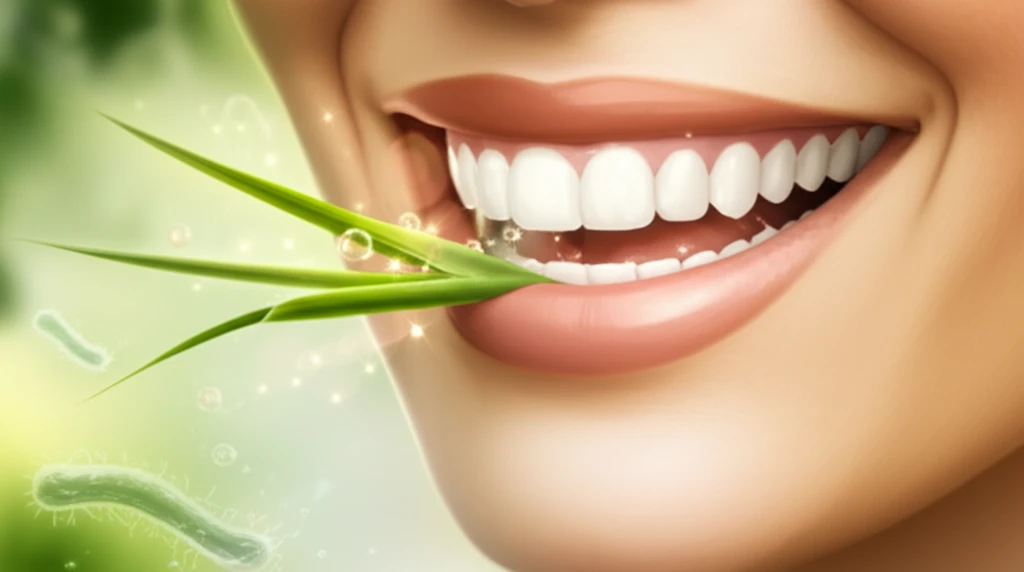
A digital illustration of a healthy smile with a sprig of lemon grass, representing the potential of natural remedies in dental care.

Goodbye, Cavities! How Lemon Grass Oil Could Revolutionize Dental Health

"Discover the surprising power of lemon grass in the fight against tooth decay and gum disease, offering a natural approach to a healthier smile."


In a world dominated by artificial solutions, the pursuit of natural remedies is more vital than ever. The field of dentistry is no exception. For generations, we've relied on fluoride and harsh chemicals to combat cavities and gum disease. But what if the answer to a healthier smile was as simple as a common kitchen ingredient? Enter: lemon grass oil.

This article delves into groundbreaking research that explores the antimicrobial properties of lemon grass oil (Cymbopogon citratus) and its potential to revolutionize oral health. We'll examine the science behind its effectiveness, its impact on the bacteria that cause tooth decay, and how it could change the way we approach dental care. Prepare to be amazed by the power of nature.

The study, published in the African Journal of Microbiology Research, highlights the potential of lemon grass oil in combating Streptococcus mutans, the primary culprit behind tooth decay. This article is not just about a research paper; it's about the possibility of a healthier future, one where nature's remedies take center stage in our pursuit of well-being.

Lemon Grass Oil: Nature's Secret Weapon Against Dental Plaque

A digital illustration of a healthy smile with a sprig of lemon grass, representing the potential of natural remedies in dental care.

The primary focus of the research revolves around the effect of lemon grass oil (LGO) on Streptococcus mutans, a type of bacteria that thrives in the mouth and is the main cause of dental cavities. The study aimed to see if LGO could stop or slow down the growth of this harmful bacteria. The researchers used a laboratory setting to simulate the conditions in the mouth, using special discs to mimic tooth surfaces where bacteria like S. mutans form biofilms.

The study found that LGO effectively reduced the growth of S. mutans biofilms. This is significant because biofilms are complex communities of bacteria that are difficult to eradicate. The researchers found that the essential oil of lemon grass was effective in controlling bacterial growth in biofilms of Streptococcus mutans. This research suggests LGO could be a natural way to support oral health. This discovery opens doors to innovative approaches to oral care, offering a promising, natural alternative to traditional treatments.

  • Reduced Bacterial Growth: LGO significantly decreased the growth of S. mutans biofilms.
  • Natural Alternative: Offers a natural approach to fighting tooth decay, compared to traditional treatments.
  • Potential for Future Use: LGO can be a valuable ingredient in dental products.
The study results are exciting because they suggest that lemon grass oil could be a key player in the future of dental health. The study paves the way for further research into how this essential oil can be incorporated into dental products like mouthwashes and toothpastes, giving people a natural way to improve their oral health.

The Future of Dental Care: Embracing Nature's Solutions

As we continue to explore the wonders of nature, the potential of lemon grass oil in dental health is a shining example of how natural remedies can make a real difference. The research opens the door to new possibilities in oral care. By understanding and utilizing the power of natural ingredients like lemon grass oil, we can look forward to a future of healthier smiles and a stronger focus on overall well-being.

About this Article -

This article was crafted using a human-AI hybrid and collaborative approach. AI assisted our team with initial drafting, research insights, identifying key questions, and image generation. Our human editors guided topic selection, defined the angle, structured the content, ensured factual accuracy and relevance, refined the tone, and conducted thorough editing to deliver helpful, high-quality information.See our About page for more information.

Everything You Need To Know

1

What makes lemon grass oil a potential game-changer for dental health?

Lemon grass oil, specifically its effect on *Streptococcus mutans*, is a potential revolution because it offers a natural alternative to traditional dental treatments. Research indicates that *lemon grass oil* can effectively reduce the growth of *Streptococcus mutans* biofilms, which are complex communities of bacteria that are difficult to eradicate and are a primary cause of tooth decay. This is significant as current treatments heavily rely on fluoride and other chemicals. The prospect of incorporating *lemon grass oil* into dental products offers a more natural approach to maintaining oral health.

2

How does lemon grass oil tackle the problem of tooth decay?

The ability of *lemon grass oil* to tackle tooth decay lies in its antimicrobial properties. The oil has demonstrated the ability to combat *Streptococcus mutans*, the main bacteria responsible for causing dental cavities. Studies have shown that *lemon grass oil* can effectively reduce the growth of *Streptococcus mutans* biofilms. By controlling the growth of these bacterial communities, *lemon grass oil* helps prevent the formation of dental plaque and, consequently, reduces the risk of tooth decay.

3

What are biofilms, and why is it important that lemon grass oil can reduce them?

Biofilms are complex communities of bacteria that adhere to surfaces within the mouth. *Streptococcus mutans* is a bacteria that form these biofilms, making them difficult to eliminate. The ability of *lemon grass oil* to reduce *Streptococcus mutans* biofilms is crucial because these biofilms are a primary factor in tooth decay and other oral health issues. By disrupting and reducing these biofilms, *lemon grass oil* can prevent the bacteria from causing harm to the teeth and gums, thus promoting better oral health. This is especially significant because biofilms are notoriously resistant to many traditional antimicrobial agents.

4

How might lemon grass oil be incorporated into future dental care products?

Given its demonstrated effectiveness in combating *Streptococcus mutans*, *lemon grass oil* could be integrated into various dental care products. One can expect to see *lemon grass oil* as a key ingredient in mouthwashes and toothpastes, offering consumers a more natural option for maintaining their oral hygiene. Further research could lead to its inclusion in dental varnishes or gels for targeted treatment of areas prone to decay. The possibilities are vast, but they all point toward harnessing the power of nature to enhance our approach to dental care.

5

What other areas of dentistry could benefit from incorporating natural solutions like lemon grass oil?

Beyond cavity prevention, natural solutions such as *lemon grass oil* could benefit other areas of dentistry, including the treatment of gingivitis and periodontitis. Its antimicrobial properties could aid in reducing inflammation and fighting harmful bacteria associated with gum disease. Additionally, natural remedies might play a role in managing oral thrush or other fungal infections in the mouth. As research advances, natural ingredients could be integrated into restorative dentistry, such as in dental materials with antimicrobial properties to prevent secondary infections around fillings or crowns. The focus extends beyond just treating existing problems to preventing future ones.

Newsletter Subscribe

Subscribe to get the latest articles and insights directly in your inbox.