
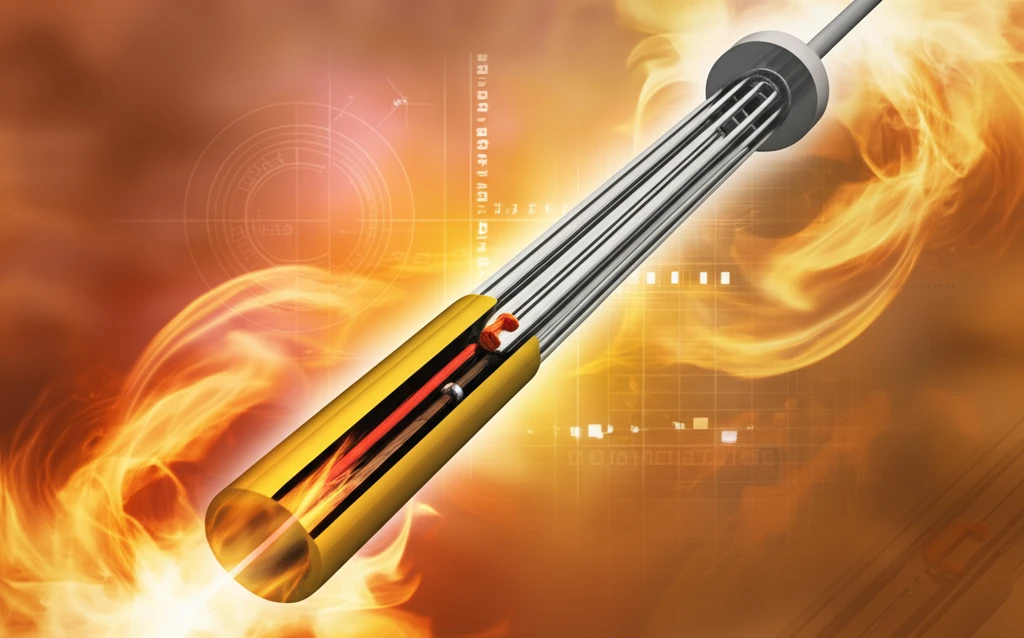
Gold vs. Platinum: The Unexpected Temperature Sensor Showdown

"Are thermocouples made from gold and platinum ready to replace traditional thermometers in extreme heat? Let's explore the science and potential."
For years, industries needing to measure ultra-high temperatures have relied on platinum resistance thermometers. While effective, these thermometers face limitations in extreme conditions, sparking a search for more robust alternatives.
Enter the gold/platinum thermocouple. Emerging research highlights the potential of these thermocouples to not only withstand intense heat but also provide exceptionally stable and consistent readings. This has researchers questioning if they could become the new gold standard in high-temperature measurement.
This article dives into the world of gold/platinum thermocouples, comparing them against current temperature measurement methods and exploring their potential impact across industries.
What Makes Gold/Platinum Thermocouples So Promising?
Thermocouples, in general, work by measuring temperature differences through the Seebeck effect. This effect occurs when two dissimilar metals are joined, creating a voltage that varies with temperature. Gold and platinum, both highly stable elements, create a thermocouple that is exceptionally resistant to contamination and maintains its accuracy even at extreme temperatures.
- Stability at High Temperatures: Unlike standard platinum resistance thermometers, gold/platinum thermocouples maintain stability and repeatability in environments exceeding 700°C.
- Resistance to Contamination: The inherent stability of gold and platinum provides reliable measurements, even in harsh industrial conditions.
- Potential for Miniaturization: Their simple construction allows for smaller, more adaptable sensors than traditional high-temperature measurement devices.
The Future of High-Temperature Measurement
Gold/platinum thermocouples hold significant promise for revolutionizing high-temperature measurement across diverse fields. While challenges remain in refining gold wire homogeneity, ongoing research and improved annealing techniques pave the way for reliable, high-precision temperature sensing in the most demanding environments.