
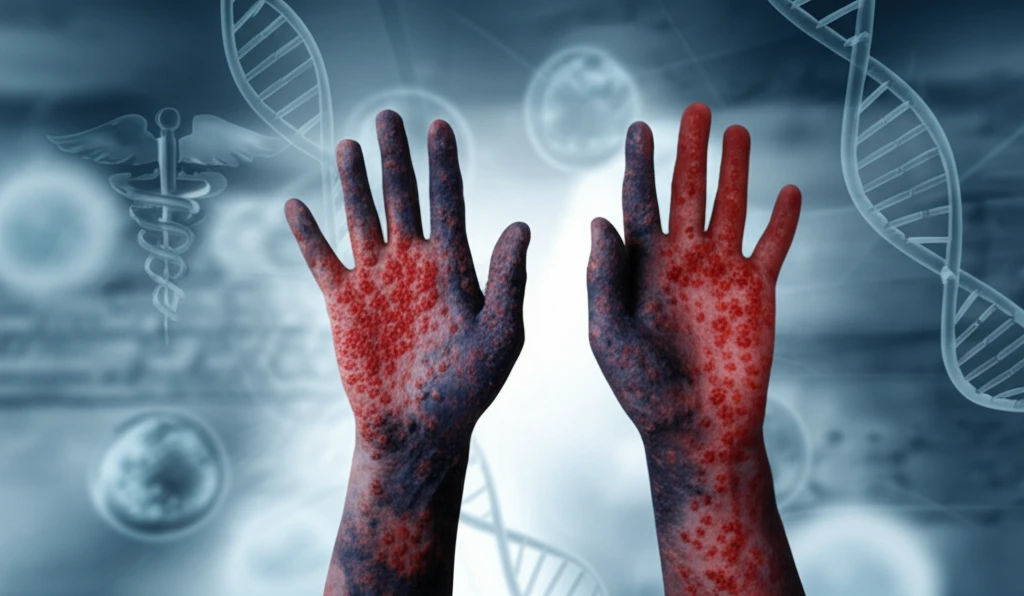
Hands and feet with the characteristic rash of Gloves and Socks Syndrome.

Gloves and Socks Syndrome: What You Need to Know About This Rare Condition

"Unveiling the mysteries of 'Gloves and Socks' syndrome in an HIV patient: symptoms, diagnosis, and treatment options explored."


The human body can manifest illnesses in surprising ways, and one such intriguing condition is the 'Gloves and Socks' syndrome. Characterized by a distinctive rash affecting the hands and feet, this syndrome can be both puzzling and concerning. While it's often linked to parvovirus B19 infection, its appearance in individuals with HIV/AIDS presents a unique clinical scenario.

In a recent medical case, doctors encountered a 39-year-old patient with a known history of HIV-1 infection who developed the telltale signs of 'Gloves and Socks' syndrome. This patient, who was on effective antiretroviral therapy with undetectable viral load and a healthy CD4+ count, highlights the complexities of diagnosing and managing this syndrome, particularly in immunocompromised individuals.

Let’s delve into the specifics of this rare condition, exploring its causes, symptoms, diagnostic process, and treatment options. Understanding 'Gloves and Socks' syndrome is crucial for both healthcare professionals and individuals seeking answers about unusual skin manifestations.

What are the Key Symptoms of Gloves and Socks Syndrome?

Hands and feet with the characteristic rash of Gloves and Socks Syndrome.

The primary symptom of 'Gloves and Socks' syndrome is a distinctive rash that appears on the hands and feet. This rash typically exhibits the following characteristics:

The rash associated with Gloves and Socks Syndrome often presents several distinct characteristics:

  • Erythematous-Purpuric Appearance: The rash is often red (erythematous) and may have a purplish discoloration (purpuric), indicating small areas of bleeding under the skin.
  • Bilateral and Symmetrical: The rash usually affects both hands and both feet in a symmetrical pattern.
  • Edematous: The affected areas may be swollen (edematous).
  • Abrupt Upper Limit: The rash tends to have a clear, well-defined border, stopping abruptly at a certain point on the limbs.
  • Associated Symptoms: The rash can be accompanied by other symptoms, such as joint pain (arthralgia), general malaise, sore throat (odinophagia), and a non-productive cough.
In the described case, the patient experienced these symptoms over a five-day period, prompting their admission to the hospital. Recognizing these signs is the first step toward proper diagnosis and management.

Seeking Answers and Support

If you suspect you may have 'Gloves and Socks' syndrome, consulting a healthcare professional is crucial. Early diagnosis and appropriate management can alleviate symptoms and prevent potential complications. Support groups and online resources can also provide valuable information and a sense of community for those affected by rare conditions. Remember, you're not alone, and answers are within reach.

About this Article -

This article was crafted using a human-AI hybrid and collaborative approach. AI assisted our team with initial drafting, research insights, identifying key questions, and image generation. Our human editors guided topic selection, defined the angle, structured the content, ensured factual accuracy and relevance, refined the tone, and conducted thorough editing to deliver helpful, high-quality information.See our About page for more information.

This article is based on research published under:

DOI-LINK: 10.20344/amp.7017, Alternate LINK

Title: Síndrome ‘Luvas-E-Peúgas’ Em Doente Com Infecção Por Vih

Subject: General Medicine

Journal: Acta Médica Portuguesa

Publisher: Ordem dos Medicos

Authors: Diana Póvoas, Cândida Fernandes, Fernando Maltez

Published: 2016-10-31

Everything You Need To Know

1

What exactly is 'Gloves and Socks' syndrome, and what makes it a concern?

'Gloves and Socks' syndrome is a rare condition characterized by a distinctive rash that primarily affects the hands and feet. The rash presents as erythematous-purpuric (red with purplish discoloration), often accompanied by edema (swelling). Its symmetrical nature and abrupt upper limit on the limbs distinguish it. The concern arises from its potential association with underlying conditions, such as parvovirus B19 infection, and its unique presentation in individuals with compromised immune systems, like those with HIV/AIDS. Timely diagnosis and management are essential to alleviate symptoms and prevent complications, making it a significant concern for both patients and healthcare professionals.

2

What are the key visual indicators of the rash associated with 'Gloves and Socks' syndrome?

The rash associated with 'Gloves and Socks' syndrome is characterized by several distinct features. Primarily, it presents with an erythematous-purpuric appearance, meaning it's red (erythematous) and may have a purplish discoloration (purpuric) due to small areas of bleeding under the skin. The rash is typically bilateral and symmetrical, affecting both hands and both feet in a corresponding pattern. Additionally, the affected areas may appear edematous (swollen). A notable characteristic is the abrupt upper limit of the rash, indicating a clear, well-defined border on the limbs. These visual cues are essential for recognizing the syndrome.

3

Besides the rash, what other symptoms might a person with 'Gloves and Socks' syndrome experience?

Alongside the characteristic rash, individuals with 'Gloves and Socks' syndrome may experience a range of other symptoms. These can include joint pain (arthralgia), general malaise (a feeling of discomfort or illness), sore throat (odinophagia), and a non-productive cough (coughing without bringing up mucus). The presence of these associated symptoms, in conjunction with the distinctive rash, helps in the diagnosis and assessment of the syndrome, especially when considering potential underlying causes like parvovirus B19 or, in specific cases, its presentation in individuals with HIV/AIDS.

4

How does 'Gloves and Socks' syndrome manifest differently in someone with HIV/AIDS compared to someone without it?

While the fundamental presentation of the rash in 'Gloves and Socks' syndrome remains consistent, its appearance in individuals with HIV/AIDS presents a unique clinical scenario due to their immunocompromised status. The body's response to infections, like parvovirus B19 (often associated with the syndrome), can be altered. Furthermore, the underlying HIV infection and its treatments, such as antiretroviral therapy, can also influence the presentation and management of the syndrome. In individuals with HIV/AIDS, the syndrome can be more challenging to diagnose and manage, necessitating a comprehensive approach that considers both the syndrome and the underlying HIV infection.

5

What is the significance of early diagnosis and management of 'Gloves and Socks' syndrome?

Early diagnosis and appropriate management of 'Gloves and Socks' syndrome are crucial for several reasons. Prompt identification of the syndrome allows healthcare professionals to alleviate symptoms and prevent potential complications. This involves a thorough assessment of the rash's characteristics, and the accompanying symptoms such as joint pain or sore throat, as well as considering potential underlying causes like parvovirus B19, especially in patients with HIV/AIDS. Early intervention may include supportive care to manage symptoms, and in some cases, targeted treatments depending on the underlying cause. Early intervention ensures a better prognosis and reduces the risk of further health issues.

Newsletter Subscribe

Subscribe to get the latest articles and insights directly in your inbox.