
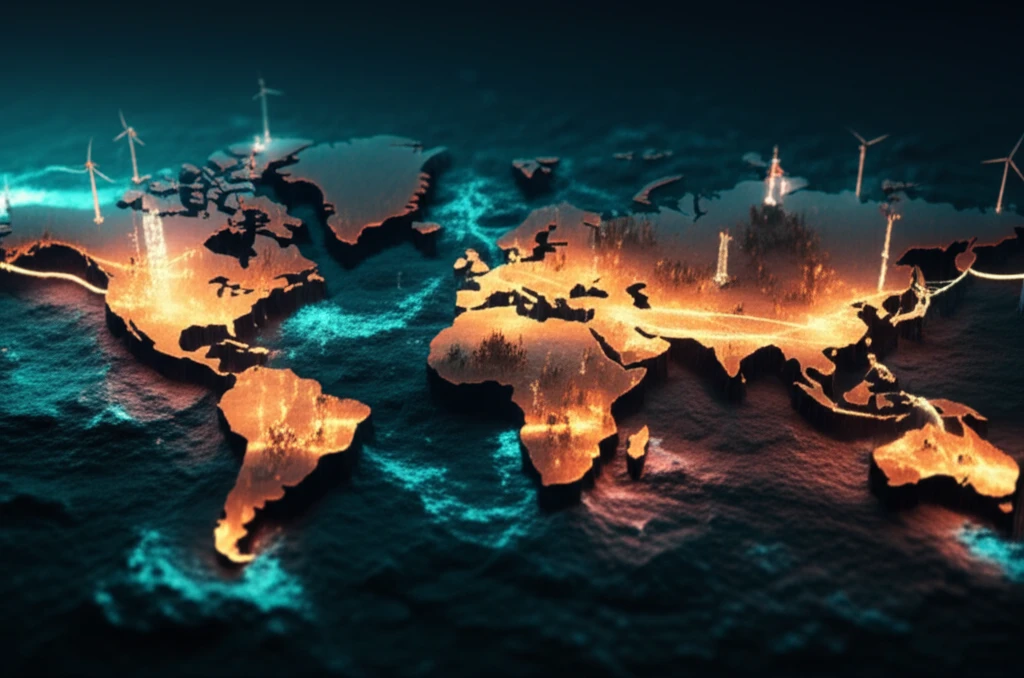
Global natural gas production represented by glowing pipelines on a world map, highlighting energy extraction technologies and sustainability.

Global Gas Production: How Geopolitics & Technology Shape Energy Trends

"A look at how shifting regional outputs and innovative techniques are reshaping the natural gas landscape."


Natural gas remains a crucial component of the global energy mix, influencing everything from power generation to heating and industrial processes. Recent data highlights evolving trends in its production, shaped by both regional dynamics and technological advancements. Understanding these shifts is vital for stakeholders across the energy sector, informing strategic decisions and policy developments.

In 2016, global natural gas production reached 3,563.43 billion cubic meters, reflecting the continuous demand for this energy source. However, growth isn't uniform across all regions. North America and the Middle East are seeing increased production, while Europe and CIS countries are experiencing fluctuations due to geopolitical and economic factors.

Technological innovations, like hydraulic fracturing (fracking) and enhanced extraction methods, play a significant role in boosting production in certain areas. These advancements enable access to previously unreachable reserves, impacting the global supply and market dynamics. These methods influence environmental considerations and sustainability practices within the industry.

What are the Key Regional Trends Shaping Global Gas Production?

Global natural gas production represented by glowing pipelines on a world map, highlighting energy extraction technologies and sustainability.

Natural gas production varies significantly across different regions, driven by diverse factors such as resource availability, political stability, and technological capabilities. Here's a detailed look at some key regional trends:

North America has seen substantial growth in natural gas production, primarily driven by the United States and Canada. Technological advancements in shale gas extraction have unlocked vast reserves, transforming the region into a major global producer. This surge has not only met domestic demand but also facilitated exports, reshaping international energy markets. Production in the U.S. alone reached 749.59 billion cubic meters in 2016.

  • Western Hemisphere: Production led by the United States, with significant contributions from Canada and Mexico.
  • OECD Europe: Fluctuating production due to factors like declining North Sea reserves and geopolitical tensions.
  • CIS Countries: Russia remains the dominant producer, with output influenced by economic and political factors.
  • Middle East: Continuous growth driven by countries like Qatar and Saudi Arabia.
  • Asia-Pacific: Increasing demand met by a mix of domestic production and imports, with China and Australia playing key roles.
These regional shifts highlight the complex interplay of factors influencing global natural gas production. Each region's unique circumstances contribute to the overall dynamics of the energy sector. As demand continues to evolve, understanding these trends will be crucial for navigating the future of natural gas.

Navigating the Future of Natural Gas Production

The natural gas industry is at a critical juncture, shaped by technological advancements, geopolitical dynamics, and environmental concerns. Understanding these factors is essential for industry participants and policymakers alike. As the world transitions to cleaner energy sources, natural gas will likely play a bridging role, requiring strategic planning and sustainable practices to ensure its continued relevance.

About this Article -

This article was crafted using a human-AI hybrid and collaborative approach. AI assisted our team with initial drafting, research insights, identifying key questions, and image generation. Our human editors guided topic selection, defined the angle, structured the content, ensured factual accuracy and relevance, refined the tone, and conducted thorough editing to deliver helpful, high-quality information.See our About page for more information.

Everything You Need To Know

1

What are the primary factors driving the trends in global natural gas production?

The evolving trends in global natural gas production are primarily shaped by regional dynamics and technological advancements. Specifically, these include resource availability, political stability, and technological capabilities such as hydraulic fracturing (fracking) and enhanced extraction methods. These advancements enable access to previously unreachable reserves, impacting the global supply and market dynamics. These methods influence environmental considerations and sustainability practices within the industry.

2

How have technological innovations like hydraulic fracturing impacted natural gas production, and what are the broader implications?

Technological innovations, most notably hydraulic fracturing (fracking) and enhanced extraction methods, have significantly boosted natural gas production, particularly in North America. These advancements allow access to previously unreachable reserves, transforming regions like the United States and Canada into major global producers. The broader implications include reshaping international energy markets by facilitating exports and influencing environmental considerations and sustainability practices within the industry. However, the environmental impact of fracking remains a critical consideration.

3

Which regions are experiencing growth in natural gas production, and what factors are contributing to their success?

North America and the Middle East are experiencing increased natural gas production. In North America, growth is driven by technological advancements in shale gas extraction, particularly in the United States and Canada. This has unlocked vast reserves and transformed the region into a major global producer. The Middle East sees continuous growth due to countries like Qatar and Saudi Arabia, supported by their substantial resource availability and strategic geopolitical positioning. In contrast, Europe and CIS countries are experiencing fluctuations due to geopolitical and economic factors.

4

How do geopolitical factors influence natural gas production in regions like Europe and CIS countries, and what are the potential implications?

In Europe and CIS countries, geopolitical factors significantly influence natural gas production, leading to fluctuations. Declining North Sea reserves, coupled with political tensions, impact Europe's production levels. In CIS countries, Russia remains the dominant producer, but its output is closely tied to economic and political factors. These geopolitical dynamics can affect energy security, market stability, and international relations, potentially leading to supply disruptions and price volatility. Understanding these influences is crucial for stakeholders across the energy sector.

5

In the context of a transition to cleaner energy sources, what role will natural gas likely play, and what strategies are necessary to ensure its continued relevance?

Natural gas is expected to play a bridging role during the transition to cleaner energy sources. To ensure its continued relevance, strategic planning and sustainable practices are essential. This includes investing in technologies to reduce emissions associated with natural gas production and usage, such as carbon capture and storage. Additionally, integrating natural gas with renewable energy sources can create a more resilient and environmentally friendly energy system. Policymakers and industry participants must also address environmental concerns related to extraction methods like hydraulic fracturing to maintain public support and ensure long-term viability.

Newsletter Subscribe

Subscribe to get the latest articles and insights directly in your inbox.