
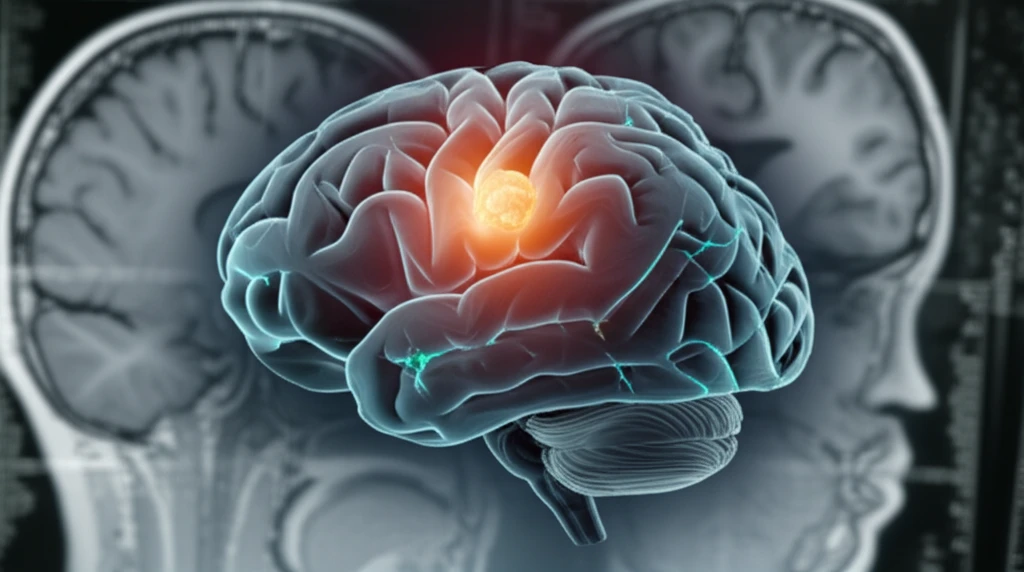
Glioblastoma Breakthrough: Shining a Light on Tumor Cells Beyond MRI Detection

"New research reveals how a fluorescent dye can highlight hidden tumor cells in brain cancer, even when MRI scans appear clear."
Glioblastoma multiforme (GBM) is one of the most aggressive forms of brain cancer. Treating it often involves surgery to remove as much of the tumor as possible. Surgeons use various tools and techniques to guide them, including magnetic resonance imaging (MRI). MRI helps visualize the tumor, but sometimes, cancer cells can hide in plain sight, evading detection by conventional imaging.
A fluorescent substance called 5-aminolevulinic acid (5-ALA) is emerging as a valuable tool in GBM surgery. When administered to patients, 5-ALA causes tumor cells to glow under a special blue light, making them easier to see and remove. This technique has significantly improved the extent of tumor resection, leading to better outcomes for patients.
However, a perplexing phenomenon has been observed during 5-ALA-guided surgery: fluorescence in the walls of the brain's ventricles (fluid-filled spaces) even when MRI scans show no sign of tumor involvement. A new study published in Oncology Reports investigates this unexpected fluorescence, shedding light on the presence of tumor cells beyond the reach of MRI detection.
Unveiling Hidden Tumor Cells with 5-ALA Fluorescence
The study, led by researchers at Yonsei University College of Medicine in South Korea, involved 19 patients with newly diagnosed GBM located near the lateral ventricle. During surgery, the surgeons carefully examined the ventricular walls for fluorescence after administering 5-ALA. They collected tissue samples from areas with and without fluorescence, even if the MRI scans showed no tumor presence.
- Intraoperative Observation: Surgeons used microscopes with special filters to identify areas of fluorescence in the ventricle walls during GBM surgery.
- Tissue Sampling: 25 ventricular wall tissue samples were collected, regardless of whether they showed fluorescence or had visible tumor involvement on MRI.
- Histopathological Analysis: These samples underwent detailed examination to determine if tumor cells were present, and advanced techniques like immunohistochemistry and genetic analysis were used.
Implications and Future Directions for Glioblastoma Treatment
This study highlights the potential of 5-ALA fluorescence to reveal hidden tumor cells that MRI might miss. This could lead to more complete tumor removal during surgery, potentially improving patient outcomes. However, the study also raises questions about what causes fluorescence in the absence of tumor cells. Further research is needed to understand the nature of this unexpected ventricular wall fluorescence and to optimize the use of 5-ALA in GBM surgery. More studies including molecular characterization, of these falsely fluorescing samples are warranted.