
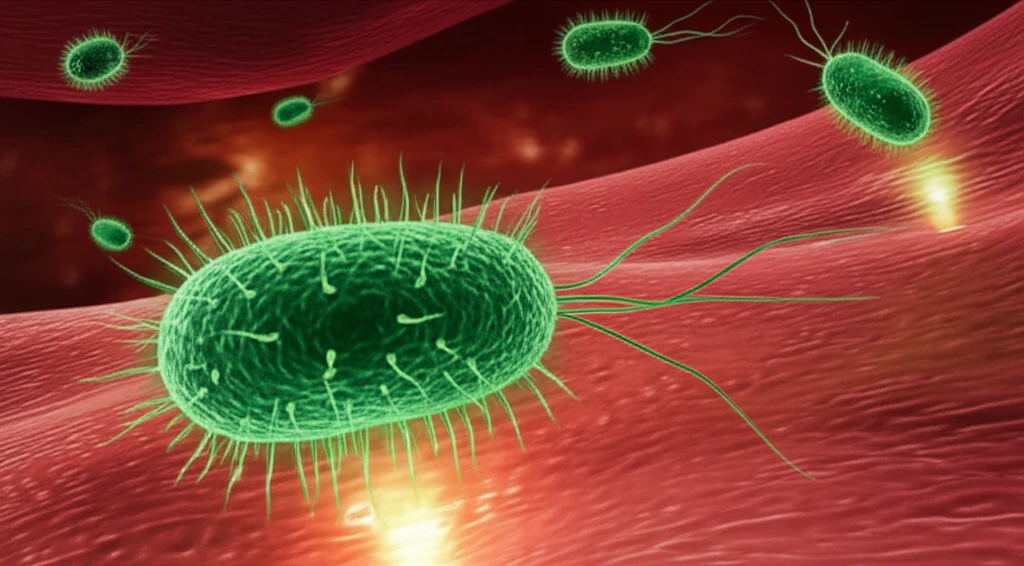
Giardia's Sneaky Strategy: How This Parasite Turns Host Defenses Into Offense

"New research reveals Giardia duodenalis doesn't just attach – it manipulates host signals to boost its virulence, paving the way for innovative treatment approaches."
Giardia duodenalis is a microscopic parasite responsible for a significant number of gastroenteritis cases worldwide. Understanding how this parasite interacts with its host is crucial for developing effective treatments and preventive measures. While previous research has focused on the attachment mechanisms of Giardia, new studies are revealing a more complex picture of its pathogenesis.
A recent study published in Scientific Reports sheds light on Giardia's ability to manipulate its host's defenses for its own benefit. Researchers used HT-29 intestinal epithelial cells (IEC) as a model to demonstrate that Giardia actively responds to host secretions, triggering a cascade of events that ultimately enhance its virulence. This discovery challenges the traditional view of Giardia pathogenesis and opens new avenues for therapeutic intervention.
This article dives into the details of this groundbreaking research, exploring how Giardia's interaction with host secretions leads to the upregulation of virulence factors, independent of direct attachment. We'll uncover the specific proteins and pathways involved in this process and discuss the implications for future Giardia treatment strategies. Get ready to rethink everything you thought you knew about this cunning parasite.
Decoding Giardia's Virulence Strategy: It's More Than Just Attachment
The conventional understanding of Giardia pathogenesis centers on its strong attachment to intestinal epithelial cells via a ventral adhesive disc. However, the new study reveals a distinct initial phase where Giardia responds to soluble signals secreted by the host cells before attachment even occurs. This pre-attachment phase is characterized by a reduced tendency for the parasite to attach and the induction of specific virulence factors.
- Tenascins: Proteins involved in cell adhesion and potentially secreted during early pathogenesis.
- Cathepsin-B precursor: A cysteine protease that degrades IL-8, blocking neutrophil chemotaxis.
- Cystatin: A protease inhibitor that may modulate the host immune response.
- Variant-Specific Surface Proteins (VSPs): Proteins involved in immune evasion and antigenic variation.
Implications for Future Giardia Treatments: Targeting the Right Stage
These findings highlight the complexity of Giardia pathogenesis, revealing a biphasic process involving distinct interactions with the host at different stages. The initial response to soluble host signals primes Giardia for virulence, while subsequent attachment triggers intracellular pathways to counteract host defenses.
Understanding these distinct phases is crucial for developing targeted treatments. Interventions aimed at blocking attachment may be less effective if Giardia has already been primed for virulence by host secretions. Instead, future therapies could focus on disrupting the signaling pathways activated by HSF or inhibiting the function of upregulated virulence factors, such as VSPs or cathepsin-B.
By targeting the specific mechanisms employed by Giardia at different stages of infection, we can develop more effective and tailored treatments to combat this widespread parasitic disease. This research provides a crucial step towards a deeper understanding of Giardia pathogenesis and lays the groundwork for innovative therapeutic strategies.