
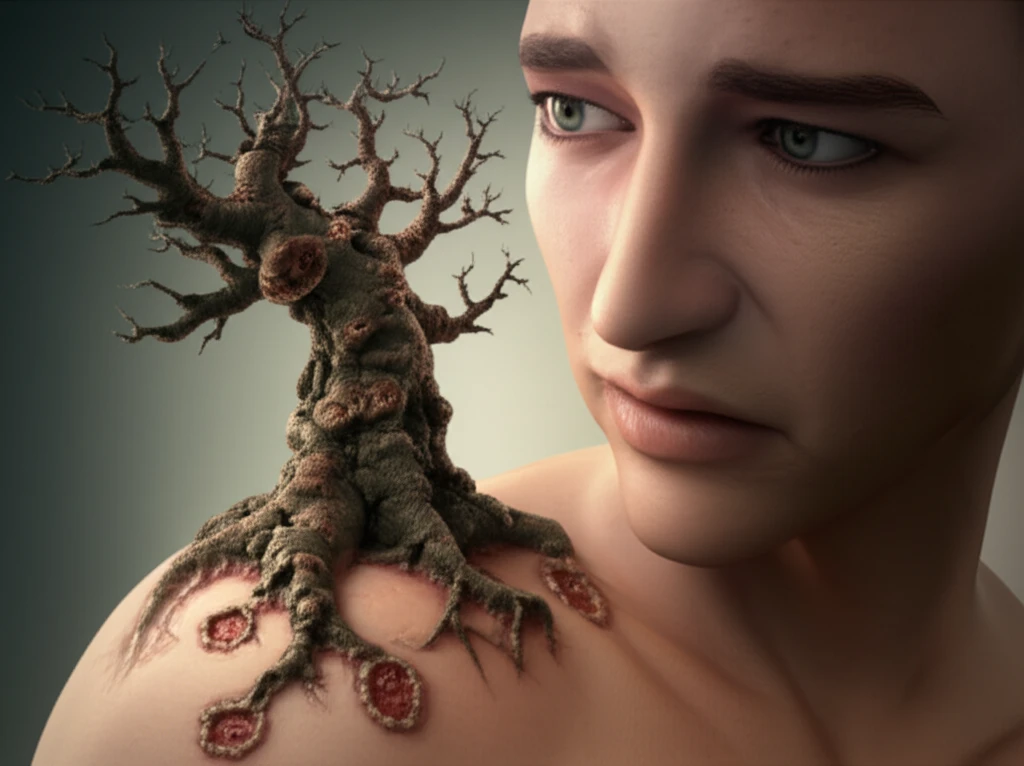
Surreal illustration of Giant Basal Cell Carcinoma on a shoulder.

Giant Basal Cell Carcinoma: What You Need to Know About This Rare Skin Cancer

"Uncover the facts about Giant Basal Cell Carcinoma (GBCC), its causes, symptoms, and treatments. Arm yourself with the knowledge to protect your skin and health."


Basal cell carcinoma (BCC) is the most frequently diagnosed type of skin cancer. However, a variant known as Giant Basal Cell Carcinoma (GBCC) is far less common, accounting for less than 0.5% of all BCC cases. GBCC is defined as a BCC lesion exceeding 5 cm in diameter. Due to its size and potential for aggressive behavior, understanding GBCC is crucial for early detection and effective treatment.

GBCC can be more aggressive than typical BCC, often leading to local invasion and, in rare cases, metastasis (spread to other parts of the body). This underscores the importance of recognizing the risk factors, signs, and available treatments for this condition. Neglecting skin changes can result in the tumor reaching significant sizes, complicating treatment and potentially impacting quality of life.

This article aims to provide a comprehensive overview of GBCC, drawing from clinical research and case studies to equip you with essential knowledge. We will cover the characteristics, risk factors, diagnosis, and treatment options for GBCC, empowering you to take proactive steps in protecting your skin health. Remember, early detection is key, and vigilance is your best defense.

What Makes a Basal Cell Carcinoma "Giant?"

Surreal illustration of Giant Basal Cell Carcinoma on a shoulder.

The designation of a basal cell carcinoma as "giant" is based primarily on its size. By definition, a GBCC is a basal cell carcinoma that measures more than 5 cm (approximately 2 inches) in diameter. This size threshold is significant because larger tumors often exhibit more aggressive behavior and may require more extensive treatment.

While size is the defining characteristic, GBCCs also tend to present with other distinctive features:

  • Location: GBCCs are more commonly found on the trunk, although they can occur on other sun-exposed areas of the body.
  • Appearance: These tumors often appear as large, ulcerated, or nodular lesions. They may have elevated and irregular borders, with areas of necrosis (dead tissue) or granulation (new connective tissue and blood vessels).
  • Growth Rate: GBCCs can grow rapidly over time, especially if left untreated. This rapid growth can lead to significant tissue damage and complications.
It's important to note that not all large BCCs are inherently more dangerous than smaller ones. However, their size often indicates a longer period of neglect or a more aggressive growth pattern, both of which can increase the risk of complications. If you notice any unusual skin growths, regardless of size, it is essential to consult a dermatologist for proper evaluation.

Taking Control of Your Skin Health

Giant Basal Cell Carcinoma, while rare, highlights the importance of regular skin checks and prompt medical attention for any suspicious changes. By understanding the characteristics, risk factors, and treatment options for GBCC, you can empower yourself to take control of your skin health and ensure early detection and effective management of any potential concerns. Stay vigilant, stay informed, and prioritize your skin health for a brighter, healthier future.

About this Article -

This article was crafted using a human-AI hybrid and collaborative approach. AI assisted our team with initial drafting, research insights, identifying key questions, and image generation. Our human editors guided topic selection, defined the angle, structured the content, ensured factual accuracy and relevance, refined the tone, and conducted thorough editing to deliver helpful, high-quality information.See our About page for more information.

This article is based on research published under:

DOI-LINK: 10.1590/s0365-05962012000300019, Alternate LINK

Title: Giant Basal Cell Carcinoma

Subject: Dermatology

Journal: Anais Brasileiros de Dermatologia

Publisher: FapUNIFESP (SciELO)

Authors: Nilton Nasser, Nilton Nasser Filho, Bruno Trauczynski Neto, Lissandra Melati Da Silva

Published: 2012-06-01

Everything You Need To Know

1

What exactly defines a Basal Cell Carcinoma as 'Giant Basal Cell Carcinoma (GBCC)', and why is this distinction important?

A Basal Cell Carcinoma is classified as a Giant Basal Cell Carcinoma (GBCC) when it exceeds 5 cm in diameter. This size threshold is significant because GBCCs tend to exhibit more aggressive behavior than smaller Basal Cell Carcinomas. Their size often reflects a longer period of growth or a more aggressive growth pattern, increasing the risk of complications such as local invasion and, in rare cases, metastasis. Early detection of all Basal Cell Carcinomas allows for treatment before it becomes a GBCC.

2

Where on the body are Giant Basal Cell Carcinomas (GBCC) typically found, and what are some common visual characteristics to watch out for?

Giant Basal Cell Carcinomas (GBCCs) are more commonly found on the trunk, although they can appear on other sun-exposed areas of the body. Visually, GBCCs often present as large, ulcerated, or nodular lesions. They may have elevated and irregular borders, with areas of necrosis (dead tissue) or granulation (new connective tissue and blood vessels). Any unusual skin growth, regardless of size, should be evaluated by a dermatologist, but the size and appearance of GBCCs make them particularly concerning.

3

How does the growth rate of Giant Basal Cell Carcinoma (GBCC) compare to typical Basal Cell Carcinoma (BCC), and what are the potential consequences of rapid growth?

Giant Basal Cell Carcinomas (GBCCs) can exhibit a rapid growth rate, especially if left untreated. This rapid growth can lead to significant tissue damage and complications, distinguishing it from the potentially slower growth of typical Basal Cell Carcinoma (BCC). The aggressive nature of GBCC, indicated by its size and growth rate, underscores the need for prompt medical attention to prevent local invasion and other severe outcomes. Unlike GBCC, regular Basal Cell Carcinomas grow slower and smaller.

4

If a person notices a suspicious skin growth that seems to be growing rapidly, what immediate steps should they take to rule out or address a potential Giant Basal Cell Carcinoma (GBCC)?

If a suspicious skin growth is detected, especially one that's growing rapidly, it's crucial to consult a dermatologist promptly. Early detection and diagnosis are vital in managing potential Giant Basal Cell Carcinomas (GBCCs) and other skin cancers. The dermatologist can perform a thorough evaluation, including a biopsy if necessary, to determine whether the growth is cancerous and to what extent it has developed. This early intervention can significantly improve treatment outcomes and reduce the risk of complications associated with GBCC.

5

Given that Giant Basal Cell Carcinoma (GBCC) is relatively rare, what specific lifestyle and preventative measures can individuals adopt to minimize their overall risk of developing this aggressive form of skin cancer?

While Giant Basal Cell Carcinoma (GBCC) is rare, adopting comprehensive sun protection measures is crucial to minimize the risk. This includes regular use of broad-spectrum sunscreen, wearing protective clothing, and avoiding prolonged sun exposure, especially during peak hours. Regular self-skin exams and professional skin screenings by a dermatologist can aid in early detection of any suspicious changes, including potential GBCCs. Although GBCC is less common than typical Basal Cell Carcinoma (BCC), these proactive steps contribute to overall skin health and early intervention. Because early detection is key for treatment to avoid development of GBCC.

Newsletter Subscribe

Subscribe to get the latest articles and insights directly in your inbox.