
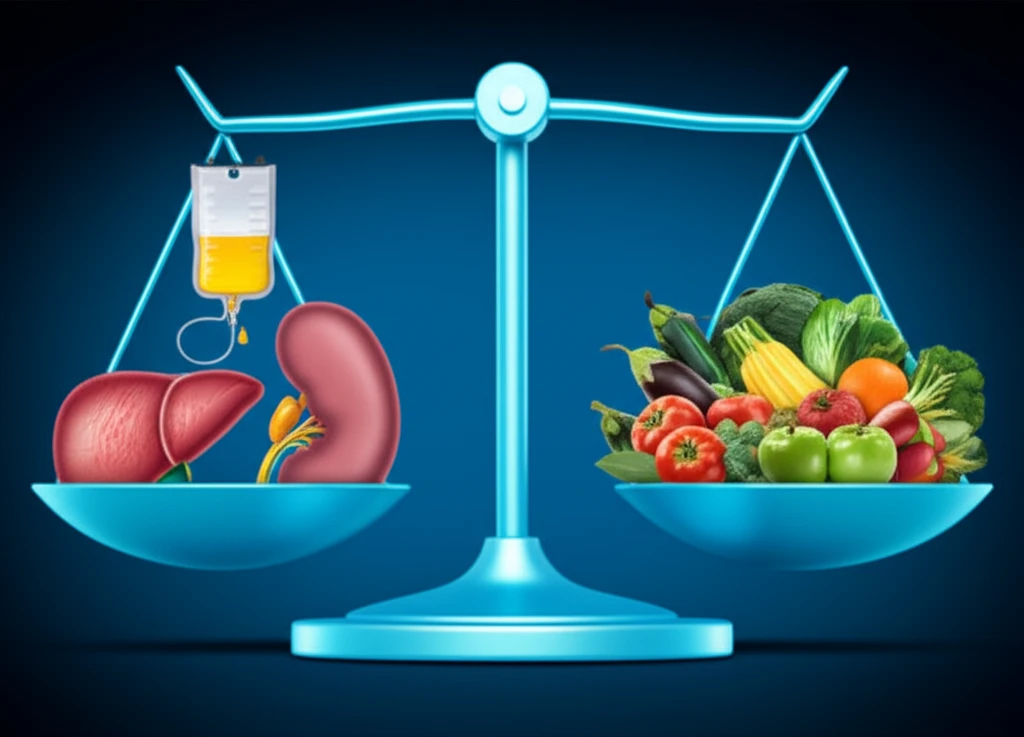
Metabolic scale symbolizing Gaucher's disease treatment and improved nutritional health.

Gaucher's Disease: How Enzyme Replacement Therapy Can Improve Nutritional Health

"Discover how enzyme replacement therapy (ERT) supports nutritional health in individuals with Gaucher's disease, easing metabolic burdens and enhancing quality of life."


Gaucher's disease is a genetic metabolic disorder caused by a deficiency in the enzyme acid beta-glucosidase, also known as beta-glucocerebrosidase. This enzyme is essential for breaking down glucocerebroside, a fatty substance. When the enzyme is deficient, glucocerebroside accumulates in cells, particularly macrophages, which then become engorged and are stored in the spleen, liver, bone marrow, and lungs. These enlarged cells are known as Gaucher cells.

The accumulation of Gaucher cells leads to a variety of clinical manifestations, including enlargement of the spleen and liver (hepatosplenomegaly), anemia, low platelet count (thrombocytopenia), bone problems, and growth delays. Depending on the severity and the presence of neurological involvement, Gaucher's disease is classified into three main types: Type 1, Type 2, and Type 3. Type 1 is the most common and does not involve primary neurological issues, while Types 2 and 3 are characterized by neurological symptoms and varying degrees of severity.

Enzyme replacement therapy (ERT) is a common treatment for Gaucher's disease, particularly Type 1. ERT involves intravenous infusions of a man-made enzyme (imiglucerase) that replaces the deficient or missing natural enzyme. This therapy aims to reduce the accumulation of glucocerebroside in the affected organs, thereby alleviating symptoms and improving the patient's overall condition. One notable effect of ERT is its impact on the patient's nutritional status, which can improve as the metabolic burden decreases.

How Does Enzyme Replacement Therapy Affect Nutritional Status?

Metabolic scale symbolizing Gaucher's disease treatment and improved nutritional health.

Prior to diagnosis and treatment, children and adolescents with Gaucher's disease often exhibit growth retardation and other signs of malnutrition. The underlying metabolic stress and organ involvement, such as splenomegaly, can contribute to poor appetite and inefficient nutrient absorption. This can lead to a catabolic state where the body struggles to maintain adequate energy and nutrient levels.

Enzyme replacement therapy can positively influence nutritional status through several mechanisms:

  • Reducing Metabolic Stress: ERT helps clear accumulated glucocerebroside, reducing the metabolic burden on the body. This can lead to improved energy levels and a better overall metabolic state.
  • Improving Organ Function: As ERT reduces the size of the spleen and liver, gastrointestinal discomfort and early satiety can decrease, leading to better food intake.
  • Promoting Weight Gain: With the reduction in metabolic stress and improved organ function, patients often experience weight gain. This is particularly important in children and adolescents, where proper growth and development are critical.
A study involving two brothers diagnosed with Type I Gaucher's disease highlights these effects. The brothers were evaluated before starting ERT and then every two months for six months. Body composition was assessed using bioelectrical impedance analysis, which measured fat-free mass and fat mass. Dietary intake was also monitored using three-day food diaries.

The Importance of Continuous Monitoring

While ERT can significantly improve the nutritional status of individuals with Gaucher's disease, continuous monitoring and personalized nutritional guidance are essential. Regular assessments of body composition, dietary intake, and overall health can help ensure that patients achieve and maintain optimal nutritional status. This comprehensive approach supports the long-term well-being of individuals undergoing treatment for Gaucher's disease.

About this Article -

This article was crafted using a human-AI hybrid and collaborative approach. AI assisted our team with initial drafting, research insights, identifying key questions, and image generation. Our human editors guided topic selection, defined the angle, structured the content, ensured factual accuracy and relevance, refined the tone, and conducted thorough editing to deliver helpful, high-quality information.See our About page for more information.

This article is based on research published under:

DOI-LINK: 10.1590/s1519-38292015000200009, Alternate LINK

Title: Evolução Do Estado Nutricional Na Doença De Gaucher Tipo I Em Tratamento Com Reposição Enzimática - Relato De Dois Casos

Subject: Public Health, Environmental and Occupational Health

Journal: Revista Brasileira de Saúde Materno Infantil

Publisher: FapUNIFESP (SciELO)

Authors: Andréa Vieira Pereira Coradine, Mara Albonei Dudeque Pianovski

Published: 2015-06-01

Everything You Need To Know

1

What is Gaucher's disease?

Gaucher's disease is a genetic metabolic disorder caused by a deficiency in the enzyme acid beta-glucosidase, also known as beta-glucocerebrosidase. This enzyme is essential for breaking down glucocerebroside, a fatty substance. When the enzyme is deficient, glucocerebroside accumulates in cells, particularly macrophages, which then become engorged and are stored in the spleen, liver, bone marrow, and lungs. These enlarged cells are known as Gaucher cells.

2

What is enzyme replacement therapy (ERT) and how does it work?

Enzyme replacement therapy (ERT) is a treatment for Gaucher's disease, particularly Type 1. ERT involves intravenous infusions of a man-made enzyme (imiglucerase) that replaces the deficient or missing natural enzyme. The primary goal of ERT is to reduce the accumulation of glucocerebroside in the affected organs. ERT helps reduce the metabolic burden on the body, improve organ function, and promote weight gain, positively influencing the patient's nutritional status.

3

What are the common symptoms of Gaucher's disease?

The accumulation of Gaucher cells leads to various clinical manifestations, including enlargement of the spleen and liver (hepatosplenomegaly), anemia, low platelet count (thrombocytopenia), bone problems, and growth delays. Patients may experience poor appetite, inefficient nutrient absorption, and struggle to maintain adequate energy levels. This can lead to growth retardation, especially in children and adolescents. ERT helps to alleviate these symptoms by addressing the underlying cause.

4

How does enzyme replacement therapy (ERT) affect a person's nutritional health?

ERT influences nutritional status by reducing metabolic stress, improving organ function, and promoting weight gain. By reducing the buildup of glucocerebroside, ERT alleviates the burden on the body. As the spleen and liver size decreases, gastrointestinal issues lessen, and food intake improves. Patients often experience weight gain, which is critical, particularly for proper growth and development in children.

5

Why is continuous monitoring important for individuals with Gaucher's disease undergoing treatment?

Continuous monitoring is essential for individuals undergoing enzyme replacement therapy (ERT). Regular assessments of body composition, dietary intake, and overall health ensure patients achieve and maintain optimal nutritional status. This comprehensive approach is crucial for long-term well-being. Tools like bioelectrical impedance analysis and food diaries are used to monitor progress and guide personalized nutritional strategies, optimizing the impact of ERT.

Newsletter Subscribe

Subscribe to get the latest articles and insights directly in your inbox.