
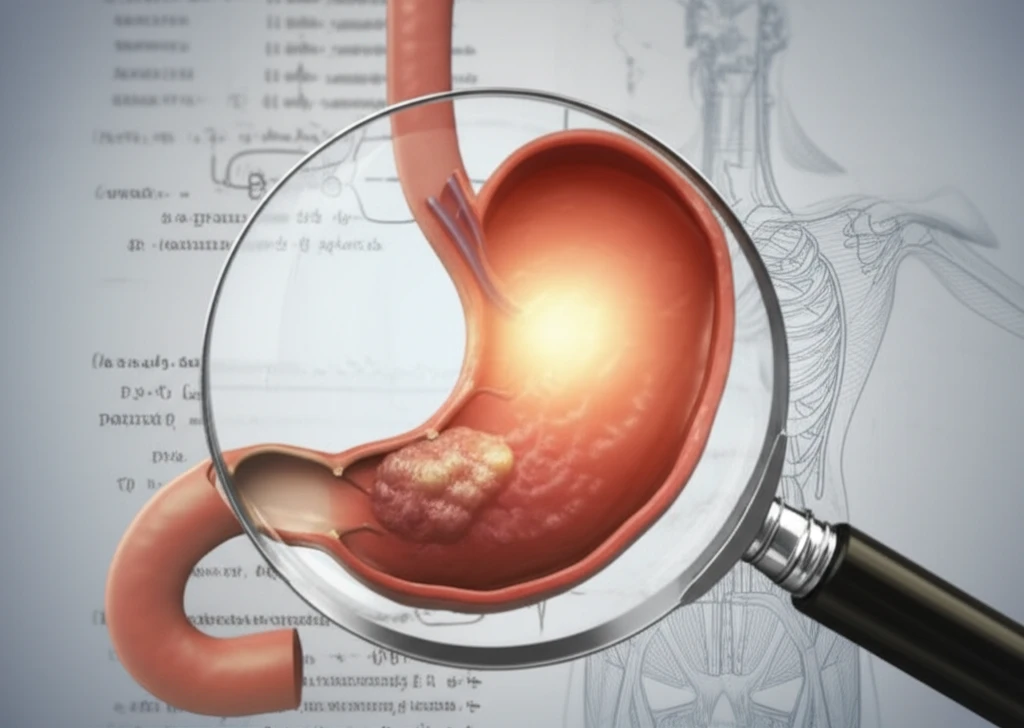
Illustration of a gastric cyst being examined

Gastric Foregut Cysts: Unraveling a Diagnostic Puzzle

"Learn about the latest insights into gastric foregut cystic malformations, a rare condition often mistaken for other tumors, and how accurate diagnosis can improve surgical outcomes."


Gastric foregut cystic developmental malformations (G-FCDMs) are rare lesions in the alimentary tract, particularly the stomach. These cysts pose diagnostic challenges due to their similarity to other conditions, such as gastric duplication cysts and bronchogenic cysts. Accurate identification is crucial for appropriate surgical management.

Historically, the nomenclature for these cysts has been inconsistent, leading to confusion. While gastric duplication cysts involve gastric mucosa and submucosal glands, bronchogenic cysts feature respiratory mucosa with cartilage and glands. G-FCDMs, however, lack these specific tissues, presenting pseudostratified ciliated columnar epithelium (PCCE).

Recent research, including a detailed case series and literature review, sheds light on the clinical and embryological characteristics of G-FCDMs. This article delves into these findings, providing insights to differentiate G-FCDMs from other gastric lesions, optimize diagnostic accuracy, and improve surgical outcomes.

Decoding Gastric Foregut Cystic Malformations: What Sets Them Apart?

Illustration of a gastric cyst being examined

Distinguishing G-FCDMs from other gastric lesions requires careful consideration of their unique features. Key differences lie in their histological composition and embryological origins.

Unlike gastric duplication cysts and bronchogenic cysts, G-FCDMs exhibit distinct characteristics:

  • Gastric Duplication Cysts: Contain gastric mucosa and submucosal glands.
  • Bronchogenic Cysts: Feature respiratory mucosa with underlying cartilage and glands.
  • G-FCDMs: Lack gastric mucosa, glands, or cartilage, presenting pseudostratified ciliated columnar epithelium (PCCE).
These distinctions are critical for accurate diagnosis. A recent study, analyzing departmental case files over 15 years, identified 12 cases of FCDMs in the alimentary tract. These findings, combined with a review of 25 literature cases, underscore the importance of recognizing these subtle yet significant differences.

Improving Outcomes: The Importance of Accurate Diagnosis

Preoperative recognition of G-FCDMs remains infrequent, leading to potential misdiagnosis and inappropriate surgical approaches. A lack of understanding regarding their embryologic origins further contributes to this challenge.

However, accurate presurgical identification of G-FCDMs is crucial for optimizing patient outcomes and minimizing complications. Advanced diagnostic techniques, such as endoscopic ultrasound-guided fine-needle aspiration (EUS-FNA), can aid in confirming the diagnosis.

By enhancing awareness and understanding of G-FCDMs, clinicians can improve diagnostic accuracy, guide appropriate surgical management, and ultimately enhance the well-being of patients with these rare lesions.

About this Article -

This article was crafted using a human-AI hybrid and collaborative approach. AI assisted our team with initial drafting, research insights, identifying key questions, and image generation. Our human editors guided topic selection, defined the angle, structured the content, ensured factual accuracy and relevance, refined the tone, and conducted thorough editing to deliver helpful, high-quality information.See our About page for more information.

This article is based on research published under:

DOI-LINK: 10.3748/wjg.v21.i2.432, Alternate LINK

Title: Gastric Foregut Cystic Developmental Malformation: Case Series And Literature Review

Subject: Gastroenterology

Journal: World Journal of Gastroenterology

Publisher: Baishideng Publishing Group Inc.

Authors: Yan-Hua Geng

Published: 2015-01-01

Everything You Need To Know

1

What exactly are gastric foregut cystic malformations (G-FCDMs), and why are they so difficult to diagnose?

Gastric foregut cystic malformations, or G-FCDMs, are rare lesions found in the digestive system, particularly the stomach. They are challenging to diagnose because they can resemble other conditions like gastric duplication cysts and bronchogenic cysts. Correct identification is crucial for selecting the appropriate surgical treatment and improving patient outcomes.

2

What key histological features differentiate G-FCDMs from other gastric lesions like gastric duplication cysts and bronchogenic cysts?

G-FCDMs are distinct from other gastric lesions due to their unique histological composition. Unlike gastric duplication cysts, which contain gastric mucosa and submucosal glands, and bronchogenic cysts, which feature respiratory mucosa with cartilage and glands, G-FCDMs lack these specific tissues. Instead, G-FCDMs present pseudostratified ciliated columnar epithelium (PCCE). These differences are essential for accurate diagnosis.

3

Why is it important to accurately diagnose G-FCDMs before surgery, and what challenges contribute to misdiagnosis?

Preoperative recognition of G-FCDMs is not always common, leading to potential misdiagnosis and less-than-ideal surgical procedures. A deeper understanding of their embryologic origins could help improve diagnostic accuracy. This could lead to improved surgical outcomes and more appropriate treatment strategies tailored to these specific cysts.

4

Can you clearly outline the tissue differences among G-FCDMs, gastric duplication cysts and bronchogenic cysts?

Gastric duplication cysts contain gastric mucosa and submucosal glands, while bronchogenic cysts feature respiratory mucosa with underlying cartilage and glands. G-FCDMs, in contrast, lack these gastric and respiratory tissues. Instead, G-FCDMs are characterized by pseudostratified ciliated columnar epithelium (PCCE). Recognizing these differences is critical for distinguishing G-FCDMs from other similar conditions.

5

What are the main reasons why G-FCDMs are frequently misdiagnosed, and what can be done to improve diagnostic accuracy?

Inconsistent naming conventions and a lack of comprehensive understanding about the embryological origins of G-FCDMs contribute to diagnostic challenges. The rarity of G-FCDMs, coupled with their resemblance to more common lesions like gastric duplication cysts and bronchogenic cysts, often leads to misdiagnosis. Improved awareness and detailed study of these malformations are crucial to enhance diagnostic accuracy.

Newsletter Subscribe

Subscribe to get the latest articles and insights directly in your inbox.