
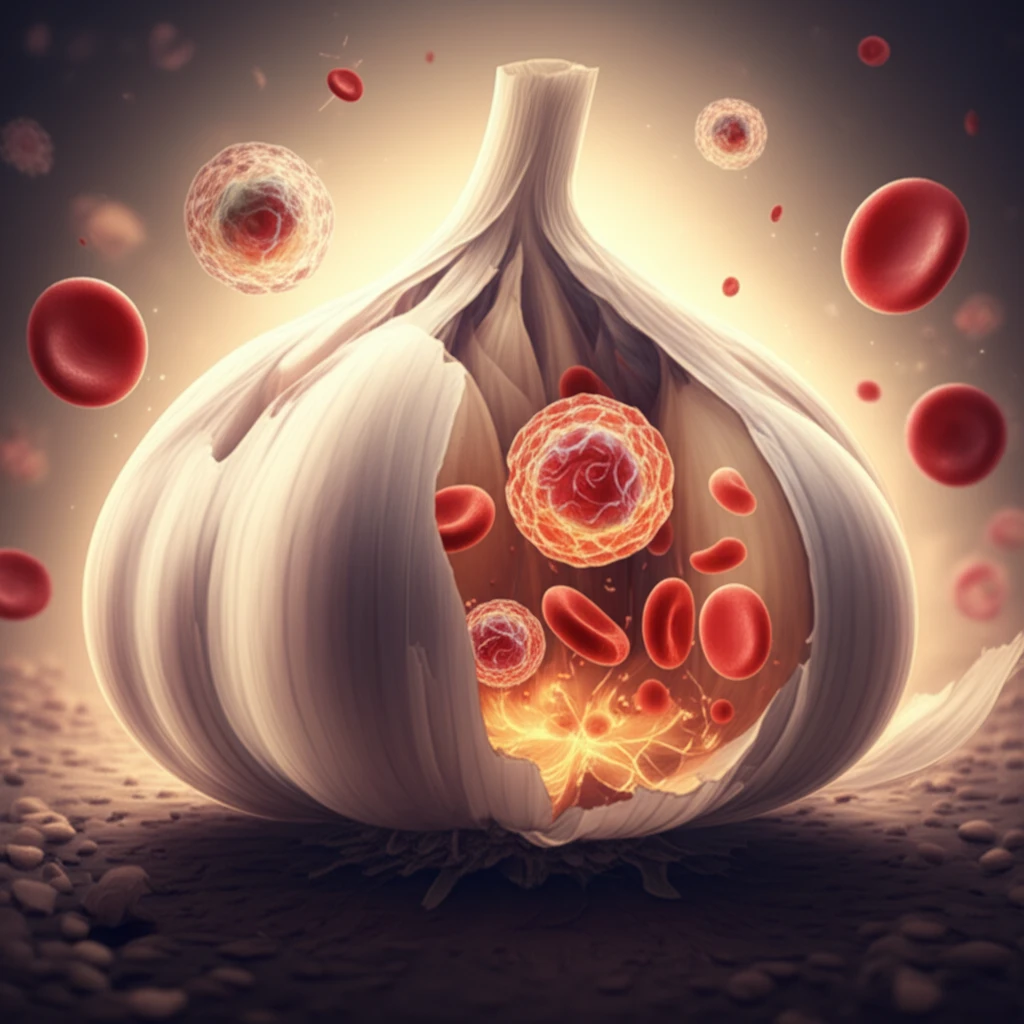
Garlic's Secret Weapon Against Cancer: How a Compound in Your Kitchen Could Revolutionize Leukemia Treatment

"New research unveils the remarkable potential of diallyl disulfide, a compound found in garlic, in fighting leukemia cells. Could this common kitchen ingredient hold the key to a breakthrough in cancer treatment?"
In the relentless battle against cancer, researchers are constantly seeking innovative treatments. While chemotherapy and radiation have been mainstays, they often come with harsh side effects and may not always be effective. This has spurred the exploration of alternative approaches, including harnessing the power of natural compounds. A fascinating area of research involves diallyl disulfide (DADS), a sulfur-containing compound found abundantly in garlic.
DADS has shown remarkable promise in various studies for its potential anticancer properties. It has demonstrated the ability to inhibit the growth of cancer cells and even induce them to differentiate, essentially changing them from harmful cells into less dangerous or even harmless ones. But how does this common kitchen ingredient achieve such a feat? Recent research sheds light on the mechanisms at play, revealing a complex interplay of cellular processes.
This article dives deep into the latest findings on DADS and its impact on leukemia cells. We'll explore how this compound interacts with cellular pathways, specifically focusing on its effects on calreticulin (CRT) and CCAAT enhancer binding protein-alpha (C/EBPα). By understanding these intricate interactions, we move closer to harnessing the full potential of DADS as a targeted therapy and offering a glimmer of hope for those battling leukemia.
Unlocking the Power of Garlic: How DADS Works at the Cellular Level
At the heart of DADS's effectiveness lies its ability to influence the behaviour of leukemia cells. Research has shown that DADS can trigger the differentiation of these cells, transforming them into more mature, less harmful forms. This differentiation process is crucial, as it can lead to the elimination of cancerous cells and the slowing of disease progression. The key to DADS's success lies in its ability to interact with specific proteins and cellular pathways.
- Downregulation of Calreticulin (CRT): DADS reduces the levels of CRT, a protein often found at high levels in cancer cells.
- Promotion of C/EBPα Expression: Simultaneously, DADS increases the expression of C/EBPα, a protein that encourages healthy cell development.
- Differentiation of Leukemia Cells: These changes contribute to the transformation of leukemia cells into more mature, non-cancerous forms.
- Impact on Tumor Growth: In animal studies, DADS has been shown to inhibit the growth of leukemia cells.
- ROS Pathway Involvement: The effects of DADS involve the generation of reactive oxygen species (ROS), which play a role in signaling pathways.
A Promising Future for Garlic and Cancer Treatment
The research surrounding DADS and its potential in treating leukemia offers a beacon of hope in the complex landscape of cancer treatment. By understanding how DADS interacts with cellular pathways and proteins, researchers are paving the way for innovative therapies that are less toxic and more effective. While this research is still in its early stages, the results are encouraging, and garlic could be a crucial tool in future cancer treatments, signifying a shift towards natural, targeted therapies. Further research is needed to fully understand the mechanisms of DADS in human studies and to determine the optimal dosages and delivery methods. The journey to a cure for leukemia is long, but studies like these bring hope and new treatment options for patients.