
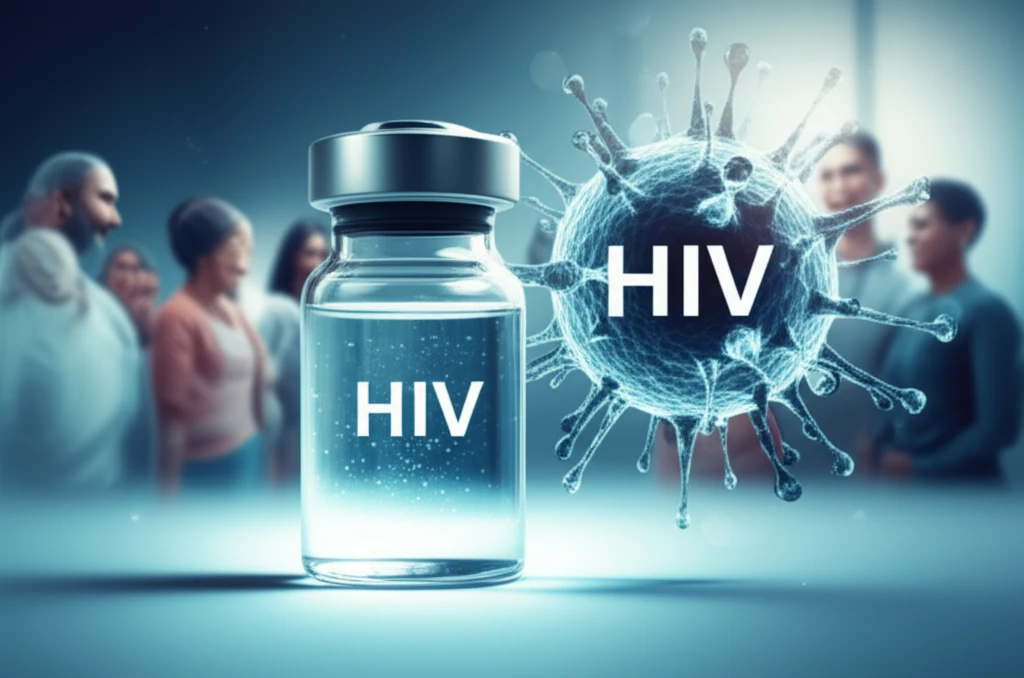
Future of HIV Prevention: How a New Vaccine Approach Could Revolutionize Protection

"Groundbreaking research unveils a bivalent protein boost, paving the way for innovative HIV vaccine strategies and offering renewed hope for a healthier future."
The fight against HIV/AIDS has seen incredible progress, but the quest for a truly effective vaccine remains a global priority. While existing treatments have transformed the lives of millions, the challenge of preventing new infections persists. Recent research has unveiled a promising new approach: a bivalent protein boost designed to stimulate a robust immune response. This development could be a game-changer in the ongoing effort to protect communities from HIV.
The research, published in PLOS ONE, centers on a bivalent protein boost. This innovative vaccine strategy uses two different versions of the HIV-1 gp120 protein, targeting key areas of the virus to trigger a strong and comprehensive immune response. The study, led by a team of international researchers, has shown encouraging results, suggesting this approach could improve the effectiveness of future HIV vaccines.
This article will explore the study's key findings, the science behind the bivalent protein boost, and what these advancements mean for the future of HIV prevention. We'll examine how this new approach builds upon previous research, what challenges remain, and the potential for a future where HIV prevention is significantly more effective.
Decoding the Bivalent Boost: A Closer Look at the Science
The core of the new vaccine approach lies in its bivalent nature. This means it utilizes two different HIV-1 gp120 proteins, specifically designed to target the variable loops of the virus. The gp120 protein is found on the surface of HIV and plays a crucial role in the virus's ability to infect human cells. By targeting these specific areas, the vaccine aims to trigger the body's immune system to produce antibodies that can neutralize a wide range of HIV strains.
- What is gp120? A protein on the surface of HIV that the virus uses to attach to human cells.
- What is a bivalent vaccine? A vaccine that contains two different antigens (in this case, gp120 proteins) to target multiple strains or variants of a virus.
- What is an adjuvant? A substance that boosts the immune response to a vaccine, making it more effective.
Looking Ahead: The Path to a New Era of HIV Prevention
The development of a successful HIV vaccine is a complex and lengthy process. The promising results of this study, however, represent a significant step forward. The bivalent protein boost approach offers a targeted and comprehensive strategy for stimulating protective immune responses. As researchers continue to refine and test these new vaccines, we move closer to a future where HIV prevention is significantly more effective and accessible, offering hope to communities around the world.