
Fusidic Acid: A Promising New Weapon in the Fight Against Cancer?

"Scientists Uncover Novel Fusidic Acid Derivatives with Potent Anticancer Activity"
Cancer remains a leading cause of mortality worldwide, driving continuous research for more effective and less toxic treatments. Chemotherapy, while a cornerstone of cancer therapy, often presents severe side effects that diminish patients' quality of life. As such, the quest for novel agents that selectively target cancer cells without harming healthy tissues is of paramount importance.
Fusidic acid (FA), a steroid-based antibiotic, has been used for decades to combat bacterial infections. While generally considered safe and well-tolerated, recent investigations have explored its potential beyond antibacterial applications. Scientists are now focusing on whether modified versions of fusidic acid could be harnessed to fight cancer.
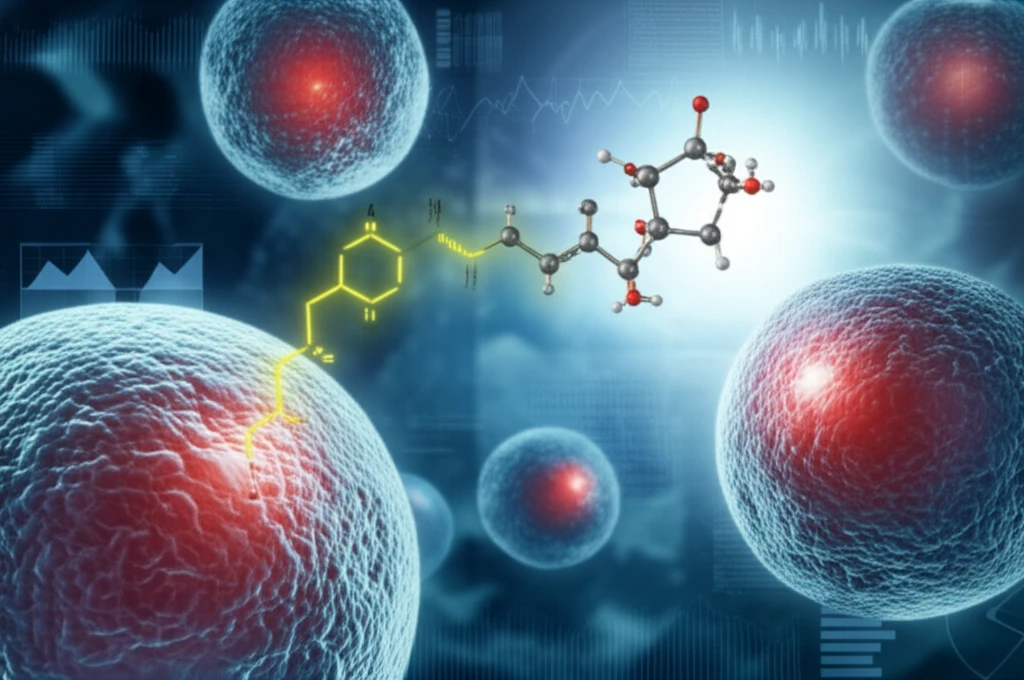
A groundbreaking study has revealed the synthesis and evaluation of novel fusidic acid derivatives with promising anticancer activity. These modified compounds introduce amino-terminal groups at the 3-hydroxyl position, significantly enhancing their ability to target and destroy cancer cells. This discovery marks a significant step forward in the development of new cancer therapies.
How Do These Modified Fusidic Acid Derivatives Work?
The research team synthesized a series of novel fusidic acid derivatives and screened them for their ability to inhibit the growth of various cancer cell lines, including Hela (cervical cancer), U87 (glioma), KBV (drug-resistant oral cancer), and MKN45 (gastric cancer). The most promising compound, labeled as compound 4, demonstrated exceptional anti-proliferative activity across all tested cell lines.
- Induction of Apoptosis: Compound 4 triggers programmed cell death in cancer cells.
- Cell Cycle Arrest: It arrests the cell cycle at a critical stage, preventing further growth.
- Inhibition of Protein Synthesis: The compound disrupts the production of proteins necessary for cancer cell survival.
The Future of Fusidic Acid in Cancer Therapy
This research opens exciting new avenues for cancer treatment. By modifying fusidic acid, scientists have created derivatives that effectively target cancer cells while minimizing toxicity. Compound 4 shows particular promise, demonstrating strong anticancer activity both in vitro and in vivo. Further studies are underway to optimize these derivatives and explore their potential in clinical trials. The introduction of medium-length amino-terminal groups appears to be a key factor in enhancing the anti-tumor activity, paving the way for future drug development.