
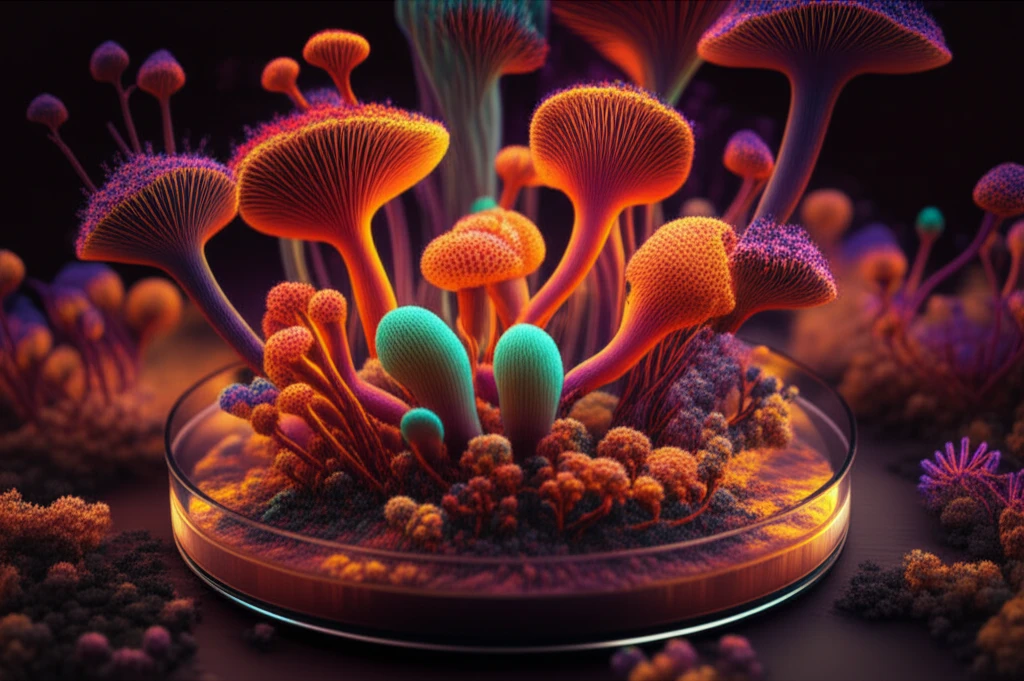
Fungal Food Coloring: Is This the Next Big Thing in Natural Pigments?

"Scientists explore how a common mold can produce betalains, a vibrant alternative to synthetic dyes."
For ages, we've jazzed up our food, drinks, and cosmetics with color, using both synthetic and natural pigments. Synthetic dyes, once super popular for their bright hues and low cost, have faced increasing scrutiny. Many folks see them as contaminants, and some are even linked to health concerns. Because of this, lots of countries are putting restrictions on them, making way for natural alternatives.
That's where pigments like betalains come in. Betalains are natural water-soluble pigments and commonly extracted from beets. Betalains are used as food colorants, are packed with antioxidants, and show promise in fighting viruses and microbes. However, depending solely on beets has its drawbacks, like traditional extraction methods being tough on the environment and the amount of arable land for beet crops shrinking. So, the hunt is on for better ways to get these vibrant compounds.
Now, researchers are looking into the potential of Penicillium novae-zelandiae, a common type of fungus, to produce these betalains through a process called biomembrane surface fermentation. This method could pave the way for a more sustainable and efficient production of these natural pigments. This article dives into this exciting possibility, exploring the what, why, and how of betalain production using fungal fermentation.
How Can Fungi Create Natural Pigments?
The key lies in a process called biomembrane surface fermentation. In this study, scientists optimized this technique, and they found that by adding tyrosine, an amino acid, they could significantly boost the production of betalains. Further investigation revealed that the main pigment produced was 2-decarboxybetanin, a close relative of the betalain found in beets.
- Biomembrane Surface Fermentation: The fungus grows on the surface of a liquid medium, forming a film or membrane.
- Tyrosine Boost: Adding tyrosine to the mix significantly increases pigment production.
- 2-Decarboxybetanin: The main pigment produced is identified as 2-decarboxybetanin.
- Transcriptomic Analysis: Studying the active genes reveals the complete biosynthetic pathway.
What Does This Mean for the Future of Food Coloring?
This research opens up a whole new avenue for producing natural food colorings. Imagine a future where we can create vibrant, safe, and sustainable pigments using simple fermentation processes! This is the first reported case of betalain production through microbial fermentation, marking a significant step forward.
While this study is promising, there's still work to be done. Scientists need to optimize the fermentation process to maximize betalain production and explore the potential of metabolic regulation to further enhance yields. The long-term goal is to make this process commercially viable, offering a real alternative to traditional methods and synthetic dyes.
In conclusion, keep an eye out for fungal fermentation as a potential game-changer in the world of natural pigments. It’s a vibrant area of research with the potential to revolutionize how we color our food and cosmetics, making them safer and more sustainable for everyone.