
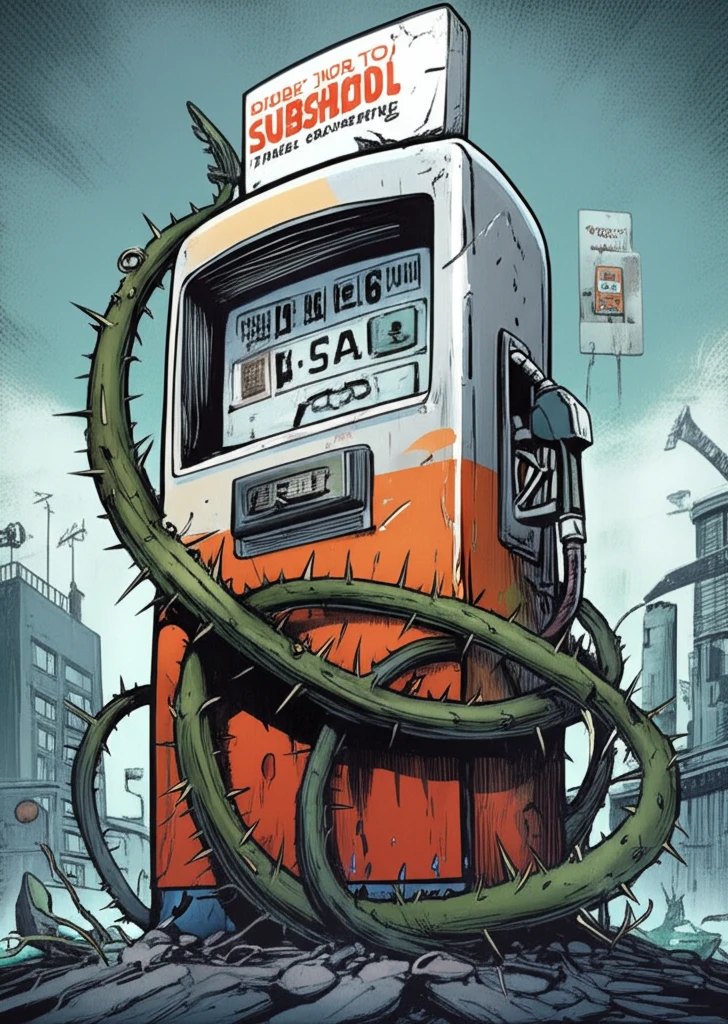
Fuel Subsidy: Is Removal Really the Answer for Economic Growth?

"Examining the impact of fuel subsidy policies in Nigeria and whether their removal can drive economic growth and stability."
Governments worldwide constantly make critical decisions aimed at serving their citizens. However, these decisions are often complicated by economic conditions, legal frameworks, political climates, and socio-cultural shifts. Public problems are inherently complex and their consequences are sometimes unpredictable. This complexity often leads to conflict between governments and the public, particularly concerning policies with direct economic impact.
One such contentious issue is fuel subsidies. These subsidies, designed to keep fuel prices artificially low, have sparked considerable debate in Nigeria. While intended to ease the financial burden on the average citizen, the policy's effectiveness and long-term consequences are hotly debated. The core question is whether the removal of these subsidies will genuinely pave the way for sustainable economic growth, or simply add to the economic strain on the populace.
This article delves into the intricacies surrounding fuel subsidy removal in Nigeria. It explores the history, the arguments for and against the policy, and the potential impact on the Nigerian people. It seeks to provide a balanced perspective, examining whether this controversial decision can truly unlock economic growth or if alternative solutions should be considered.
Current Fuel Price Landscape
The U.S. Energy Information Administration continuously monitors gasoline and diesel fuel prices, providing critical data on market fluctuations and supply-demand dynamics. Current fuel pricing remains volatile, influenced by global crude oil markets, geopolitical tensions, and seasonal demand variations. Understanding these price movements is essential for evaluating fuel subsidy policies, as subsidies directly affect consumer costs and government fiscal positions. The EIA's data serves as a foundational resource for policymakers assessing the economic implications of fuel subsidy programs.
Methodological Framework for Subsidy Analysis
Economists typically employ cost-benefit analysis and fiscal impact modeling to evaluate fuel subsidy effectiveness, comparing direct government expenditures against projected economic growth outcomes. However, these conventional methods often struggle to capture secondary effects such as market distortions, behavioral changes among consumers, and long-term structural economic impacts. Quantifying the true opportunity cost of subsidy spending requires consideration of alternative investment scenarios, which introduces significant analytical complexity. The limitations of standard approaches highlight the need for more nuanced, context-specific evaluation frameworks when assessing whether subsidy removal genuinely promotes economic growth.
Historical Evolution of Fuel Use
Firewood represents one of humanity's earliest fuel sources, marking the beginning of our species' relationship with combustible materials for energy production. Over millennia, fuel sources evolved from biomass to include coal, petroleum, and natural gas—collectively known as fossil fuels—which fundamentally transformed industrial economies. This progression from traditional to modern fuels created new dependencies and policy challenges, including the emergence of fuel subsidies as governments sought to ensure affordable energy access. Understanding this historical trajectory provides essential context for contemporary debates about whether maintaining or removing fuel subsidies better serves economic development objectives.
A History of Fuel Subsidies in Nigeria: A Bumpy Road
Fuel subsidies in Nigeria have a long and controversial history, dating back to 1978. Successive governments have implemented and removed subsidies, leading to public outcry and economic disruption. The core aim of these subsidies was to make petroleum products affordable for the average Nigerian, but the reality has often been marred by corruption and inefficiency.
- 1976: General Murtala Mohammed - 9k
- 1978: Gen. Olusegun Obasanjo (military ruler) - 15.37k (Subsidy Withdrawn: 6.37k)
- 1982: Alhaji Shehu Shagari - 20k (Subsidy Withdrawn: 4.63k)
- 1986: Gen. Ibrahim Babangida - 39.50k (Subsidy Withdrawn: 19.50k)
- 1988: Gen. Ibrahim Babangida - 42k (Subsidy Withdrawn: 2.50k)
- 1989: Gen. Ibrahim Babangida - 60k (Subsidy Withdrawn: 18k)
- 1991: Gen. Ibrahim Babangida - 70k (Subsidy Withdrawn: 10k)
- 1993: Gen. Ibrahim Babangida - N3.25k (Subsidy Withdrawn: N2.55)
- 1994: Gen. Sani Abacha - N11.00 (Subsidy Withdrawn: N7.75)
- 1999: Abdulsalami Abubakar - N20.00 (Subsidy Withdrawn: N9.00)
- 2000: Olusegun Obasanjo (civilian president) - N22.00 (Subsidy Withdrawn: N2.00)
- 2002: Olusegun Obasanjo - N26.00 (Subsidy Withdrawn: N4.00)
- 2003: Olusegun Obasanjo - N40.00 (Subsidy Withdrawn: N14.00)
- 2004: Olusegun Obasanjo - N45.00 (Subsidy Withdrawn: N5.00)
- 2007: Olusegun Obasanjo - N70.00 (Subsidy Withdrawn: N25.00)
- 2007: Alhaji Umaru Shehu Yardua - N65.00 (Subsidy Withdrawn: (N5.00))
- 2012: Dr. Goodluck Jonathan - N97.00 (Subsidy Withdrawn: N32.00)
Contemporary Research Landscape
While comprehensive recent studies on fuel subsidy removal effects remain under-researched, existing literature generally suggests mixed outcomes depending on implementation timing and complementary policy measures. Research indicates that sudden subsidy removal without transitional support mechanisms can trigger significant social and economic disruption, particularly in developing economies. Current academic discourse increasingly emphasizes the importance of targeted social protection programs as alternatives to broad-based fuel subsidies. However, definitive conclusions about optimal subsidy reform strategies remain elusive, highlighting the need for more rigorous empirical investigations.
Critiques of Subsidy Removal Policies
Critics of fuel subsidy removal argue that such policies disproportionately burden low-income populations who spend larger proportions of their income on transportation and basic goods. Historical implementation attempts have sometimes failed due to inadequate social safety nets, poor communication strategies, and timing that coincided with broader economic instability. The argument that removed subsidy funds automatically translate into productive investment lacks consistent empirical support, as governments may redirect savings to other non-growth-enhancing expenditures. Additionally, inflationary pressures following subsidy removal can offset intended economic benefits, particularly in economies with limited fiscal buffers.
Cross-Country Comparative Perspectives
Different nations have adopted vastly different approaches to fuel subsidy reform, producing varied outcomes that complicate universal policy prescriptions. Countries with strong institutional capacity and comprehensive social protection systems have generally managed subsidy transitions more successfully than those lacking such infrastructure. The experience of nations that maintained partial subsidies while introducing targeted support programs suggests that hybrid approaches may offer more stable transitions than complete removal. These comparative perspectives underscore that the effectiveness of subsidy removal depends heavily on pre-existing economic conditions, institutional frameworks, and political will to implement complementary reforms.
Moving Forward: A Path to Sustainable Solutions
The question of fuel subsidy removal in Nigeria is multifaceted. While the government views it as a necessary step towards economic reform and attracting investment, the public remains wary of its potential impact on their daily lives. Finding a balanced solution requires careful consideration of alternative approaches, such as phased implementation, targeted support for vulnerable populations, and robust measures to combat corruption. Effective communication, transparency, and building trust between the government and its citizens are paramount for any successful policy implementation. Ultimately, Nigeria's economic future hinges on making informed and equitable decisions that prioritize the well-being of all its citizens.
Expert Synthesis and Analysis
Expert analysis generally converges on the view that fuel subsidy reform requires careful sequencing and complementary policies rather than abrupt removal. Economists increasingly recommend graduated phase-outs combined with targeted transfers to vulnerable populations to minimize social disruption. The consensus suggests that subsidy removal alone is insufficient to drive economic growth without concurrent investments in infrastructure, education, and productive economic sectors. Most analysts emphasize that the success of reform depends less on the act of removal itself and more on the quality of governance and policy implementation surrounding the transition.
Emerging Trends and Future Research Directions
Future research is likely to focus on developing more sophisticated modeling tools that capture the full range of second-order effects from fuel subsidy reforms. The growing emphasis on climate change mitigation may accelerate subsidy reform efforts as governments seek to reduce fossil fuel consumption incentives. Digital payment systems and improved targeting mechanisms could enable more efficient delivery of social support, potentially making subsidy removal more politically feasible. As energy markets continue evolving with renewable energy integration, the fundamental premises underlying fuel subsidy debates may require significant reassessment.
Systemic Challenges in Energy Policy
Fuel subsidy reform intersects with broader systemic challenges including energy security concerns, environmental sustainability imperatives, and international trade dynamics. Governments must balance short-term political pressures against long-term economic restructuring needs, creating persistent policy tensions. The interconnected nature of global energy markets means that domestic subsidy decisions can have international ramifications that extend beyond national policy objectives. These systemic complexities suggest that fuel subsidy debates cannot be divorced from larger conversations about sustainable development pathways and equitable economic transformation.
Social and Human Dimensions of Subsidy Policy
Fuel subsidy decisions directly affect household budgets, employment patterns, and quality of life, particularly for populations dependent on affordable transportation and energy. The distributional impacts of subsidy removal vary significantly across demographic groups, with rural communities, informal sector workers, and urban poor often bearing disproportionate burdens. Human-centered policy design requires understanding these differential impacts before implementing reform measures. Real-world experiences demonstrate that technical economic efficiency must be balanced against social equity considerations and community resilience to achieve genuinely beneficial outcomes.