
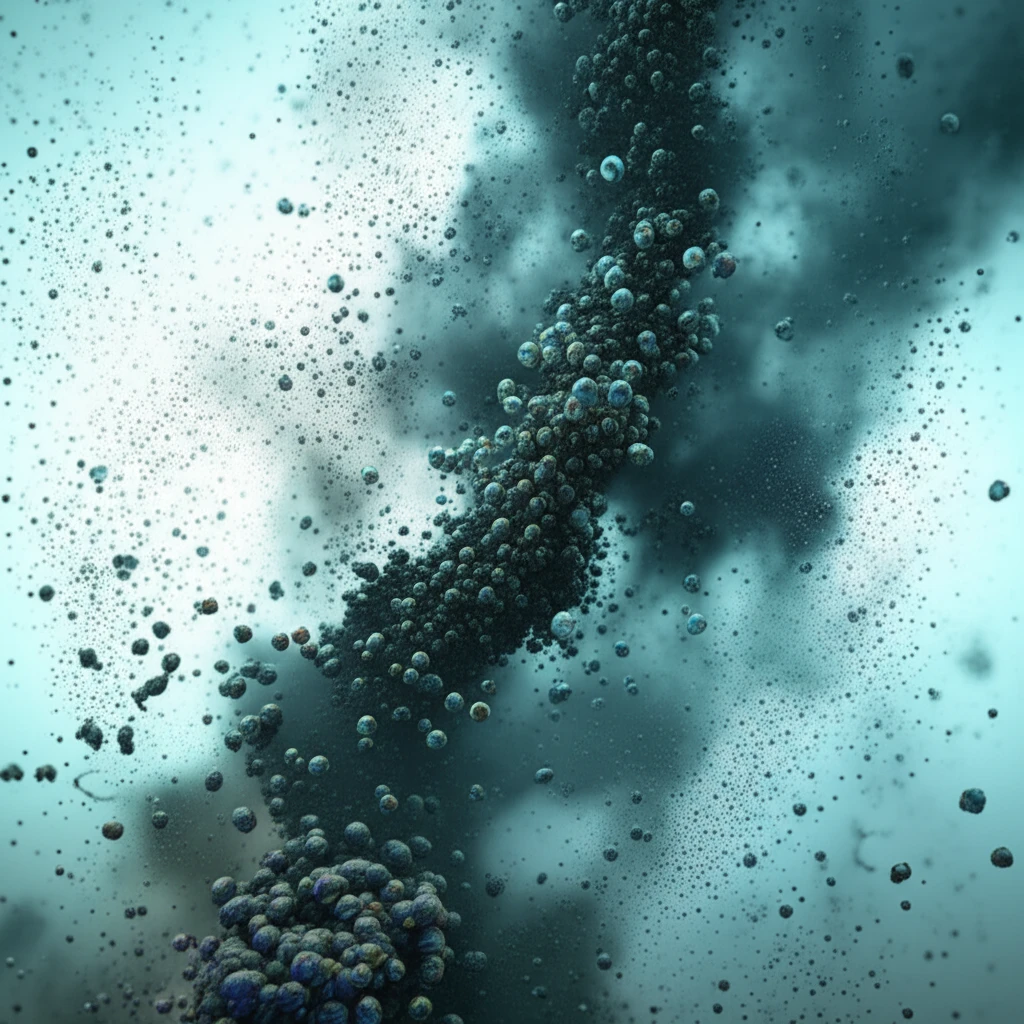
FGD ash particles reacting with phosphorus in wastewater

From Waste to Resource: How Flue Gas Desulfurization Ash Can Help Remove Phosphorus

"Turning pollution control byproducts into a valuable tool for environmental cleanup and resource recovery."


As the world seeks cleaner energy solutions, coal-fired power plants still play a significant role in energy production. However, burning coal releases sulfur dioxide (SO2), a major contributor to acid rain and soil acidification. To combat this, power plants use flue gas desulfurization (FGD) technologies to remove SO2 from their emissions.

Semi-dry FGD, a widely used method, involves using lime to capture SO2. While effective, this process generates a byproduct: FGD ash. This ash, rich in calcium compounds, has often been considered a waste product. However, research is uncovering its potential as a valuable resource.

This article explores how FGD ash, specifically semi-dry FGD ash, can be repurposed to remove phosphorus from wastewater. Phosphorus pollution leads to eutrophication, harming aquatic ecosystems. Using FGD ash to tackle this issue offers a two-fold environmental benefit: reducing waste and cleaning up our waters.

Unlocking the Potential of Semi-Dry FGD Ash for Phosphorus Removal

FGD ash particles reacting with phosphorus in wastewater

Semi-dry FGD ash primarily consists of calcium sulfite (CaSO3·0.5H2O) and calcium hydroxide (Ca(OH)2). The ash particles are typically small, around 8 micrometers in diameter, with irregular shapes. The key to its effectiveness lies in the calcium compounds, which can react with phosphorus in wastewater.

The process involves a precipitation reaction where the calcium in the ash binds with phosphorus, effectively removing it from the water. Studies have shown that semi-dry FGD ash can remove significant amounts of phosphorus, making it a promising and cost-effective solution.

Here are the key components and reactions involved:
  • Calcium Hydroxide (Ca(OH)2): A major component of the ash, it provides the calcium ions needed for the precipitation reaction.
  • Calcium Sulfite (CaSO3·0.5H2O): This compound also contributes to the phosphorus removal process.
  • Precipitation: The calcium ions react with phosphate ions in the water to form insoluble calcium phosphate compounds, which can then be easily separated.
Research indicates that the maximum phosphorus removal capacity of semi-dry FGD ash can reach nearly 80 mg of phosphorus per gram of ash. This makes it a highly efficient adsorbent for phosphorus removal, offering a sustainable alternative to traditional methods.

A Sustainable Solution for Waste and Water

Repurposing semi-dry FGD ash for phosphorus removal offers a compelling solution for two environmental challenges: waste management and water pollution. By transforming a waste product into a valuable resource, we can reduce landfill burden and improve water quality.

Further research and development can optimize the use of FGD ash for phosphorus removal, potentially leading to wider adoption in wastewater treatment plants. This innovative approach aligns with the principles of a circular economy, where waste is minimized and resources are reused.

As we transition towards cleaner energy and more sustainable practices, finding innovative ways to manage and reuse industrial byproducts like FGD ash will be crucial for protecting our environment and building a healthier future.

About this Article -

This article was crafted using a human-AI hybrid and collaborative approach. AI assisted our team with initial drafting, research insights, identifying key questions, and image generation. Our human editors guided topic selection, defined the angle, structured the content, ensured factual accuracy and relevance, refined the tone, and conducted thorough editing to deliver helpful, high-quality information.See our About page for more information.

This article is based on research published under:

DOI-LINK: 10.1088/1757-899x/359/1/012021, Alternate LINK

Title: Properties Of Semi-Dry Flue Gas Desulfurization Ash And Used For Phosphorus Removal

Subject: General Medicine

Journal: IOP Conference Series: Materials Science and Engineering

Publisher: IOP Publishing

Authors: Y P Yu, Y Fang, S Y Chai, Z Z Zhuang

Published: 2018-05-01

Everything You Need To Know

1

What is semi-dry FGD ash, and what is its significance?

Semi-dry FGD ash is a byproduct of flue gas desulfurization, a process used by coal-fired power plants to remove sulfur dioxide (SO2) from emissions. This ash is primarily composed of calcium sulfite (CaSO3·0.5H2O) and calcium hydroxide (Ca(OH)2). It's significant because it can be repurposed to remove phosphorus from wastewater, offering a sustainable solution for waste management and environmental protection.

2

Why is it important to remove phosphorus from wastewater?

Phosphorus pollution leads to eutrophication, which harms aquatic ecosystems. This means excessive phosphorus causes algal blooms, depleting oxygen and harming aquatic life. By using semi-dry FGD ash to remove phosphorus from wastewater, the adverse effects of eutrophication can be mitigated, improving water quality and protecting aquatic environments.

3

How does semi-dry FGD ash remove phosphorus from wastewater?

The process involves a precipitation reaction where the calcium in the semi-dry FGD ash binds with phosphorus in the wastewater. Specifically, the calcium ions from compounds like Calcium Hydroxide (Ca(OH)2) react with phosphate ions in the water, forming insoluble calcium phosphate compounds. These compounds can then be easily separated from the water, effectively removing the phosphorus.

4

How effective is semi-dry FGD ash at removing phosphorus?

Semi-dry FGD ash can remove significant amounts of phosphorus because of the presence of calcium compounds. Research indicates that semi-dry FGD ash can remove nearly 80 mg of phosphorus per gram of ash. This high capacity makes it an efficient adsorbent for phosphorus removal compared to other traditional methods.

5

What are the main benefits of using semi-dry FGD ash for phosphorus removal?

Repurposing semi-dry FGD ash offers a sustainable solution for both waste management and water pollution. It reduces the amount of waste sent to landfills by transforming a byproduct into a valuable resource. At the same time, it improves water quality by removing phosphorus, preventing eutrophication, and protecting aquatic ecosystems. This approach provides a two-fold environmental benefit.

Newsletter Subscribe

Subscribe to get the latest articles and insights directly in your inbox.