
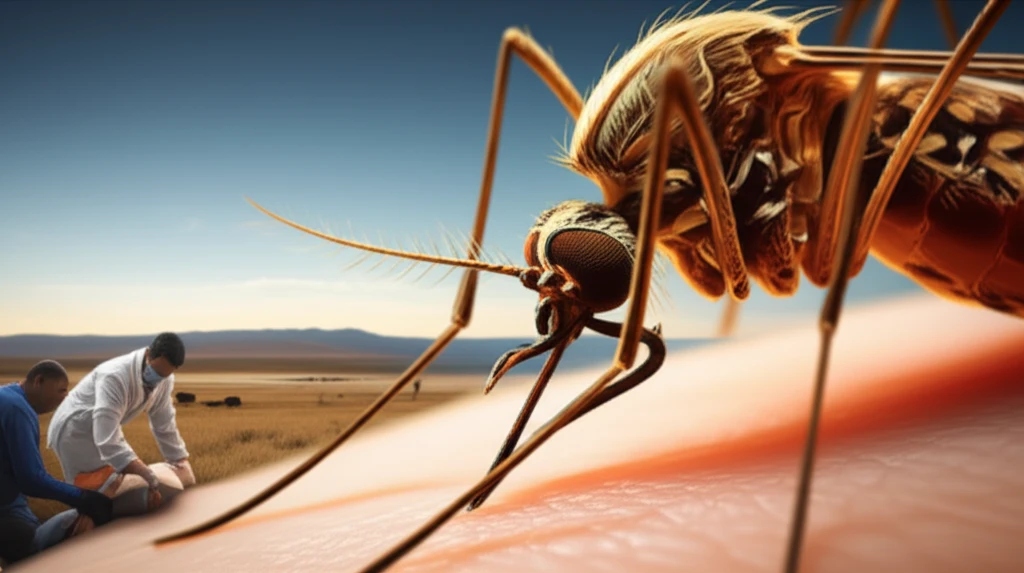
Illustration of malaria transmission in South Africa, with a focus on vector control and public health interventions.

From Control to Elimination: Unpacking the Fight Against Malaria in South Africa

"A Deep Dive into South Africa's Journey in Combating Malaria: From Endemic Threat to Elimination Goals."


Malaria, a disease transmitted by mosquitoes, has long been a significant health challenge in South Africa. However, the country has made remarkable strides in controlling and aiming to eliminate this threat. This article delves into the epidemiology of malaria in South Africa, examining the historical context, current strategies, and future prospects.

This deep dive explores the factors that influence the spread of malaria, including the interplay of the host, vector, parasite, and environment. We will examine how these factors have shaped malaria incidence and the effectiveness of control measures. This article targets both a general and specialized audience.

We will explore the comprehensive strategies employed, from vector control and case management to the rational use of drugs and rapid diagnostic tests. The discussion will encompass not only the scientific and medical aspects but also the social, economic, and policy dimensions of malaria elimination.

Understanding the Epidemiology of Malaria in South Africa

Illustration of malaria transmission in South Africa, with a focus on vector control and public health interventions.

Understanding the epidemiology of malaria is essential for effective disease control and elimination. Malaria is endemic in specific regions of South Africa, particularly in northeastern areas of KwaZulu-Natal (KZN), Mpumalanga, and Limpopo provinces. The disease is caused by the parasite Plasmodium falciparum, which is transmitted through the bites of infected Anopheles mosquitoes.

Over the years, South Africa has implemented a range of strategies, including sustained vector control and case management, to combat malaria. Vector control involves reducing the mosquito population through insecticide use and environmental management, while case management focuses on prompt diagnosis and effective treatment of infected individuals. These measures have been pivotal in reducing the burden of malaria and preventing outbreaks.

  • Vector Control: Strategies such as indoor residual spraying (IRS) and insecticide-treated bed nets (ITNs) have been crucial.
  • Case Management: Prompt diagnosis and effective treatment, including the use of artemisinin-based combination therapies (ACTs).
  • Surveillance and Monitoring: Comprehensive surveillance systems to track cases, monitor drug resistance, and evaluate the effectiveness of interventions.
  • Cross-Border Collaboration: Initiatives to address malaria transmission across international borders, particularly with neighboring countries like Mozambique and Swaziland.
The shift towards malaria elimination requires a multifaceted approach. It necessitates the strengthening of surveillance systems, the enhancement of cross-border collaboration, and the active engagement of communities. The goal is not only to reduce the incidence of malaria but also to prevent its re-establishment, ensuring that South Africa achieves its malaria elimination goals sustainably.

Conclusion: The Path Forward in Malaria Elimination

South Africa's journey towards malaria elimination showcases the power of evidence-based strategies, community engagement, and international collaboration. With continued commitment and innovation, the country is on track to eliminate malaria, paving the way for a healthier future for its citizens. The successes in South Africa offer valuable lessons and inspiration for other countries working to eliminate malaria and other infectious diseases.

About this Article -

This article was crafted using a human-AI hybrid and collaborative approach. AI assisted our team with initial drafting, research insights, identifying key questions, and image generation. Our human editors guided topic selection, defined the angle, structured the content, ensured factual accuracy and relevance, refined the tone, and conducted thorough editing to deliver helpful, high-quality information.See our About page for more information.

This article is based on research published under:

DOI-LINK: 10.7196/samj.7441, Alternate LINK

Title: Epidemiology Of Malaria In South Africa: From Control To Elimination

Subject: General Medicine

Journal: South African Medical Journal

Publisher: South African Medical Association NPC

Authors: R Maharaj, J Raman, N Morris, D Moonasar, D N Durrheim, I Seocharan, P Kruger, B Shandukani, I Kleinschmidt

Published: 2013-08-29

Everything You Need To Know

1

What are the key strategies South Africa has used to control malaria?

South Africa has employed several key strategies to control malaria, including sustained vector control and case management. Vector control focuses on reducing the mosquito population through methods like indoor residual spraying (IRS) and insecticide-treated bed nets (ITNs). Case management involves the prompt diagnosis and effective treatment of infected individuals, including the use of artemisinin-based combination therapies (ACTs). Additionally, comprehensive surveillance systems are in place to track cases and monitor drug resistance.

2

Where is malaria most prevalent in South Africa, and what parasite is responsible for its transmission?

Malaria is endemic in specific regions of South Africa, particularly in the northeastern areas of KwaZulu-Natal (KZN), Mpumalanga, and Limpopo provinces. The disease is caused by the parasite Plasmodium falciparum, which is transmitted through the bites of infected Anopheles mosquitoes. Understanding the geographic distribution and causative agent is essential for targeted interventions.

3

What does South Africa's shift towards malaria elimination entail, and why is cross-border collaboration important?

The shift towards malaria elimination in South Africa requires a multifaceted approach that goes beyond control measures. It necessitates the strengthening of surveillance systems to detect and respond to cases effectively, the enhancement of cross-border collaboration to address transmission across international borders with neighboring countries like Mozambique and Swaziland, and the active engagement of communities to promote awareness and participation in control efforts. Cross-border collaboration is particularly important because malaria transmission often occurs across borders, making coordinated efforts essential to prevent re-establishment of the disease.

4

How do factors like host, vector, parasite, and environment influence the spread of malaria in South Africa, and what role do they play in the effectiveness of control measures?

The spread of malaria in South Africa is influenced by the interplay of several factors: the host (human population), the vector (Anopheles mosquitoes), the parasite (Plasmodium falciparum), and the environment (climate, geography, and human activities). These factors shape malaria incidence and impact the effectiveness of control measures. For instance, environmental changes can affect mosquito breeding sites, while human behavior can influence exposure to mosquito bites. Control measures need to consider all these factors to be effective.

5

What are artemisinin-based combination therapies (ACTs), and why are they important in malaria case management in South Africa?

Artemisinin-based combination therapies (ACTs) are a class of drugs used for effective treatment of malaria infections. They are a key component of malaria case management in South Africa due to their ability to rapidly reduce the number of parasites in a patient's body. ACTs combine artemisinin with another antimalarial drug to enhance their efficacy and delay the development of drug resistance. The prompt and appropriate use of ACTs is crucial for preventing severe malaria and reducing the risk of transmission.

Newsletter Subscribe

Subscribe to get the latest articles and insights directly in your inbox.