
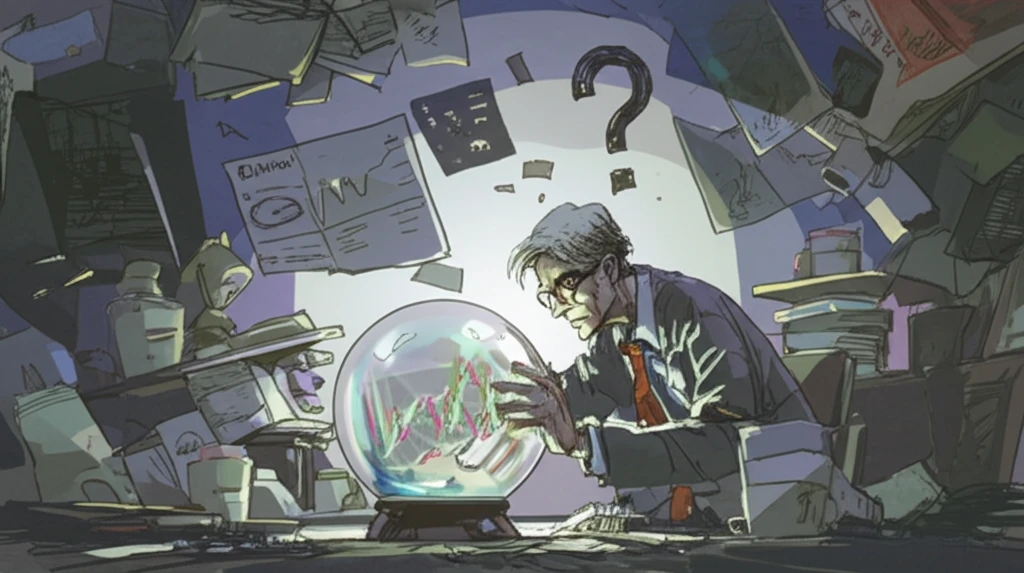
Forecast Fumbles: Why Economic Predictions Miss the Mark and How to Spot the Warning Signs

"Uncover the hidden biases and psychological traps that lead even seasoned economists astray, and learn how to interpret forecasts with a critical eye."
In our fast-paced world, keeping up with economic trends is essential for individuals and businesses alike. We rely on forecasts from economists to guide our decisions, from investments to budgeting. But let's face it: economic predictions often miss the mark. Why is it so hard to accurately foresee the future of the economy?
The truth is, macroeconomic forecasting is a complex blend of art and science. Economists use a variety of models and data to make their predictions, but judgment plays a significant role. This is where things get interesting, because human judgment is prone to biases and errors. When forecasts go wrong, it's not always due to faulty data or flawed models. Often, it's the human element that throws things off course.
This article aims to unpack the challenges of economic forecasting. We'll explore the common pitfalls that lead to inaccurate predictions, from cognitive biases to the messy world of data revisions. More importantly, we'll equip you with the knowledge to interpret forecasts with a critical eye, so you can make smarter decisions in an uncertain world.
The Human Factor: How Judgment Skews Economic Forecasts
Economic forecasting isn't just about crunching numbers; it's heavily influenced by human judgment. Professional forecasters typically use a combination of macroeconomic and econometric models, fine-tuning the results with their own expertise and insights. While this judgment can be valuable, it also introduces the potential for bias. Think of it as adding a pinch of salt to a recipe – sometimes it enhances the flavor, but too much can ruin the dish.
- Confirmation Bias: The tendency to seek out information that confirms existing beliefs, while ignoring contradictory evidence. This can lead forecasters to selectively interpret data to support their initial predictions.
- Overconfidence: An inflated sense of one's own abilities and knowledge. Overconfident forecasters may overestimate the accuracy of their predictions and dismiss alternative viewpoints.
- Groupthink: The desire for harmony within a group, which can suppress dissenting opinions and lead to flawed decision-making. In forecasting, groupthink can prevent forecasters from challenging prevailing assumptions.
Becoming a Savvy Forecast Reader
Economic forecasts are valuable tools, but they should never be taken as gospel. By understanding the inherent limitations and potential biases in forecasting, you can become a more informed consumer of economic information. Always consider the source of the forecast, the assumptions being made, and the potential for human judgment to influence the results. Look for forecasts that are transparent about their methodology and acknowledge the uncertainties involved. In the end, the best approach is to gather information from a variety of sources and make your own informed decisions.