
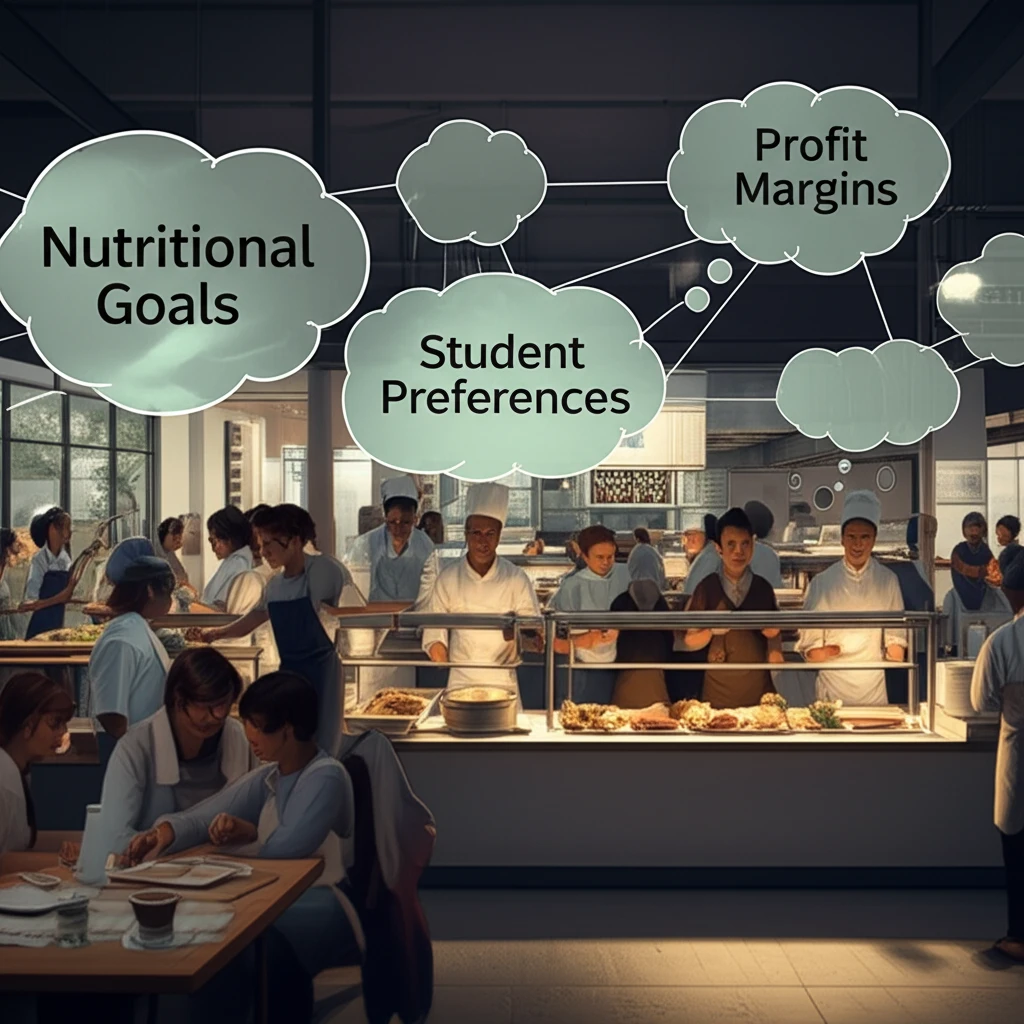
A surreal illustration showing the intersection of different viewpoints in a university restaurant.

Food for Thought: How University Restaurants Can Dish Out Success

"Balancing Act: When Ergonomics, Nutrition, and Student Satisfaction Meet at the Serving Counter"


Imagine a university restaurant aiming to provide nutritious and affordable meals to students and staff. Sounds simple, right? But what happens when the realities of food preparation, nutritional guidelines, and student preferences collide? This is the challenge many university restaurants face, and one that a university in Rio de Janeiro tackled head-on.

This article explores how the university used an ergonomic work analysis (EWA) approach to understand the complexities of their restaurant's food distribution system. By focusing on the work activity of the serving staff, they were able to reveal the different, often conflicting, perspectives of various stakeholders—from nutritionists and management to the students themselves.

The key takeaway? Understanding and integrating these different viewpoints can lead to significant improvements in both the quality of service and the working conditions for those involved. Let's dive into how this university transformed its restaurant into a more harmonious and efficient operation.

Bridging the Gap: Ergonomic Work Analysis in Action

A surreal illustration showing the intersection of different viewpoints in a university restaurant.

The university implemented an Ergonomic Work Analysis (EWA) focusing on the serving staff, or “kitchen assistants,” at the food distribution counter. The goal was to understand the challenges they faced in their daily tasks, particularly in portioning the transported, ready-cooked meals. Researchers used observations, interviews, and strategy analysis to gather comprehensive data.

The EWA revealed several key insights:

  • Conflicting Logics: The kitchen assistants were caught in the middle of various conflicting objectives: the university's nutritional goals, the contracted company's profit margins (avoiding fines for incorrect portioning), and the students' desire for tasty, satisfying meals.
  • Fixed Portioning vs. Reality: The university nutritionists promoted a “fixed portioning” approach to ensure balanced meals. However, this didn't always align with student preferences or the variability in food quality and quantity received from the supplier.
  • The Kitchen Assistant's Balancing Act: The serving staff had to constantly make real-time decisions to balance these competing demands. They adjusted portion sizes, communicated with the head nutritionist about shortages, and even developed strategies to persuade students to accept less popular, but nutritious, ingredients.
This analysis demonstrated that the kitchen assistants weren't just performing a simple task; they were actively integrating and negotiating different logics to make the system work. Their activity served as a crucial interface among the various stakeholders.

From Fixed to Flexible: A Recipe for Success

Based on the EWA findings, the university decided to move away from the rigid “fixed portioning” concept and embrace a more flexible approach. This gave the kitchen assistants greater autonomy to adjust portion sizes based on student requests and the availability of ingredients.

This shift had several positive outcomes: reduced food waste, improved student satisfaction, and a more positive work environment for the serving staff. By recognizing and valuing the knowledge and skills of the kitchen assistants, the university created a more responsive and efficient food service system.

This case study highlights the importance of considering the human element in system design. By using ergonomic work analysis to understand the realities of the work activity, organizations can bridge the gap between different perspectives and create solutions that benefit everyone involved.

About this Article -

This article was crafted using a human-AI hybrid and collaborative approach. AI assisted our team with initial drafting, research insights, identifying key questions, and image generation. Our human editors guided topic selection, defined the angle, structured the content, ensured factual accuracy and relevance, refined the tone, and conducted thorough editing to deliver helpful, high-quality information.See our About page for more information.

This article is based on research published under:

DOI-LINK: 10.3233/wor-182832, Alternate LINK

Title: The Work Activity As An Interface Among Different Logics: The Case Of Distributing Food In A University Restaurant

Subject: Public Health, Environmental and Occupational Health

Journal: Work

Publisher: IOS Press

Authors: Viktoriya Lipovaya, Francisco Duarte, Pascal Béguin

Published: 2019-01-03

Everything You Need To Know

1

What is an Ergonomic Work Analysis (EWA), and how was it used in the university restaurant?

An Ergonomic Work Analysis (EWA) focuses on understanding the challenges faced by workers in their daily tasks. In the university restaurant context, the EWA involved observations, interviews, and strategy analysis to gather data on the serving staff's experiences, particularly concerning portioning ready-cooked meals. It revealed conflicting objectives, the impracticality of fixed portioning, and the critical role of kitchen assistants in balancing competing demands to ensure the food distribution system functions effectively.

2

What does 'fixed portioning' mean in the context of the university restaurant, and why was it problematic?

The concept of 'fixed portioning' refers to the university nutritionists' approach to ensuring balanced meals by adhering to strict portion sizes. However, the Ergonomic Work Analysis (EWA) revealed that this approach didn't always align with student preferences or the variability in food quality and quantity received from the supplier. Kitchen assistants found themselves needing to adjust portion sizes and negotiate with students, highlighting the limitations of a rigid, one-size-fits-all approach. Moving away from fixed portioning allowed for a more flexible system better adapted to real-world conditions.

3

What were the 'conflicting logics' at play in the university restaurant, and how did they affect the staff?

The 'conflicting logics' in the university restaurant referred to the differing objectives of various stakeholders: the university's nutritional goals, the contracted company's profit margins (avoiding fines for incorrect portioning), and the students' desire for tasty, satisfying meals. The kitchen assistants were caught in the middle, having to balance these competing demands in real-time. This conflict highlighted the need for a more integrated and flexible approach to food distribution that considers all perspectives. Addressing these conflicting logics was crucial for improving both service quality and working conditions.

4

What role did the kitchen assistants play in the university restaurant's food distribution system, according to the Ergonomic Work Analysis (EWA)?

By implementing an Ergonomic Work Analysis (EWA), the university identified that the serving staff, referred to as "kitchen assistants," were not just performing a simple task. They were actively integrating and negotiating the university's nutritional goals, the contracted company's profit margins, and the students' preferences. They adjusted portion sizes, communicated shortages to the head nutritionist, and persuaded students to accept nutritious ingredients. Their activity served as a crucial interface among various stakeholders, highlighting the need for a more flexible approach to food distribution.

5

What were the implications of moving away from 'fixed portioning' and embracing a more flexible approach in the university restaurant?

The move away from 'fixed portioning' and the embrace of a more flexible approach had several implications. It gave the kitchen assistants greater autonomy to adjust portion sizes based on student requests and ingredient availability, leading to increased student satisfaction. It also acknowledged the complexity of the food distribution system and the importance of considering the perspectives of all stakeholders, from nutritionists and management to the students themselves. This shift ultimately transformed the university restaurant into a more harmonious and efficient operation. While the text focuses on the serving line it would be interesting to understand how the EWA was conducted in the kitchen and the types of food served, and if those parameters changed.

Newsletter Subscribe

Subscribe to get the latest articles and insights directly in your inbox.