
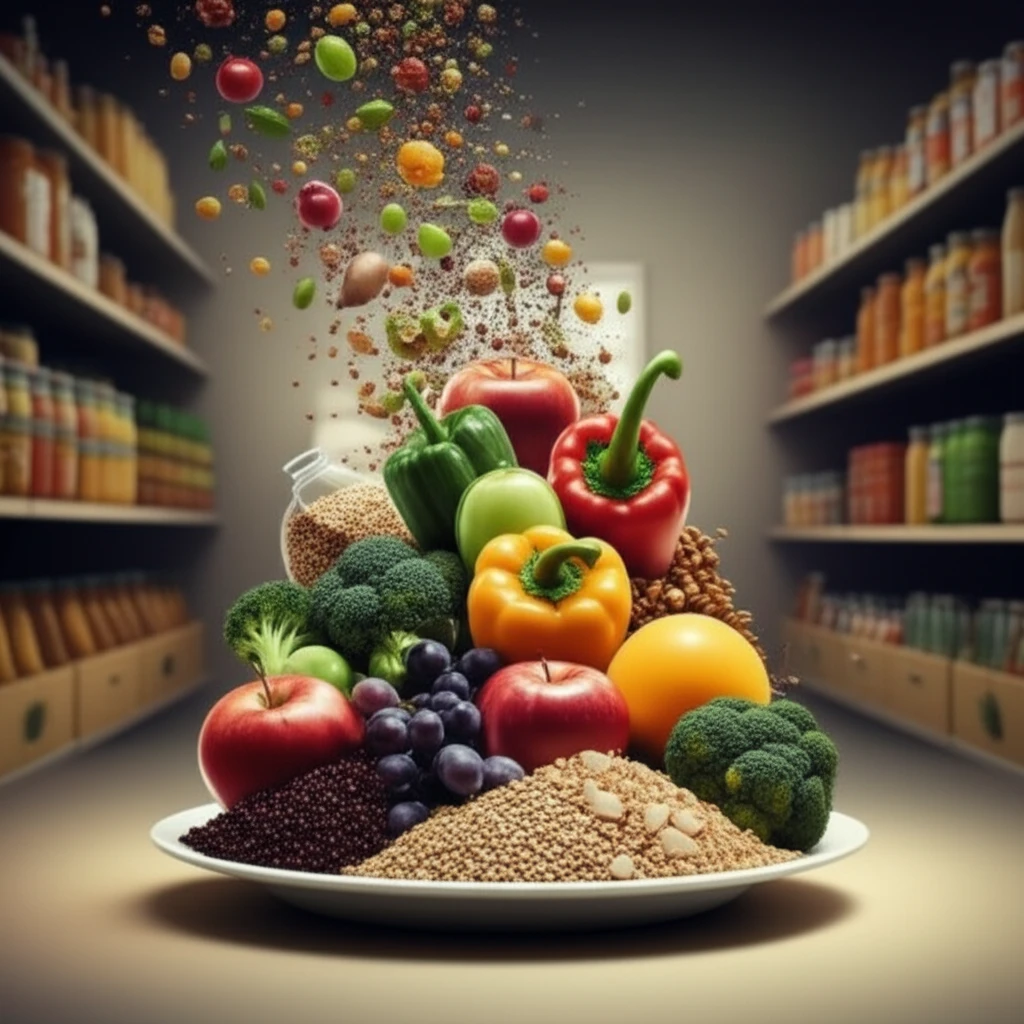
Illustration of a plate of healthy food transforming into a food bank

Food Banks vs. Your Plate: How Healthy Eating Indexes Are Changing What You Eat

"Discover the surprising ways a simple scoring system is revolutionizing food choices in settings like food banks—and what it means for your own diet."


In a world buzzing with diet trends and nutritional advice, one might overlook the critical role of food banks. These organizations are not just about providing meals; they're increasingly becoming pivotal players in shaping public health. And at the heart of this transformation? A surprisingly powerful tool called the Healthy Eating Index (HEI).

The HEI isn't just a number; it's a detailed scoring system that assesses the healthfulness of foods. Initially designed to evaluate individual diets, it has evolved into a key metric for food environments. This article will unpack how the HEI is used in food banks and, more importantly, what this means for you and your food choices.

We'll delve into the HEI's evolution, its practical implications in hunger relief, and how these insights can influence your everyday decisions. Get ready to see food—and the food system—in a whole new light.

Decoding the Healthy Eating Index: A Closer Look

Illustration of a plate of healthy food transforming into a food bank

The Healthy Eating Index (HEI) is a comprehensive tool developed by the USDA to measure adherence to the Dietary Guidelines for Americans (DGAs). It's not just about counting calories; it's a nuanced system that evaluates various components of a diet, from whole grains to saturated fats, offering a holistic view of nutritional quality. Think of it as a report card for your plate.

The HEI assigns scores to different components of a diet, considering both 'adequacy' (like fruits and vegetables) and 'moderation' (like sodium and saturated fats). A higher score suggests a diet more closely aligned with the DGAs. The HEI is adaptable, reflecting updates to dietary guidelines every five years, making it a dynamic tool for assessing nutritional health.

  • Components: The HEI assesses elements like total fruit, whole grains, and sodium intake.
  • Scoring: Each component gets a score, and these are added up to get a total HEI score.
  • Adaptability: The HEI is updated regularly to reflect the latest dietary recommendations.
The HEI's adaptability allows it to be used across various settings, from individual diets to entire food environments, making it a versatile tool for evaluating nutritional health.

The Future of Food and Health: Embracing the HEI

The HEI is more than just a number; it's a powerful tool that can help us all make more informed decisions about the food we consume. From food banks to your own kitchen, understanding and using the HEI can be a significant step towards a healthier, more sustainable future.

About this Article -

This article was crafted using a human-AI hybrid and collaborative approach. AI assisted our team with initial drafting, research insights, identifying key questions, and image generation. Our human editors guided topic selection, defined the angle, structured the content, ensured factual accuracy and relevance, refined the tone, and conducted thorough editing to deliver helpful, high-quality information.See our About page for more information.

This article is based on research published under:

DOI-LINK: 10.1080/19320248.2016.1175398, Alternate LINK

Title: Comparing The Application Of The Healthy Eating Index–2005 And The Healthy Eating Index–2010 In The Food Shelf Setting

Subject: Public Health, Environmental and Occupational Health

Journal: Journal of Hunger & Environmental Nutrition

Publisher: Informa UK Limited

Authors: Katherine Y. Grannon, Courtney Hoolihan, Qi Wang, Cael Warren, Robert P. King, Marilyn S. Nanney

Published: 2016-06-24

Everything You Need To Know

1

How does the Healthy Eating Index, or HEI, work to evaluate the nutritional quality of foods?

The Healthy Eating Index (HEI) is a scoring system developed by the USDA to measure how well a diet aligns with the Dietary Guidelines for Americans (DGAs). It evaluates various components of a diet, assigning scores based on 'adequacy' (like fruits and whole grains) and 'moderation' (like sodium and saturated fats). The scores are totaled, with a higher score indicating a diet closer to the DGAs. It's updated every five years to reflect current dietary recommendations, adapting to new nutritional science. However, the HEI doesn't consider factors like food processing levels or individual dietary needs beyond the general guidelines.

2

In what settings is the Healthy Eating Index (HEI) used, and how does it influence food choices?

The Healthy Eating Index (HEI) is used in various settings, including food banks and individual diet assessments. In food banks, the HEI helps guide the selection of food items, aiming to provide healthier options to communities. It is also used to evaluate the nutritional quality of school lunches and other institutional food programs. For individuals, understanding the HEI can inform healthier food choices by highlighting the importance of a balanced diet. However, the HEI doesn't address issues like food access or cultural dietary preferences.

3

What are the Dietary Guidelines for Americans (DGAs), and how are they related to the Healthy Eating Index (HEI)?

The Dietary Guidelines for Americans (DGAs) are nutritional recommendations developed and updated every five years by the USDA and HHS. They provide guidance on what constitutes a healthy diet. The Healthy Eating Index (HEI) is specifically designed to measure adherence to these guidelines. Essentially, the HEI is a tool used to assess how well a diet, or a food environment, aligns with the DGAs, making it a practical application of the DGAs' recommendations. One limitation is that both the HEI and DGA don't fully account for individual metabolic differences or specific health conditions.

4

How can understanding the Healthy Eating Index (HEI) impact my personal dietary choices and promote a more sustainable future?

Understanding the Healthy Eating Index (HEI) can empower you to make more informed dietary decisions by highlighting the importance of balance and variety in your diet, aligning with the Dietary Guidelines for Americans (DGAs). By favoring foods that score well on the HEI, such as whole grains, fruits, and vegetables, and moderating the intake of saturated fats and sodium, you can improve your overall nutritional intake. The HEI's adaptability to different food environments, from food banks to personal kitchens, allows for consistent application of healthy eating principles. This system can reduce food waste and improve public health. However, it's important to remember that the HEI is a general guide and doesn't replace personalized dietary advice from a healthcare professional.

5

What are the limitations of using the Healthy Eating Index (HEI) as the sole metric for evaluating food and diet?

While the Healthy Eating Index (HEI) is a valuable tool for assessing adherence to the Dietary Guidelines for Americans (DGAs), it has limitations. The HEI may not fully capture the nuances of individual dietary needs, cultural food preferences, or the impact of food processing on nutritional value. It primarily focuses on broad dietary components like fruits, vegetables, and whole grains but may not account for the quality or source of these foods. Additionally, the HEI score alone does not address issues related to food access, affordability, or the environmental sustainability of food choices. A reliance on the HEI without considering these factors could lead to an incomplete picture of overall dietary health and its broader implications.

Newsletter Subscribe

Subscribe to get the latest articles and insights directly in your inbox.