
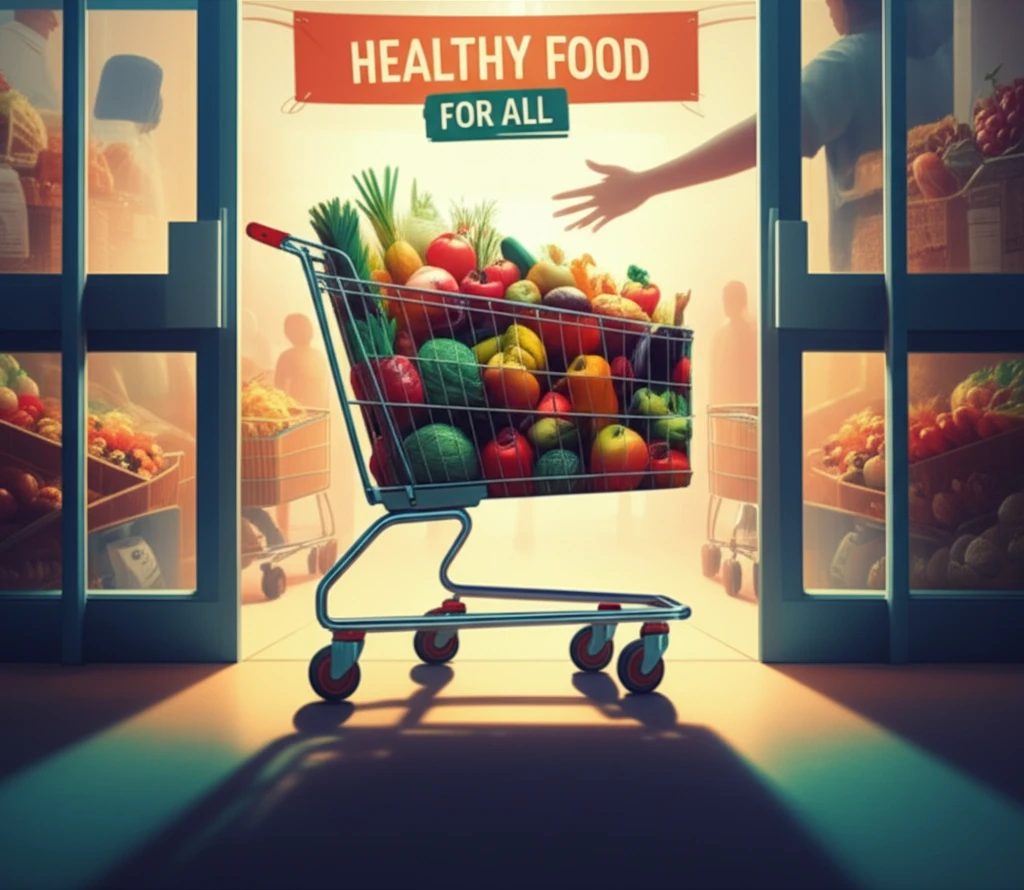
Illustration depicting a healthy grocery cart entering a food bank, symbolizing improved food choices.

Food Banks vs. Healthy Eating: Can We Make the Menu Healthier?

"Comparing the application of two different Healthy Eating Indices in food shelf settings to understand how we can improve the quality of food for those in need."


In the world of food assistance, ensuring that those in need receive nutritious meals is a constant challenge. Food banks and food shelves play a vital role in communities, but the question remains: are the foods provided meeting the standards of a healthy diet? This article explores a study that analyzed the application of two different versions of the Healthy Eating Index (HEI) to food provided by food banks. The study sheds light on whether the food provided is aligned with modern dietary guidelines, focusing on what we can do to improve the nutritional quality of food shelf offerings.

The Healthy Eating Index (HEI) is a tool developed to measure the quality of diets based on the Dietary Guidelines for Americans (DGAs). It assesses how well a set of foods aligns with recommendations for a healthy eating pattern. Researchers in this study compared the HEI-2005 and HEI-2010 versions to understand how changes in dietary guidelines influence the healthfulness of food choices within the food bank setting. This comparison is crucial, as it helps identify where improvements are needed.

This study is especially relevant given the food environment's influence on people's eating habits. For individuals relying on food banks, the available options directly affect their dietary intake. By examining the HEI scores, the researchers aimed to identify the strengths and weaknesses of current food offerings and determine how to better support those in need. The research also provides insight into the impact of different HEI versions and how these variations affect the evaluation of food environments. The following sections will delve into the study's findings, its implications, and suggestions for improvement within the food bank system.

The Healthy Eating Index: A Closer Look at Measuring Healthfulness

Illustration depicting a healthy grocery cart entering a food bank, symbolizing improved food choices.

The Healthy Eating Index (HEI) is more than just a scoring system; it's a detailed tool designed to assess the healthfulness of diets and food environments. Originally developed by the U.S. Department of Agriculture (USDA) for individual diets, the HEI is now being utilized to evaluate the quality of food in various settings, especially those providing food assistance. This metric allows for standardized evaluation of food offerings, making it easier to compare and improve the healthfulness of food environments.

The HEI works by scoring different components of a diet based on their adherence to the Dietary Guidelines for Americans (DGAs). The DGAs are updated every five years by the USDA based on the latest scientific research. The HEI reflects these updates, ensuring that it aligns with current nutritional science. With each edition, a score is given for different components like fruits, vegetables, whole grains, and sodium. The HEI score is measured out of a total of 100 points. Each component is weighted based on its importance in a balanced diet. By calculating the HEI score, professionals can evaluate the overall healthfulness of a set of foods.

  • Adequacy Components: These components score a diet based on the amount of beneficial foods like fruits, vegetables, and whole grains.
  • Moderation Components: These components score the diet based on the levels of less-desirable elements like sodium, saturated fats, and added sugars.
  • Total Score: The sum of these component scores determines the overall HEI score, which can range from 0 to 100.
The study focused on two versions of the HEI: HEI-2005 and HEI-2010. These editions reflect different iterations of the DGAs, which means the components and scoring methods varied. This difference is crucial because the research team aimed to understand how the shift between the two HEI versions impacted food shelf evaluations and what that means for efforts to improve the food environment. Their goal was to assess how changes in scoring between the HEI-2005 and HEI-2010 could influence the healthfulness of food options for people using food assistance programs.

Moving Forward: Making Food Banks Healthier

This study underscores the importance of regularly assessing and improving food offerings in assistance programs. As dietary guidelines evolve, food banks must adapt to ensure that their services align with current nutritional science. By utilizing tools like the HEI, these programs can make more informed decisions about food procurement and distribution, making it possible for the people that use the food banks to live a healthier and better life. This commitment to improving the quality of food provided supports communities and improves the well-being of vulnerable populations.

About this Article -

This article was crafted using a human-AI hybrid and collaborative approach. AI assisted our team with initial drafting, research insights, identifying key questions, and image generation. Our human editors guided topic selection, defined the angle, structured the content, ensured factual accuracy and relevance, refined the tone, and conducted thorough editing to deliver helpful, high-quality information.See our About page for more information.

Everything You Need To Know

1

What is the main goal of using the Healthy Eating Index (HEI) in food bank settings?

The primary goal of using the Healthy Eating Index (HEI) in food bank settings is to evaluate the nutritional quality of the food provided. By applying the HEI, the aim is to determine if the food offerings align with the Dietary Guidelines for Americans (DGAs) and to identify areas where improvements can be made to ensure that individuals relying on food assistance receive healthier, more nutritious options. It helps in making informed decisions about food procurement and distribution.

2

How do the Adequacy Components and Moderation Components contribute to the overall Healthy Eating Index (HEI) score?

The Adequacy Components and Moderation Components are essential in determining the overall Healthy Eating Index (HEI) score. Adequacy Components score the diet based on the presence of beneficial foods like fruits, vegetables, and whole grains, encouraging the consumption of these nutritious items. Conversely, Moderation Components score the diet based on less desirable elements such as sodium, saturated fats, and added sugars, discouraging excessive intake. The total HEI score, ranging from 0 to 100, is the sum of these component scores, offering a comprehensive assessment of the diet's healthfulness.

3

Why did the study compare the Healthy Eating Index (HEI)-2005 and the Healthy Eating Index (HEI)-2010?

The study compared the Healthy Eating Index (HEI)-2005 and the Healthy Eating Index (HEI)-2010 to understand how changes in the Dietary Guidelines for Americans (DGAs) impacted the evaluation of food in food shelf settings. These two versions reflect different iterations of the DGAs, meaning the components and scoring methods varied. By comparing them, researchers could assess how these shifts influenced the healthfulness scores of food options and identify the implications for improving the food environment for people using food assistance programs. This comparison helps show how updated dietary guidelines should influence the foods offered.

4

What are the broader implications of improving the Healthy Eating Index (HEI) scores within food banks for community health?

Improving the Healthy Eating Index (HEI) scores within food banks has significant implications for community health. By aligning food bank offerings with the Dietary Guidelines for Americans (DGAs), vulnerable populations gain access to more nutritious foods, improving their overall well-being and reducing the risk of diet-related diseases. This commitment supports healthier communities, addresses food insecurity, and contributes to long-term public health by promoting better dietary habits among those who rely on food assistance.

5

Beyond the Healthy Eating Index (HEI), what other factors should food banks consider to improve the healthfulness of their offerings?

While the Healthy Eating Index (HEI) is a valuable tool, food banks should also consider other factors to enhance the healthfulness of their offerings. These include incorporating culturally relevant foods to meet the diverse needs of their communities, providing nutrition education to help individuals make informed food choices, and partnering with local farmers and organizations to source fresh, local produce. Addressing food storage and accessibility issues, reducing food waste, and promoting sustainable food practices are also crucial for comprehensively improving the food environment. Food banks could offer cooking classes or recipes that align with the Dietary Guidelines for Americans (DGAs) to improve the overall health and well-being of the community.

Newsletter Subscribe

Subscribe to get the latest articles and insights directly in your inbox.