
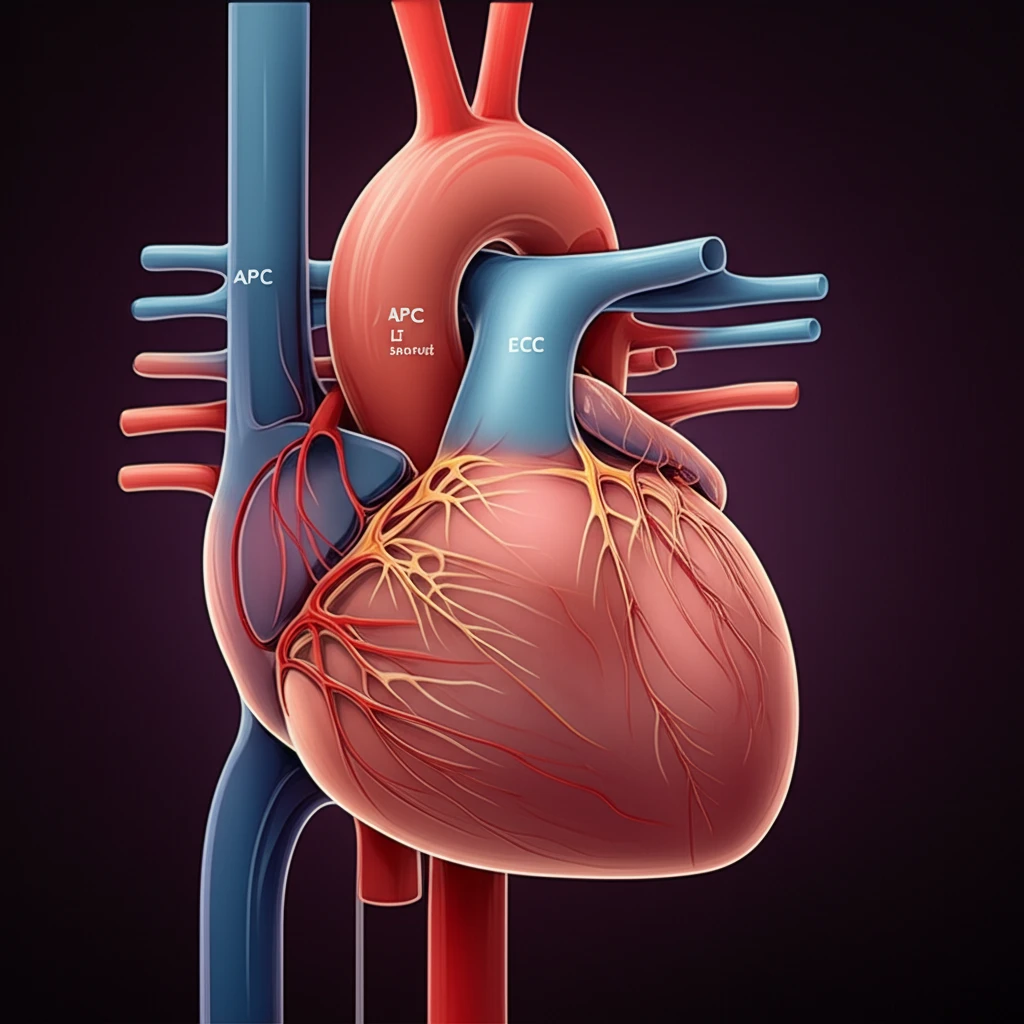
Digital illustration of blood flow in a Fontan heart representing varying degrees of pulsatility.

Fontan Operations: Unlocking Secrets to Better Blood Flow

"Quantitative analysis reveals key differences in circulation efficiency, pulsatility, and respiratory variability among Fontan circuit types, paving the way for personalized care."


The Fontan procedure dramatically extends the lives of individuals born with a single ventricle heart. However, it introduces unique circulatory challenges. After undergoing a Fontan operation, patients face long-term risks associated with altered blood flow dynamics. To mitigate these risks, a deeper understanding of how different Fontan circuit types impact circulation is essential.

Researchers have been working to unravel the complexities of blood flow in various Fontan operations. A key focus is on how these operations differ in terms of respiratory and cardiac cycles. By quantifying blood flow, scientists aim to fine-tune post-operative management and potentially reduce long-term complications.

This article delves into a study that investigates the hemodynamic characteristics of three common Fontan circuit types: atriopulmonary connection (APC), lateral tunnel (LT), and extracardiac conduit (ECC). The goal is to translate the study's findings into practical insights for understanding and managing Fontan patients.

Decoding Blood Flow: Key Parameters and Fontan Types

Digital illustration of blood flow in a Fontan heart representing varying degrees of pulsatility.

The study evaluated 35 patients with different Fontan connections, carefully measuring various parameters to assess blood flow. These parameters included:

These measurements, taken at key points in the circulatory system, such as the superior vena cava (SVC), inferior vena cava (IVC), and pulmonary arteries, provided a detailed picture of how blood moves through each Fontan circuit type.

  • Pulsatility Index (PIx): Measures the variation in blood flow velocity during each cardiac cycle, reflecting the heart's pumping action.
  • Respiratory Variability Index (RVI): Assesses how much blood flow changes with each breath, indicating the influence of respiratory effort.
  • Net Antegrade Flow Integral (NAFI): Calculates the overall forward blood flow, providing insight into the efficiency of circulation.
  • Inspiratory/Expiratory Blood Flow (IQ/EQ): Compares blood flow during inhalation versus exhalation, highlighting respiratory impact.
The researchers used intravascular Doppler echocardiography, a technique that allows for precise measurement of blood flow velocity within vessels. This allowed for a comprehensive assessment of blood flow characteristics under the combined influence of cardiac and respiratory cycles.

Personalized Circulation: Tailoring Care for Fontan Patients

The study revealed significant differences in hemodynamic characteristics among the three Fontan circuit types. For instance, the pulsatility index (PIx) differed significantly between APC and the TCPC types (LT and ECC), indicating variations in the impact of cardiac activity on blood flow. The respiratory variability index (RVI) also showed significant differences, highlighting the varying degrees to which respiration influences circulation in each circuit type.

These findings suggest that each Fontan circuit type presents unique challenges and potential long-term risks. For example, patients with APC circuits may be more susceptible to complications related to increased pulsatility in certain vessels. Conversely, those with TCPC circuits might be more vulnerable to respiratory-related circulatory issues.

By understanding these differences, clinicians can tailor management strategies to address the specific hemodynamic profiles of each patient's Fontan circuit. The novel parameters developed in this study offer valuable tools for assessing blood flow characteristics and optimizing care for individuals after Fontan operations. Future research and clinical application of these findings promise to further improve long-term outcomes for these patients.

About this Article -

This article was crafted using a human-AI hybrid and collaborative approach. AI assisted our team with initial drafting, research insights, identifying key questions, and image generation. Our human editors guided topic selection, defined the angle, structured the content, ensured factual accuracy and relevance, refined the tone, and conducted thorough editing to deliver helpful, high-quality information.See our About page for more information.

This article is based on research published under:

DOI-LINK: 10.3349/ymj.2019.60.1.56, Alternate LINK

Title: Characterization Of Flow Efficiency, Pulsatility, And Respiratory Variability In Different Types Of Fontan Circuits Using Quantitative Parameters

Subject: General Medicine

Journal: Yonsei Medical Journal

Publisher: Yonsei University College of Medicine

Authors: Kee Soo Ha, Jae Young Choi, Se Yong Jung, Han Ki Park

Published: 2019-01-01

Everything You Need To Know

1

What is a Fontan operation, and how do different types of Fontan circuits impact blood flow?

The Fontan procedure addresses single ventricle heart defects by redirecting blood flow. It involves creating a connection between the inferior vena cava (IVC) and/or superior vena cava (SVC) and the pulmonary arteries, allowing venous blood to flow directly to the lungs without passing through the heart. Different Fontan circuit types, such as atriopulmonary connection (APC), lateral tunnel (LT), and extracardiac conduit (ECC), achieve this in slightly different ways, impacting blood flow dynamics and long-term outcomes.

2

What does the Pulsatility Index (PIx) tell us about blood flow in Fontan patients, and how does it vary between different circuit types?

The Pulsatility Index (PIx) measures the variation in blood flow velocity during each cardiac cycle, reflecting the heart's pumping action. A higher PIx indicates greater variability in blood flow, suggesting a more pulsatile flow pattern. In the context of Fontan operations, differences in PIx among circuit types, such as atriopulmonary connection (APC) versus lateral tunnel (LT) and extracardiac conduit (ECC), reveal variations in the impact of cardiac activity on blood flow dynamics.

3

How does the Respiratory Variability Index (RVI) relate to blood flow in Fontan operations, and what are the implications of its variations across different circuit types?

The Respiratory Variability Index (RVI) assesses how much blood flow changes with each breath, indicating the influence of respiratory effort on circulation. In Fontan operations, the RVI helps understand how efficiently the circulatory system adapts to respiratory changes. Significant differences in RVI among Fontan circuit types like atriopulmonary connection (APC), lateral tunnel (LT) and extracardiac conduit (ECC) may suggest variations in the interaction between respiration and circulation, potentially influencing long-term outcomes.

4

What is Net Antegrade Flow Integral (NAFI), and how does it help in assessing the efficiency of different Fontan circuit types?

Net Antegrade Flow Integral (NAFI) calculates the overall forward blood flow, providing insight into the efficiency of circulation. A higher NAFI generally indicates more efficient blood flow. Understanding NAFI in different Fontan circuit types, such as atriopulmonary connection (APC), lateral tunnel (LT), and extracardiac conduit (ECC), is crucial for assessing how effectively each circuit type supports systemic circulation and delivers blood to the lungs. There is also Inspiratory/Expiratory Blood Flow (IQ/EQ) that compares blood flow during inhalation versus exhalation, highlighting respiratory impact.

5

How does intravascular Doppler echocardiography contribute to understanding blood flow dynamics in Fontan operations, and what kind of data does it provide?

Intravascular Doppler echocardiography is a technique used to precisely measure blood flow velocity within vessels. In the study of Fontan operations, this allows researchers to comprehensively assess blood flow characteristics at key points in the circulatory system, such as the superior vena cava (SVC), inferior vena cava (IVC), and pulmonary arteries. By measuring parameters like Pulsatility Index (PIx) and Respiratory Variability Index (RVI) using this technique, researchers can gain detailed insights into how different Fontan circuit types affect blood flow dynamics under the combined influence of cardiac and respiratory cycles, paving the way for personalized care and optimized circulatory support.

Newsletter Subscribe

Subscribe to get the latest articles and insights directly in your inbox.