
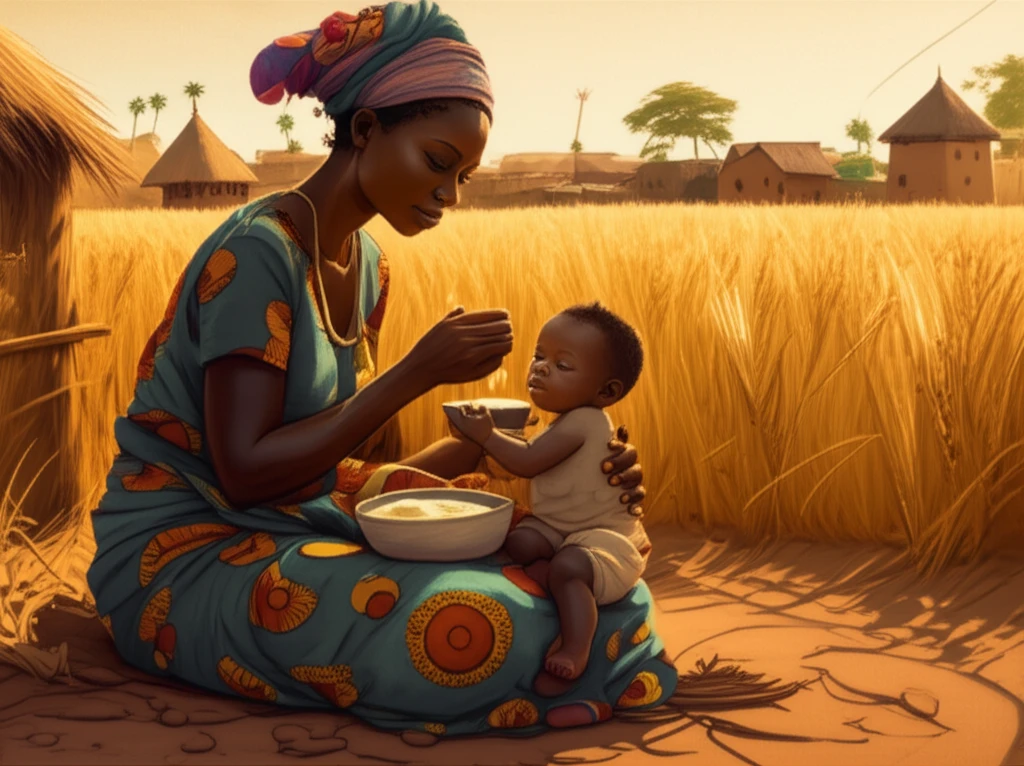
Fonio Flour: The Ancient Grain Revolutionizing Baby Food in Benin

"Discover how a fonio-based complementary food is enhancing nutrition for young children in Benin and offering a sustainable solution for food security."
Ensuring optimal nutrition during the first 1,000 days of a child's life is critical for their long-term physical and cognitive development. As infants grow beyond six months, breast milk alone becomes insufficient to meet their increasing nutritional needs. This is where complementary foods come into play, bridging the nutritional gap and supporting healthy growth.
However, in many developing countries, complementary feeding practices are often inadequate, leading to malnutrition and developmental delays. Common issues include the late or early introduction of complementary foods and the consumption of nutrient-poor, unsanitary options. In Benin, these challenges are reflected in statistics showing that while a significant percentage of infants receive complementary foods, the quality and timing often fall short of recommended guidelines.
Recognizing the urgent need for improved infant nutrition, researchers are exploring the potential of local food resources to create affordable, nutrient-rich complementary foods. One such resource is fonio (Digitaria exilis), an ancient West African grain known for its nutritional benefits and resilience. This article delves into a groundbreaking study conducted in Benin, which focuses on developing and assessing a fonio-based complementary food designed to meet the specific needs of young children.
Why Fonio? Unpacking the Nutritional Powerhouse
Fonio, often hailed as the "seed of the universe," is West Africa's oldest cultivated cereal. Despite its rich history and impressive nutritional profile, fonio remains relatively underutilized. This grain boasts a wealth of essential nutrients, making it an ideal candidate for addressing malnutrition and promoting food security.
- Fonio Flour Formulation 1 (Ffo1): Contained 70% fonio, 13% soybean, 16% groundnut, and 1% dried fish.
- Fonio Flour Formulation 2 (Ffo2): Featured a modified fonio content of 63%, with 20% soybean, 16% groundnut, and 1% dried fish.
- Maize Flour Formulation (FMa+): Served as a control, comprising 70% maize, 13% soybean, 16% groundnut, and 1% dried fish.
The Future of Fonio: A Sustainable Solution for Infant Nutrition
The study successfully developed a fonio-based complementary food that aligns with WHO recommendations for infant nutrition. This innovative approach not only addresses the critical need for improved nutrition among young children in Benin but also promotes the use of local food resources, offering a sustainable solution for food security. While further improvements in micronutrient content, such as iron, are needed, this research paves the way for adapting fonio-based formulations to different agro-ecological zones and tailoring them to the specific nutritional needs of local populations. By harnessing the power of ancient grains like fonio, we can create a brighter, healthier future for children in Benin and beyond.