
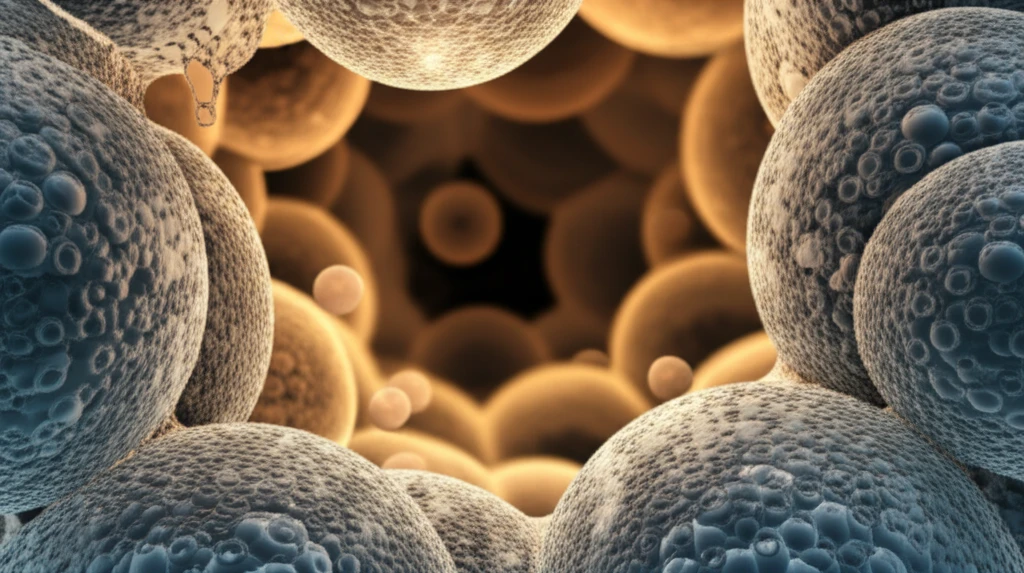
Microscopic view of fire extinguishing foam enhanced with nanosilica.

Foam Fighters: How Nanosilica Could Revolutionize Fire Extinguishing

"Scientists explore how manipulating the size of silica particles enhances foam's fire-fighting power, offering a safer, more effective approach to tackling blazes."


Imagine a world where fires are extinguished more quickly and efficiently, minimizing damage and saving lives. This vision may be closer than you think, thanks to groundbreaking research into the properties of nanosilica and its effects on fire-extinguishing foam. While conventional methods have long been the standard, scientists are constantly seeking innovative solutions to improve our fire safety measures.

Silica (SiO2), a compound known for its stable physical and chemical attributes, is at the heart of this innovation. Ranging from micro to nano sizes, silica particles exhibit unique behaviors that can be harnessed for various applications. Nanosilica, in particular, presents exciting possibilities due to its small particle size, large surface area, and excellent dispersion properties, making it a versatile component in numerous industries.

Recent studies have explored incorporating light solid particles into ordinary foam to enhance its anti-burning capabilities. The size of these particles plays a critical role in the effectiveness of the foam, influencing its stability and overall performance. Now, researchers are diving deeper into understanding exactly how nanosilica, at varying sizes, can optimize foam's fire-fighting prowess.

The Nanosilica Advantage: Boosting Foam Stability

Microscopic view of fire extinguishing foam enhanced with nanosilica.

The core of the research focuses on understanding how different sizes of silica powder—specifically 15 nm, 30 nm, and 4 µm—affect the foaming capability and thermal stability of fire-extinguishing agents. The study also examines the superficial morphology of the foam to understand how nanosilica interacts with the foam structure at a microscopic level. Key to this is drainage time which is how quickly liquid drains, affects how well the foam can maintain its structure and continue to smother the flames. A longer drainage time means the foam is more stable and effective.

The experiments revealed some fascinating insights. Decreasing the size of the silica powder, particularly down to 15 nm, reduced the initial foaming capability of the extinguishing agent. This might seem counterintuitive, but the benefits in thermal stability more than compensated for this slight reduction. Smaller silica particles significantly improved the foam's resistance to heat and breakdown over time.

  • Foaming Capability: A reduction of 20.1% was observed with the 15 nm silica powder.
  • 25% Drainage Time: Increased by an impressive 257% with the 15 nm silica powder.
  • 50% Drainage Time: Saw a substantial increase of 122% with the 15 nm silica powder.
  • Thermal Stability: Enhanced by 139% with the 15 nm silica powder.
These results indicate that nanosilica powders, especially the 15 nm particles, are readily adsorbed at the gas-liquid interface within the foam. This adsorption increases the lamella thickness—the thin liquid films that make up the foam structure—and slows down film drainage. By creating thicker, more stable films, the foam gains enhanced thermal resistance, making it a more effective barrier against flames.

The Future of Firefighting

This research highlights the potential of nanosilica to transform fire extinguishing technology. By optimizing the size of silica particles, we can create foam agents that offer superior thermal stability and longer-lasting performance. This not only improves firefighting efficiency but also enhances safety for both firefighters and the public. As we continue to explore the possibilities of nanotechnology, the future of fire safety looks brighter and more secure.

About this Article -

This article was crafted using a human-AI hybrid and collaborative approach. AI assisted our team with initial drafting, research insights, identifying key questions, and image generation. Our human editors guided topic selection, defined the angle, structured the content, ensured factual accuracy and relevance, refined the tone, and conducted thorough editing to deliver helpful, high-quality information.See our About page for more information.

This article is based on research published under:

DOI-LINK: 10.1680/jnaen.17.00003, Alternate LINK

Title: Effect Of Nanosilica On Foam And Thermal Stability Of A Foam Extinguishing Agent

Subject: General Medicine

Journal: Nanomaterials and Energy

Publisher: Thomas Telford Ltd.

Authors: Baohua Tang, Zhaoliang Wu, Wei-Hong Chen

Published: 2017-12-01

Everything You Need To Know

1

What exactly is nanosilica, and how does it relate to fire-extinguishing foam?

Nanosilica is silica (SiO2) in particle sizes measured in nanometers, typically less than 100 nm. These particles possess unique properties due to their small size, including a high surface area and excellent dispersion. This research leverages these properties to enhance fire-extinguishing foam, improving its thermal stability and effectiveness in fighting fires. The specific particle sizes tested were 15 nm, 30 nm, and 4 µm.

2

What are the main goals of the research into nanosilica and fire-extinguishing foam?

The research focuses on optimizing fire-extinguishing foam by incorporating different sizes of silica powder. The primary goal is to improve the foam's thermal stability and longevity. By manipulating the size of the silica particles, researchers can enhance the foam's ability to withstand high temperatures and maintain its structure, ultimately leading to more efficient firefighting and increased safety.

3

How does the size of silica particles influence the performance of fire-extinguishing foam?

The size of the silica particles significantly affects the foam's performance. Smaller particles, specifically 15 nm nanosilica, have shown remarkable improvements. Although the initial foaming capability was slightly reduced, the 15 nm particles dramatically increased the foam's drainage time and thermal stability. This means the foam lasts longer and resists heat better, making it more effective at extinguishing fires. The experiments revealed: foaming capability was reduced by 20.1%, the 25% drainage time increased by 257%, the 50% drainage time increased by 122%, and the thermal stability was enhanced by 139%.

4

In what way does nanosilica improve the stability of fire-extinguishing foam?

Nanosilica enhances foam stability by adsorbing at the gas-liquid interface within the foam. This adsorption thickens the lamella, the thin liquid films that make up the foam structure, and slows down film drainage. The thicker, more stable films created by nanosilica increase the foam's thermal resistance. This improved resistance allows the foam to better withstand the heat of a fire and maintain its structure longer, thus effectively smothering the flames.

5

Why is this research on nanosilica in firefighting so important?

The use of nanosilica in fire-extinguishing foam is significant because it can lead to a safer and more effective approach to tackling blazes. By improving the foam's thermal stability and longevity, nanosilica can help firefighters extinguish fires more quickly and efficiently, minimizing damage and saving lives. This innovation has the potential to revolutionize firefighting technology, enhancing safety for both firefighters and the public, marking a significant advancement in fire safety measures.

Newsletter Subscribe

Subscribe to get the latest articles and insights directly in your inbox.