
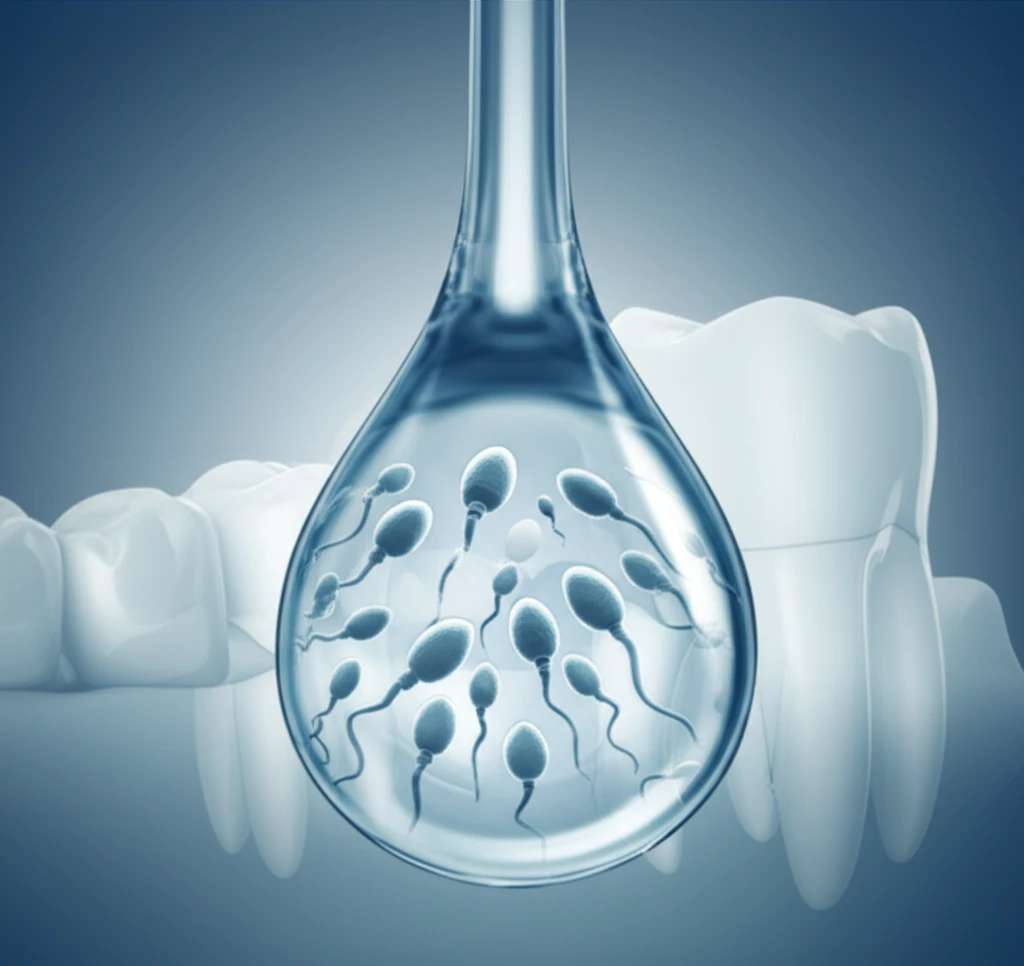
Surreal illustration of water droplet with sperm cells and dental structure, representing fluoride fertility study.

Fluoride Under Fire: Does It Really Impact Male Fertility?

"Unpacking the science behind fluoride, dental health, and male reproductive health"


For decades, fluoride has been added to public water supplies with the intention of reducing dental cavities, becoming a cornerstone of public health initiatives. However, alongside its widespread use, concerns about its potential health effects have arisen, particularly regarding reproductive health. These concerns have fueled ongoing debates and sparked numerous studies aimed at understanding the full scope of fluoride's impact on the human body.

Fluoride, a naturally occurring element, is now ubiquitous, present not only in water but also in various food products, beverages, and dental care items. This widespread exposure has led to questions about the safety of cumulative fluoride intake and its potential effects on different aspects of health, including reproductive functions. The impact of fluoride on male fertility has become a focal point of concern, prompting researchers to investigate its potential effects on sperm production and quality.

To address these concerns, a study was conducted to evaluate the effects of sodium fluoride (NaF) on the male reproductive system. The study examined adult male rats exposed to varying concentrations of NaF in their drinking water over a 30-day period. The research aimed to provide clarity on whether fluoride at levels commonly found in drinking water could potentially affect sperm production and morphology.

Fluoride's Impact on Male Fertility: What the Rat Study Reveals

Surreal illustration of water droplet with sperm cells and dental structure, representing fluoride fertility study.

In a controlled experiment, researchers exposed adult male rats to NaF in their drinking water at concentrations of 1.54 ppm (control, tap water), 50 ppm, and 100 ppm for 30 days. They then meticulously examined various factors, including body and organ weights, daily sperm production, sperm count, and sperm morphology, to determine if NaF had any adverse effects.

The study found no significant differences in sperm count or morphology between the groups. The rats exposed to NaF showed no changes in body weight or the weights of their organs (testes, epididymis, seminal vesicles, and prostate). The absence of notable effects on these parameters suggests that NaF, at the tested concentrations, does not impair male reproductive function.

Here's a breakdown of the key findings:
  • Sperm Count and Morphology: No significant differences were observed among the groups, indicating that NaF did not negatively impact sperm production or shape.
  • Body and Organ Weights: The rats exposed to NaF showed no significant changes in body weight or the weights of their reproductive organs.
  • Dental Fluorosis: A mild degree of dental fluorosis was observed in the group receiving the highest dose of NaF (100 ppm).
While the higher dose group exhibited mild dental fluorosis, indicating some degree of fluoride exposure, the study results indicated that NaF at the doses used did not adversely affect sperm production and morphology in male rats. These findings contribute to the ongoing discussion about fluoride's safety and its potential impact on reproductive health.

The Bottom Line: Fluoride and Male Fertility

The study provides evidence that exposure to NaF at levels commonly found in drinking water does not adversely affect sperm production or morphology in male rats. While a mild degree of dental fluorosis was observed at higher doses, the results suggest that fluoride's impact on male reproductive health may not be as significant as some concerns suggest. It’s important to consider that these results are from a rat study, and further research is needed to fully understand the effects on human reproductive health. However, the findings offer reassurance and contribute to a more nuanced understanding of fluoride's role in overall health.

About this Article -

This article was crafted using a human-AI hybrid and collaborative approach. AI assisted our team with initial drafting, research insights, identifying key questions, and image generation. Our human editors guided topic selection, defined the angle, structured the content, ensured factual accuracy and relevance, refined the tone, and conducted thorough editing to deliver helpful, high-quality information.See our About page for more information.

Everything You Need To Know

1

What was the primary focus of the rat study regarding fluoride?

The primary focus of the rat study was to investigate the impact of sodium fluoride (NaF) on male reproductive health. Specifically, the researchers aimed to determine whether exposure to NaF at concentrations commonly found in drinking water would affect sperm production and morphology in adult male rats. The study was designed to evaluate the potential adverse effects of fluoride on sperm count, shape, and overall reproductive organ health.

2

What were the key findings of the study concerning NaF exposure and male fertility in rats?

The study revealed that exposure to sodium fluoride (NaF) at concentrations of 1.54 ppm (control), 50 ppm, and 100 ppm in drinking water for 30 days did not significantly affect sperm count or morphology in adult male rats. There were no significant changes in body weight or the weights of the reproductive organs (testes, epididymis, seminal vesicles, and prostate) among the different NaF exposure groups. However, a mild degree of dental fluorosis was observed in the group receiving the highest dose (100 ppm) of NaF.

3

Why is there a concern about fluoride in water and its effect on health?

Concerns about fluoride in water have arisen due to its widespread presence in public water supplies and various food products, beverages, and dental care items. This ubiquitous exposure has led to questions regarding the safety of cumulative fluoride intake and its potential effects on different aspects of health, including reproductive functions. The ongoing debate revolves around the long-term effects of consistent, low-level fluoride exposure and its impact on various bodily systems.

4

How does the study's findings contribute to the ongoing discussion about fluoride's impact on male reproductive health?

The study's findings contribute to the ongoing discussion by providing evidence that exposure to sodium fluoride (NaF) at levels commonly found in drinking water does not adversely affect sperm production or morphology in male rats. This offers some reassurance regarding the potential impact of fluoride on male reproductive health. However, the study also highlights the need for further research to fully understand the effects of fluoride on human reproductive health, as results from animal studies may not directly translate to humans.

5

What specific concentrations of NaF were used in the rat study, and what were the observable outcomes related to these concentrations?

The rat study used three different concentrations of sodium fluoride (NaF) in the drinking water: 1.54 ppm (control group, tap water), 50 ppm, and 100 ppm. The observable outcomes were that there were no significant differences in sperm count or morphology among the groups. The rats exposed to NaF showed no significant changes in body weight or the weights of their reproductive organs. However, a mild degree of dental fluorosis was observed in the group receiving the highest dose of 100 ppm NaF, indicating a biological effect of fluoride exposure at that concentration.

Newsletter Subscribe

Subscribe to get the latest articles and insights directly in your inbox.